ACLJ takes John Eastman disbarment fight to Supreme Court on First Amendment grounds
The ACLJ is petitioning the Supreme Court to reverse John Eastman's disbarment, arguing California punished him for protected political speech and legal advocacy rather than unethical conduct.
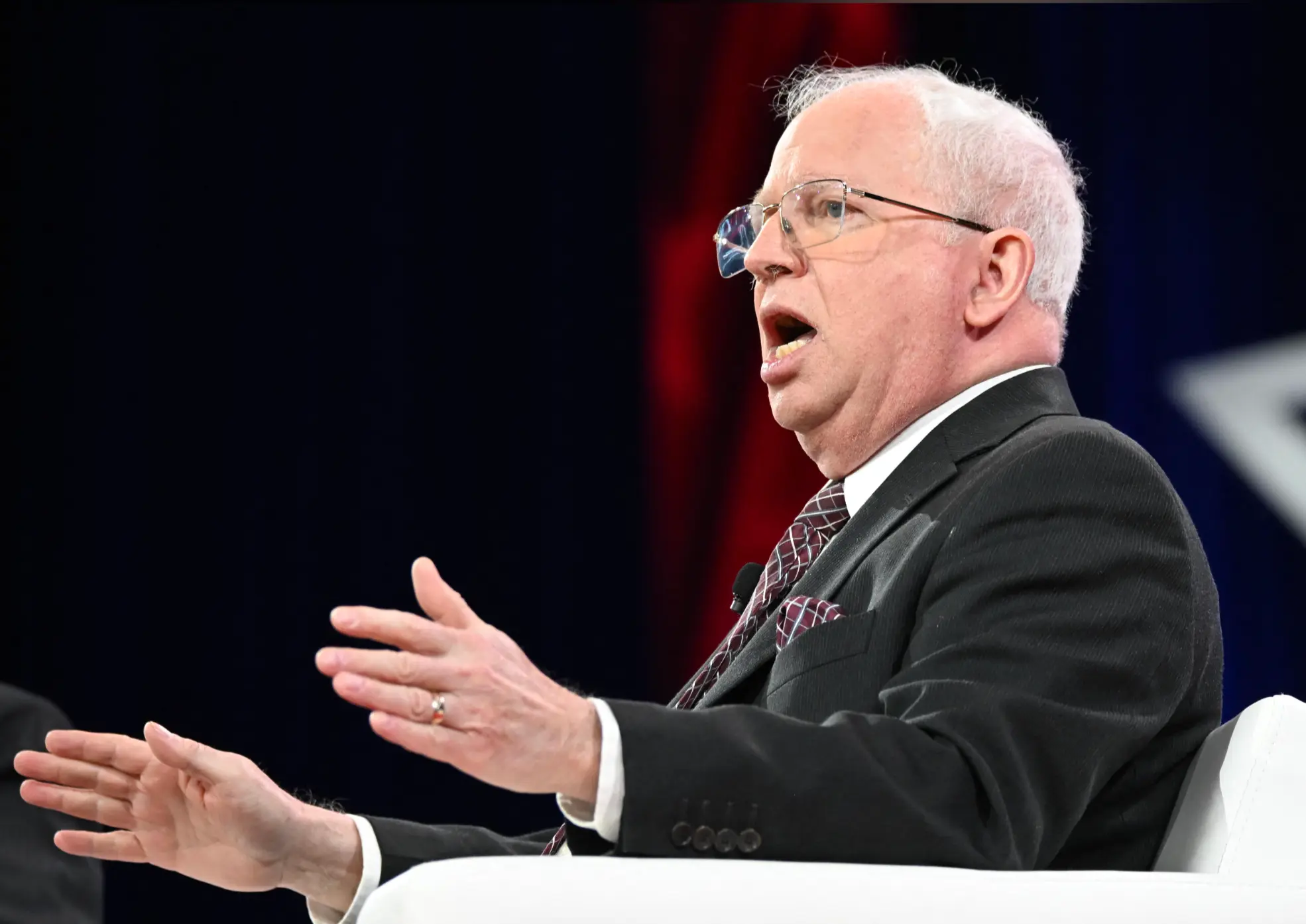
The American Center for Law and Justice (ACLJ) is preparing to ask the U.S. Supreme Court to reverse California’s disbarment of former Trump attorney and constitutional law professor John Eastman, arguing that state officials punished him for protected political speech and legal advocacy surrounding the 2020 presidential election.
The ACLJ announced July 13 that it is representing Eastman in a forthcoming petition for a writ of certiorari. The filing is due Sept. 11 and will ask the justices to consider whether a state may impose professional discipline on an attorney for advancing disputed constitutional arguments on behalf of a client.
Eastman served as an attorney for President Donald Trump following the 2020 election and promoted legal theories under which then-Vice President Mike Pence or Congress could delay or reject electoral votes from disputed states.
California’s attorney discipline authorities later charged Eastman with 11 counts of professional misconduct arising from his legal work on behalf of Trump.
A State Bar Court hearing judge found Eastman culpable on 10 counts in March 2024 and recommended disbarment. A three-judge review panel affirmed that recommendation in June 2025, and the California Supreme Court ordered Eastman disbarred in April.
The State Bar maintains that Eastman knowingly lied about the election and misled courts, public officials, and the public. Chief Trial Counsel George Cardona described the conduct as incompatible with the honesty and integrity required of California attorneys.
The ACLJ rejects that characterization, arguing that Eastman was punished for legitimately representing his then-client, proposing novel (but not illegal) constitutional theories, and participating in political debate.
“No court sanctioned Professor Eastman for any of his legal positions,” ACLJ leaders Jay Sekulow and Jordan Sekulow wrote.
They said California effectively disbarred Eastman for exercising his free-speech rights and providing legal counsel to Trump.
The ACLJ intends to ask whether the First Amendment prevents state governments from treating controversial constitutional advocacy as professional misconduct simply because courts or political opponents ultimately reject the attorney’s position.
“Constitutional law develops through advocacy, disagreement, and judicial decision-making,” the organization stated, warning that attorney discipline should not become a mechanism for punishing disfavored political arguments.
The organization acknowledged that states may regulate lawyers and discipline dishonest or unlawful conduct. Its argument, however, is that California crossed the line from regulating professional behavior into penalizing advocacy on disputed questions of constitutional law.
The Supreme Court has recognized that attorneys retain First Amendment rights, although those rights may be more limited than those of ordinary citizens in courtrooms, pending cases, and circumstances in which speech could prejudice judicial proceedings.
In the 1991 case Gentile v. State Bar of Nevada, the Court reversed discipline imposed on a defense attorney after concluding that the rule used against him was impermissibly vague. The decision also recognized states’ authority to impose narrowly tailored restrictions protecting the fairness of judicial proceedings.
Eastman’s appeal will therefore likely turn on how the justices characterize his conduct: protected constitutional argument and political speech, as the ACLJ contends, or deceitful professional misconduct falling within California’s authority to regulate lawyers, as the State Bar claimed.
The State Bar Court’s original proceedings lasted more than 35 trial days and included 23 witnesses and more than 700 exhibits. The hearing judge claimed that Eastman participated in a strategy to interfere with the counting of electoral votes despite lacking a good-faith legal basis for rejecting the certified results.
Eastman appealed every finding of culpability and also the recommended penalty. The review panel nevertheless upheld both the findings and disbarment recommendation, while leaving intact the dismissal of the sole count on which he had prevailed.
The ACLJ argues that the absence of sanctions against Eastman in the underlying election litigation is significant. According to the organization, allowing a state bar to impose the legal profession’s most severe punishment after the fact could have a chilling effect on attorneys, discouraging them from representing controversial political clients or proposing new and untested legal theories.
“To punish an attorney for exploring novel legal theories” presents a danger extending well beyond Eastman, the ACLJ said.
The organization warned that lawyers may avoid election cases, constitutional challenges, or representation of certain public figures if they believe political advocacy could later be reclassified as an ethical violation.
The dispute comes amid broader conservative allegations that government institutions and professional bodies have been used selectively against Trump, his advisers, and supporters.
As Zeale News previously reported, internal messages disclosed to Congress showed Biden-era Justice Department prosecutors discussing whether Catholic religious sisters present near the Jan. 6 rally should be investigated, fueling concerns about politically and religiously selective enforcement.
Eastman’s case presents a different legal question, but the ACLJ places it within the same broader debate over “lawfare” and the political weaponization of government authority.
The Supreme Court is not required to accept the case. Eastman will need at least four justices to vote to grant review after the petition and California’s response are filed.
The ACLJ said the stakes extend beyond the 2020 election and Eastman’s ability to practice law.
“If conservative lawyers lose their free speech rights,” the organization concluded, “our constitutional system of law is doomed.”



Comments