Amid schism, growing North Carolina SSPX community purchases 26-acre property
Though some faithful who have attended Mass at the SSPX church have become concerned amid the Vatican decree, a number of parishioners have expressed hope that the situation will improve.

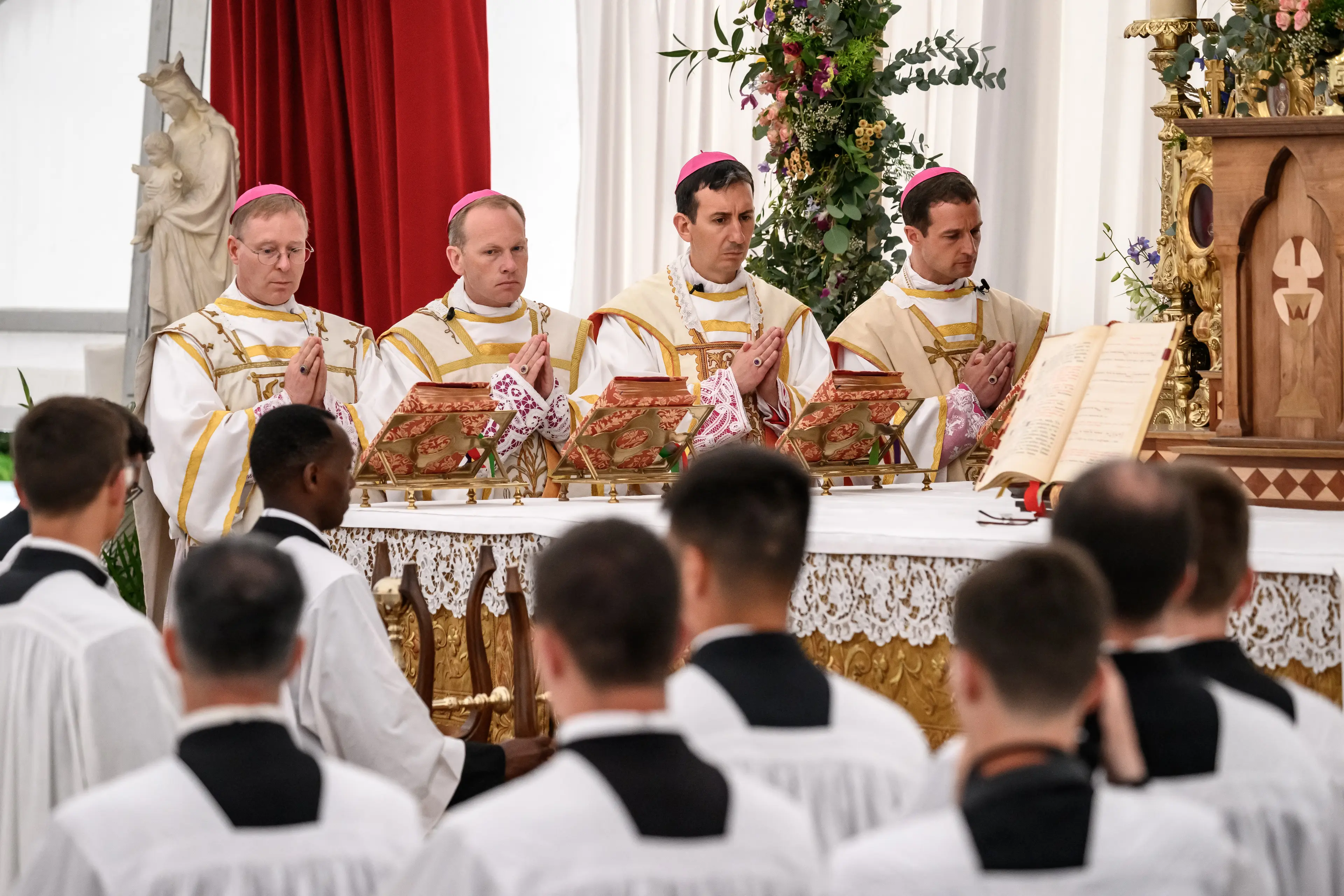
A Society of St. Pius X (SSPX) community closed on a 26-acre property outside Charlotte, North Carolina, less than a week after the Vatican declared that the SSPX is in schism, according to a July 15 Charlotte Observer report.
Members of St. Anthony’s, which is based in Mount Holly, said closing on the property shortly after the Vatican’s decree “wasn’t an act of defiance” but “an expression of confidence,” the Observer reported.
The North Carolina-based SSPX community, within the boundaries of the Diocese of Charlotte, has been searching for the land for three years and has considered more than 1,300 properties, according to the report. The acreage they settled on is about 10 minutes away from St. Anthony’s chapel.
>> US bishops offer pastoral responses after SSPX excommunications and schism <<
The Observer described the expansion plan as “the largest project in the community’s history.” The expansion aims to include a bigger church, classrooms, a cemetery, a school, and residencies for clergy and religious sisters who teach there.
In the wake of the July 2 Vatican decree, a number of diocesan U.S. bishops have urged Catholics to stop attending SSPX liturgies, stressing that to continue doing so poses a spiritual risk. They have emphasized that unity with the Church established by Christ, Whose vicar on earth is the Pope, is essential.
Longtime parishioner Jim De Piante told the Observer that SSPX chapels saw an increase in Mass attendance during the COVID-19 pandemic when many other churches suspended public liturgies. He estimated that St. Anthony’s has gone from 150 attendees at a single Sunday Mass to around 500 people regularly overfilling two Masses on Sundays.
De Piante also said “a handful of families” did not go to the Sunday Mass at St. Anthony’s after the Vatican issued its July 2 decree warning that SSPX clergy are in schism, its bishops are excommunicated, and any lay people who formally adhere to the SSPX are in schism as well. Overall, however, the atmosphere in the community has been optimistic, according to De Piante. On July 14, the SSPX filed an appeal of the decree, effectively suspending the decree’s penalties of excommunication and sacramental restrictions while it is under review. Several members of St. Anthony’s told the Observer that they are hopeful the Vatican may reconsider the decree.
Parishioner Jennifer Jaeger, who started attending the church during the pandemic, said she sees the purchase of the new property as an additional sign that the community is cultivating hope.
“We have the new bishops, we have the land and the prospect of a new church,” Jaeger said. “It’s very hopeful.”
De Piante told the Observer that he views going through with the purchase as “just as big a statement of hope as you could possibly make.”
Parishioner Giancarlo Cruz, who travels from South Carolina every weekend with his family to the liturgy at St. Anthony’s, told the Observer that the Vatican’s decree was not unexpected, but he believes “we’re going to weather this storm.”
“The overall sentiment is hope,” Cruz told the outlet. “We’re going to keep having these traditional sacraments. ... This is for us a long-term game. It’s not something for this weekend or next weekend. It’s for 100 years from now. It’s for the kids.”
A number of U.S. diocesan bishops have acknowledged the difficulty and pain that the schism inflicts upon the faithful who have attended SSPX liturgies and who have an attachment to the Traditional Latin Mass.
Archbishop Gregory Hartmayer of Atlanta, whose archdiocese is within the same ecclesial province as the Diocese of Charlotte, recently published a pastoral letter on the schism, as Zeale News previously reported. He addressed the faithful who have attended Mass at Saint Michael’s Catholic Church, an SSPX faith community within the Georgia archdiocese’s boundaries, saying that he writes “with a father’s concern for the unity of the Church and the salvation of souls.”
“I say this with pastoral concern: the Church does not reject your desire for reverent worship, sound doctrine, or holiness of life,” he said. “Rather, she calls you to seek these gifts within the visible communion of the Catholic Church, united with the successor of Saint Peter and with the bishops in communion with him.”
He also encouraged all Catholics to speak about the situation “with clarity, charity, and restraint.”
“We must avoid harsh judgments about individuals whose personal knowledge and freedom may be limited,” he said, “but we must also avoid false reassurance where the unity of the Church and the validity of the sacraments are at stake.”




Comments