ANALYSIS | California’s sanctuary policies put ICE’s revamped enforcement efforts to the test
A low-profile, no-drama approach to immigration enforcement has yielded higher arrest rates for Immigration and Customs Enforcement, but a sweeping operation launched in Democrat-run California will put those new policies to the test.
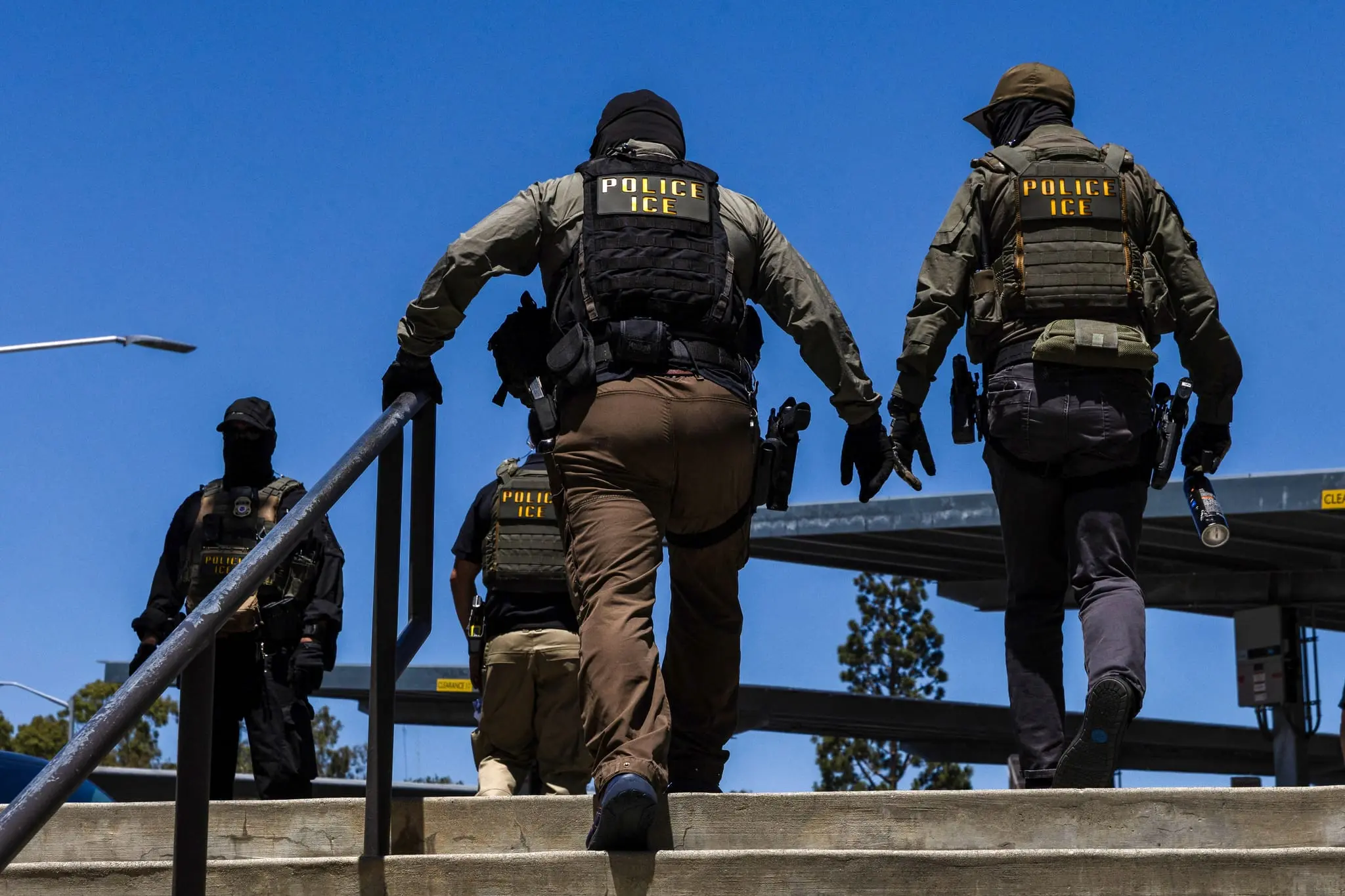
Over the course of 2025, Immigration and Customs Enforcement (ICE) operations were crippled by public backlash against high-profile activities that made headlines across the country. Riots broke out in Los Angeles in response to ICE operations in the area, prompting President Donald Trump to federalize the California National Guard to restore order while civil unrest spread to Chicago, New York, and Portland.
Late in the year and into the early days of 2026, Operation Metro Surge in Minneapolis was harshly criticized when two civilians — Renee Good and Alex Pretti — were shot and killed by federal agents after intervening in enforcement operations. Then-Secretary of Homeland Security Kristi Noem resigned shortly afterward, and U.S. Border Patrol (USBP) Commander-at-Large Gregory Bovino retired after being removed from his post and returned to his former role as a sector chief.
Since Markwayne Mullin took over as Homeland Security Secretary in March 2026, ICE operations have been lower-profile and, at the same time, more effective. ICE’s monthly arrest rate has risen significantly, consistently hitting new records. Under Noem, monthly arrests peaked in December 2025 at 39,829; under Mullin, arrests have surged to more than 50,000 per month.
Noem’s Operation Metro Surge, launched in early December 2025 and concluded in February the following year, netted nearly 4,000 arrests and involved more than 3,000 federal agents, in addition to garnering national headlines and costing two American lives. Some of those arrests were made by Bovino’s controversial “roving” USBP patrols, but most were “targeted” enforcement operations, meaning that the illegal aliens to be arrested were already known to law enforcement.
From July 27 to Aug. 29, Mullin’s Department of Homeland Security (DHS) conducted Operation Rotten Apple, sweeping across Democrat-run New York, a “sanctuary” state where state provisions bar state and local law enforcement from cooperating or collaborating with ICE. Operation Rotten Apple made no headlines until Mullin announced its results in September: 2,197 arrests in a roughly five-week span.
The high-profile Operation Metro Surge netted an average of approximately 345 arrests per week, while Operation Rotten Apple netted roughly 440 arrests per week — with none of the fuss of the Minneapolis operation and taking only one-third of the time span.
Now, ICE is launching another major operation, this time targeting California. According to the Washington Examiner, Operation Safe California began in early October and will last 45 days, with enforcement actions starting in and around San Diego, near the U.S.-Mexico border, and moving north to sweep through Los Angeles and hit San Francisco by mid-November.
One DHS insider told the Washington Examiner that ICE will maintain a low profile and is expected to tout the “worst of the worst” illegal aliens arrested, as the agency has done in the past, but the source noted that agents were “told to go after anybody, they can pick up anybody.”
In the wake of Noem’s tenure leading DHS, the agency has emphasized that ICE is not limiting its arrests to the “worst of the worst” but is also arresting illegal aliens with no criminal record in the U.S.
Like Minnesota and New York, California has enacted stringent sanctuary laws to shield illegal aliens from ICE and bar state and local law enforcement from cooperating and collaborating with federal immigration enforcement authorities.
The California Values Act went into effect in 2018, during Trump’s first term in the White House, and bars state and local law enforcement from inquiring into immigration status, honoring ICE detainer requests and turning over arrested illegal aliens to ICE custody, entering into federal contracts to assist ICE or deputize personnel to assist ICE, or using personnel or resources to investigate, interrogate, detain, detect, or arrest people for immigration enforcement purposes.
The 2016 Transparent Review of Unjust Transfers and Holds Act further requires ICE to provide prior notice and obtain written consent before using state and local facilities for the purposes of immigration enforcement. The Immigrant Worker Protection Act requires ICE to obtain judicial warrants before conducting non-public worksite enforcement measures.
In September 2026, Democratic Gov. Gavin Newsom signed an expansion of the state’s sanctuary laws, prohibiting the use of state-owned property for immigration enforcement purposes, imposing a 25% tax on income earned by private for-profit detention operators collaborating with ICE, requiring ICE and other federal officers to wear agency identification tags, and more.
Local and municipal policies in California are even stricter than state sanctuary laws. In Los Angeles, for example, Ordinance No. 188441 (“Prohibition of the Use of City Resources for Federal Immigration Enforcement”) bars the use of city resources or personnel for immigration enforcement purposes and blocking ICE from accessing city property, including jails. The ordinance was passed by the city council unanimously late in 2024, shortly before Trump returned to the White House.
According to the Washington Examiner, ICE officials expect San Francisco’s sanctuary policies to pose a particular problem.
“The challenge may be San Francisco. There may be more pushback,” one official said. “More liberal than LA.”
San Francisco’s municipal provisions bar any city law enforcement officer or employee from assisting in ICE operations, gathering information for ICE or providing information to ICE, or even inquiring about immigration status during applications for city benefits or other opportunities. San Francisco also funds legal services for illegal aliens.
Operation Safe California is expected to require ICE agents to work six-day weeks and all previously approved time-off requests have been canceled. Agents from the Los Angeles, San Francisco, and San Diego field offices will assist each other across the southern half of the state.

.jpg&w=3840&q=75)



Comments