ANALYSIS | Left-wing influence pressed America’s biggest banks to ‘debank’ conservatives and Christians
When Joe Biden was president, certain merchants and vendors saw their payment processing accounts close due to politically conservative views and Christian organizations were targeted for their positions on abortion, marriage, sexuality, and family.
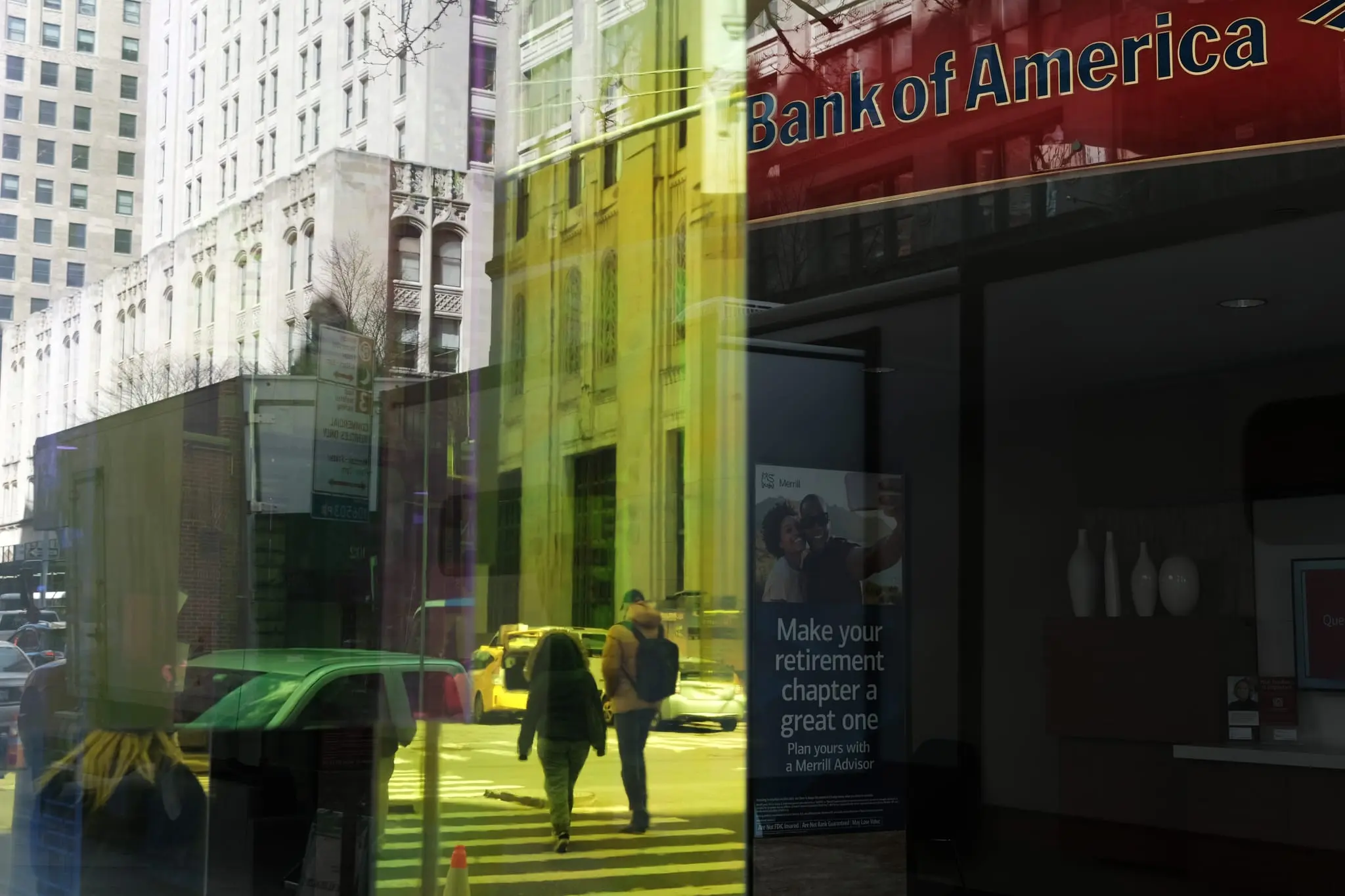
Under the Biden administration, the federal government pressured the nation’s nine largest financial institutions to deny services to customers based on political and religious beliefs, according to a new major government report.
The Office of the Comptroller of the Currency (OCC) published an Oct. 14 report finding that JPMorgan Chase Bank, Bank of America, Citibank, Wells Fargo Bank, U.S. Bank, Capital One, PNC Bank, TD Bank, and BMO Bank all engaged in “debanking” conservatives and Christians between December 2020 and December 2024, often at the behest of then-president Joe Biden and his administration through federal regulatory agencies.
The banks cited “reputational risk,” which allows financial institutions to terminate or close accounts and deny the opening or operating of accounts, effectively barring individuals and companies from conducting business and financial transactions due to perceived “risk” to the financial institutions’ credibility and reputation.
“Reputational risk” policies are generally legally required to protect corporate shareholders, but the policies that the banks put in place were overly “broad,” the OCC report found, and “lacked clear standards and objective, risk-based criteria.”
As a result, those policies “disadvantaged certain Americans based on their political, religious, or social views or based on their lawful business activities.”
The report investigated more than 100,000 complaints related to “debanking” and reviewed more than 50,000 bank records. According to the data, banks often responded to pressure from the Biden administration and left-wing organizations like the Southern Poverty Law Center (SPLC) to label conservative individuals and businesses and conservative and Christian organizations as “reputational risks” due to claimed promotion of “hate,” “violence,” or “intolerance.”
JPMorgan Chase’s payment program WePay, for example, closed the accounts of merchants selling hats and t-shirts supporting President Donald Trump, the Republican Party, and Trump’s “Make America Great Again” slogan. Internal screening systems flagged terms like “Make America Great Again,” “MAGA,” “America First,” and “Trump won” and claims that Biden’s presidency was illegitimate as signs of “reputational risk” and reason to terminate accounts.
In other cases, merchants and organizations were “debanked” due to social media posts, with one merchant’s accounts being closed due to social media posts calling Black Lives Matter activists “Marxists” and referring to Biden as “the enemy.”
Certain Christian organizations’ accounts were closed due to the organizations’ positions on LGBT issues, marriage, family, and abortion. Organizations designated as “hate groups” by the SPLC were frequently “debanked.”
According to the report, PNC Bank refused a line of credit to a media company because one of the owners was branded a “conservative commentator” and another ran a foundation that had “funded several Christian conservative groups, including several identified as hate groups by the Southern Poverty Law Center.”
>> FBI cuts ties with far-left SPLC, a ‘partisan smear machine’ <<
In other cases, banks refused to do business with legitimate businesses in fields “disfavored” by the Biden administration, such as firearms manufacturers and merchants, private prisons and detention centers, and oil and gas companies.
“Under the Biden administration, banks could face greater supervisory pressure to move away from lending to the firearms industry,” a Wells Fargo reputation risk review said.
Bank of America cited “changing policymaker attitudes” to terminate business with privately-owned prison and detention center operators, later attempting to re-open those same accounts shortly after Trump returned to office in 2025.
In some cases, the fear of public backlash or protests was enough to prompt financial institutions to “debank conservatives and Christians.”
“Fear of being on the wrong side of public opinion led at least one bank to distance itself from certain customer affiliations that could possibly be viewed as ‘partisan,’” the report said. "Mere allegations, negative press, or negative reviews contributed to some banks declining to serve average Americans, even in the absence of any validation of the underlying facts or concerns...”
Comptroller of the Currency Jonathan Gould said in an Oct. 14 statement that the banks had clearly “discriminated against” Americans due to constitutionally-protected speech and conduct.
“Americans should have access to financial services regardless of their beliefs, affiliations, or political views,” he said. “Fair access to financial services is not a mantra — it is a mandate.”
Gould said the Trump administration seeks to end the “weaponization” seen under the Biden administration, but cautioned that the reforms that the investigated banks have subsequently put in place may not be enough to prevent abuse.
“Notwithstanding certain efforts by the largest banks to rein in these practices, I am not confident that they will be enough,” Gould said. “Accordingly, the OCC will be assessing further changes to the regulatory and supervisory framework applicable to the largest banks to reduce the likelihood of these harmful practices recurring in the future.”
John Berlau, senior fellow and director of finance policy at the Competitive Enterprise Institute, told Zeale News that the banks’ conduct reported by the OCC is “very troubling” and urged Congress to take action, noting that federal pressure on banking institutions had been weaponized under the Obama-era Operation Choke Point.
Launched in 2013, Operation Choke Point was a Department of Justice initiative that investigated banks for doing business with merchants deemed at high risk of fraud or money laundering. Critics argued that the program bypassed due process and targeted industries and merchants without demonstrating first that they had violated the law.
Former Oklahoma governor and president of the American Bankers Association Frank Keating argued that the probe targeted businesses for “simply doing something government officials don't like,” forcing banks to “choke off” access to financial services.
Berlau likened the weaponization seen under the Biden administration to the abuses of Operation Choke Point.
“Regulators and politicians threatening banks with failure of reputational risk measures led to much of the debanking in the Obama administration’s ‘Operation Choke Point’ and similar initiatives by the Biden administration,” he said.
“This is yet one more reason that Congress needs to end regulators’ use of the nebulous concept of ‘reputational risk’ in the examination and supervision of banks,” he continued. “The Senate must follow the House’s lead and pass into law the Financial Integrity and Regulation Management (FIRM) Act, which would forbid federal regulatory agencies from pressuring banks to cut off financial services on the basis of ‘reputational risk.’”
Jeremy Tedesco, the senior vice president of Alliance Defending Freedom’s Counter Censorship Task Force, told Zeale News that Congress and state legislatures should follow the Trump administration’s lead in addressing the issue of “debanking.”
“The OCC’s report underscores how states like Tennessee, Idaho, and South Carolina, which have all enacted laws to protect their citizens against discriminatory debanking, have ‘likely acted as a catalyst for changes in many banks,’” he said. “ADF commends the OCC and Trump administration for bringing this threat to light and acting decisively to bring meaningful change, and urges lawmakers in other states, and in Congress, to follow their lead.”
Tedesco said that the “rampant abuse” evidenced by financial institutions in the OCC report is “alarming enough on its own,” but that the threat is compounded by the outsized influence wielded by left-wing groups like the SPLC.
“No one should be denied access to basic financial services because of their political or religious beliefs,” he said. “ADF has been deeply concerned about the rise of politicized debanking for years and has worked diligently to combat this unlawful behavior at every turn, including partnering with state legislators and federal officials to secure the fundamental freedoms of every American.”


Comments