ANALYSIS: Vance-led coalition targets abuse of work visa programs
For nearly 50 years, employers and employees alike have been abusing the H-1B worker visa program, but the vice president and his allies are working to put a stop to it.
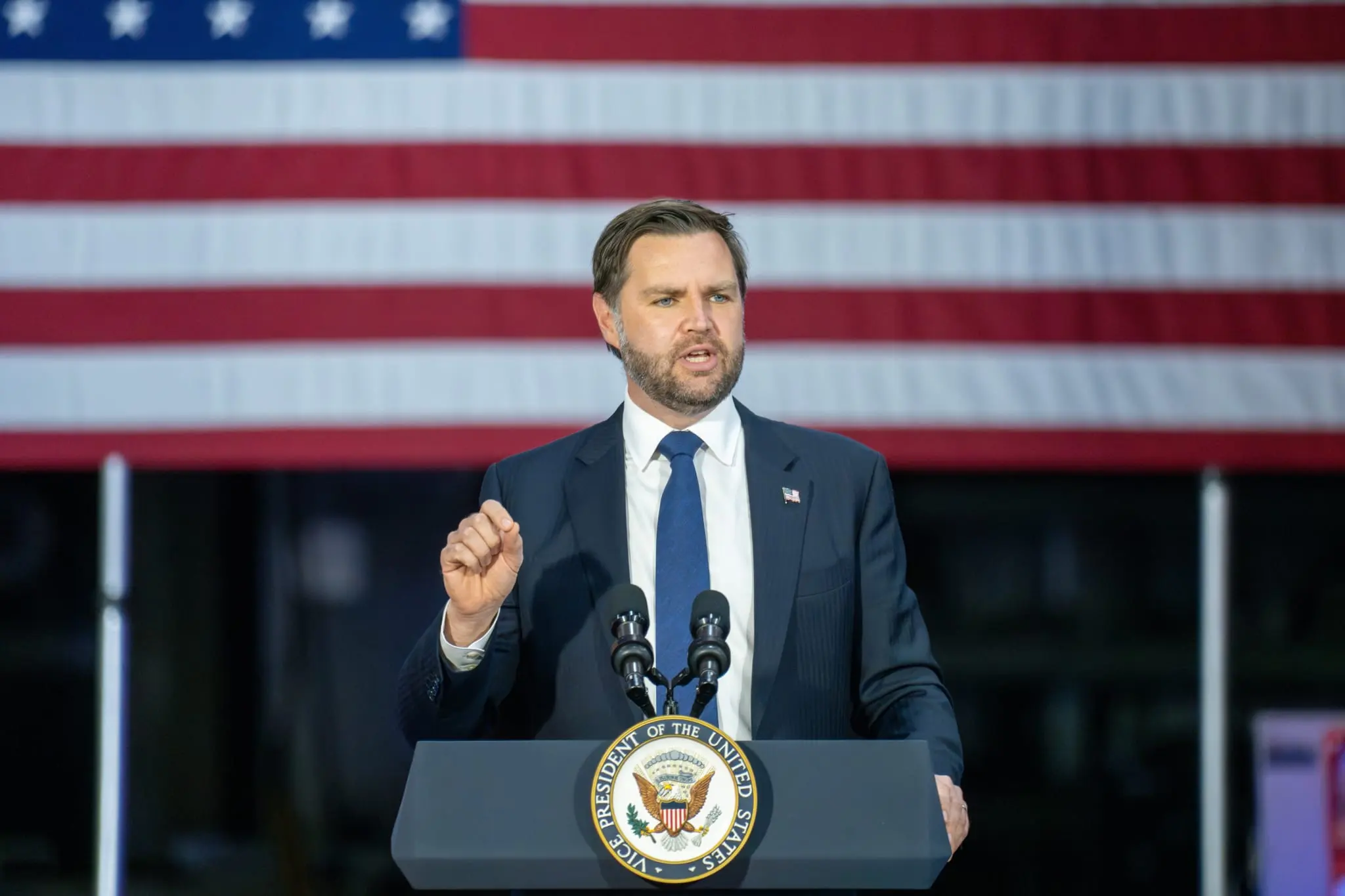
Vice President JD Vance is leading a coalition of federal government officials in exposing the abuse of temporary worker visas — abuse committed by both employers and employees.
In response to President Donald Trump’s plans to impose a $103,000 fee on H-1B visa applications, Vance said in a social media post, “If an American corporation needs workers, it should hire and train Americans.”
The announcement of the six-figure fee triggered a visceral reaction online, with CEOs of foreign extraction and H-1B employees themselves heaping abuse upon the American workers that Vance was championing.
Silicon Valley investor Ankit Gupta, a general partner at tech startup and venture capital firm Y Combinator, described Vance’s advice to hire Americans as a return of “DEI” (diversity, and equity, and inclusion) policies favored by Democrats. In a now-deleted X post, Gupta reposted the Vice President’s comment and said that “DEI is back.”
United front
Gupta’s comment was met with swift responses from Trump administration officials.
“No, Ankit. It’s called putting your own citizens first. American companies. American jobs. American workers first,” replied U.S. Department of Labor (DOL) Inspector General Antony D’Esposito.
“If that offends you, the problem isn’t America. It’s your sense of entitlement,” he added.
In a separate post, D’Esposito continued, “American jobs belong to American workers, not visa mills gaming the system for cheap labor.”
He pledged to collaborate with the U.S. Department of Justice (DOJ) to identify, investigate, and prosecute visa fraud, adding, “America First means American workers first.”
Assistant Attorney General Harmeet Dhillon of the DOJ’s civil rights division also replied to Gupta’s comment, listing a myriad of measures that U.S.-based employers use to circumvent or outright violate U.S. labor laws and import cheap foreign labor instead of hiring American workers.
“Our federal (and most state) employment laws mandate a level playing field for American workers vis-à-vis foreigners — yet many American tech (and other) companies prefer to hire cheaper/exploitable foreign workers to do routine jobs Americans could do,” Dhillon said.
Corporations and hiring managers will refuse to post available jobs on their normal hiring channels, advertise open positions to foreigners before Americans, abuse H-1B visas to hire foreign labor at lower costs than American workers, lie about eligibility for unlimited H-1B hiring, abuse other visa categories like the J-1 (cultural exchange), and abuse other programs like the Optional Practical Training (OPT) available to foreign students, effectively rolling foreign student visas directly over into H-1B visas. Dhillon added that corporations may become “super arrogant" and “gaslight laid-off and sidelined Americans while doing any of the above.”
“These are not good business practices; they are not patriotic economic practices; and they are illegal labor practices,” Dhillon concluded. “This administration will not allow American employers to discriminate against American workers. It is illegal, wrong, and bad for our economy.”
U.S. Equal Employment Opportunity Commission (EEOC) Chairwoman Andrea Lucas agreed with D’Esposito and Dhillon.
“Treating American applicants worse and preferring non-American guest workers—to exploit and control while simultaneously paying them less—is the opposite of merit-based hiring,” she said. “And it’s illegal. Full stop. This Admin is united to fight back.”
Federal Trade Commission (FTC) Chairman Andrew Ferguson suggested that Y Combinator may be “nothing more than a front for the far left,” animated by racial resentment against Americans.
“I’m deeply uncomfortable with wealthy investors attacking American workers like this. I’m afraid it’s increasingly obvious to many people that individuals such as this guy do not have the best interests of America and her citizens in mind,” he said in an X post. “The purpose of the American economy is to promote the general welfare of American workers, not provide jobs for the rest of the world.”
What is an H-1B visa?
According to U.S. Citizenship and Immigration Services (USCIS) data reviewed by Zeale News, there were 583,420 active H-1B workers in the U.S. as of early 2026. That number does not include the tens of thousands of H-4 dependents (usually spouses and children of H-1B workers), H-1B workers whose visas have been approved but who have not yet started working, or H-1B applicants currently in consular processing. Some estimates place the number of H-1B visa-holders in the U.S. as high as 700,000.
The H-1B visa was originally created by Congress in the Immigration and Nationality Act (INA) in 1952. Originally, there was only one category: H-1, which allowed the temporary entry into the U.S. of “an alien having a residence in a foreign country which he has no intention of abandoning who is of distinguished merit and ability and who is coming temporarily to the United States to perform temporary services of an exceptional nature requiring such merit and ability.”
In 1990, under then-president George H.W. Bush, the H-1 visa was split into two categories: the H-1A was for nurses to temporarily live and work in the U.S. and the H-1B was for workers in a “specialty occupation.”
Workers who enter the U.S. on an H-1B can stay and work in the country for a maximum of three years before they are required to return home, obtain a different type of visa, or renew their H-1B visa. Each H-1B visa can only be renewed once, for a total of six years in the U.S. for each worker on that particular classification of visa.
How do H-1B visas disadvantage American workers?
Importing foreign workers in any field automatically creates artificial job scarcity in that field, making it more difficult for American workers to compete for jobs in their own country. What makes it even more difficult is the fact that corporations routinely pay H-1B workers significantly less than they would be required to pay their American counterparts.
H-1B workers are generally paid on a four-level scale, with the two lowest levels being below the median wage for a given position and a third level being the median wage; only one level pays above the median wage.
Numerous studies from the Economic Policy Institute (EPI) have found that the vast majority of H-1B workers are paid at the two lowest levels on the scale. In most cases, around three-fifths of H-1B workers are paid at the lowest two levels, well below median income for the given position. The low level of pay makes it more attractive for corporations to hire H-1B workers than costlier American workers.
In many instances, American workers have been fired, replaced with H-1B workers, and made to train those new employees as a condition of severance receipt. EPI research associate and Howard University public policy professor Ron Hira testified before Congress in 2016 on the abuses of the H-1B program. He recounted that Southern California Edison, Disney, and IT corporations had laid off American employees and required them to train their H-1B replacements as a severance condition. In most cases, he found, the H-1B workers were paid 40% to 50% less than the American workers they replaced.
Center for Immigration Studies (CIS) senior legal fellow George Fishman, a veteran Homeland Security attorney, pointed out in a recent analysis that there is actually no legal prohibition against firing American workers and hiring H-1B workers in their stead.
“For years, waves of layoffs have buffeted technology workers,” he wrote, noting that tech sector layoffs since 2022 have ranged from 830,000 to upwards of 1.34 million. Many of those laid-off Americans were either replaced by H-1B workers or else their jobs were exported overseas.
Having to spend less on H-1B workers also encourages corporations to lower wages overall, which discourages American workers from applying for those jobs, thus making it easier for corporations to hire more H-1B workers at decreased wages.
The INA defines the “specialty occupations” that H-1B visas can be used for as those requiring both “theoretical and practical application of a body of highly specialized knowledge” and “attainment of a bachelor's degree or higher degree in the specific specialty (or its equivalent) as a minimum for entry into the occupation in the United States.”
Foreign nations do not, however, always adhere to the same moral and ethical standards as the U.S. For example, Manav Bharti University in India reportedly sold at least 36,000 fake bachelor’s and master’s degrees. Many of those who purchased the fraudulent degrees then went on to apply for and obtain H-1B visas, replacing American workers in jobs for which they were not qualified. Police in India have found nearly 30 such universities selling fake degrees, indicating that the problem is far from isolated.
Fixing the problem
Jessica Vaughan, director of policy studies at the CIS, told Zeale News that the H-1B visa program is rife with fraud, including discrimination against American workers, but that there are also underlying problems with the program.
“These are legitimate problems, but they can distract lawmakers from a more fundamental discussion of whether the H-1B program is needed at all,” Vaughan said.
Those who support and regularly use the H-1B program erroneously claim that high levels of H-1B workers stimulate innovation and wages and that Americans are unable or unwilling to fill open jobs.
“The idea that a country of 365 million people with top notch universities and one of the most robust market economies in the world would have a shortage of skilled workers is nonsensical,” Vaughan said.
If the government does not intervene and import foreign workers, she suggested, then the market will easily adjust to temporary or spot labor shortages.
“Institutions and employers will adapt to train and recruit new workers as needed. Wages should rise to incentive and attract workers. This is how a free market works,” she said, “but our labor market should not be so free as to force American workers to compete with millions of foreign workers who will inevitably undercut them on wages. This is not in our national interest.”
Vaughan said that Vance is right to encourage hiring American workers over imported foreign labor, recommending that foreign labor be used sparsely to supplement the American workforce with truly exceptional innovators.
“Young Americans need to believe that if they aspire to these careers they can work hard to learn the skills and be rewarded with job opportunities,” she said.
“The suggestion that prioritizing hiring Americans is some kind of reverse-DEI program to prop up less-qualified native workers is just wrong and insulting. It reveals a certain disdain for Americans too,” Vaughan continued. “It's as if they believe their own false narrative that H-1B is actually a skilled worker program instead of a cheap labor program. It shows that the Indian staffing companies who have been allowed to get rich and create insular, caste-driven communities here where they dominate are now worried that their gig is jeopardy.”


Comments