California archbishop: Mexico’s martyrs still shape Los Angeles Church and warn of persecution today
Marking 100 years since Mexico's anti-Catholic law, Archbishop Gomez tells the story of a relic of Juan Diego’s tilma in the Los Angeles Cathedral, a 1926 persecution that shaped Southern California's Catholic community, and the global toll of Christian persecution that continues today.
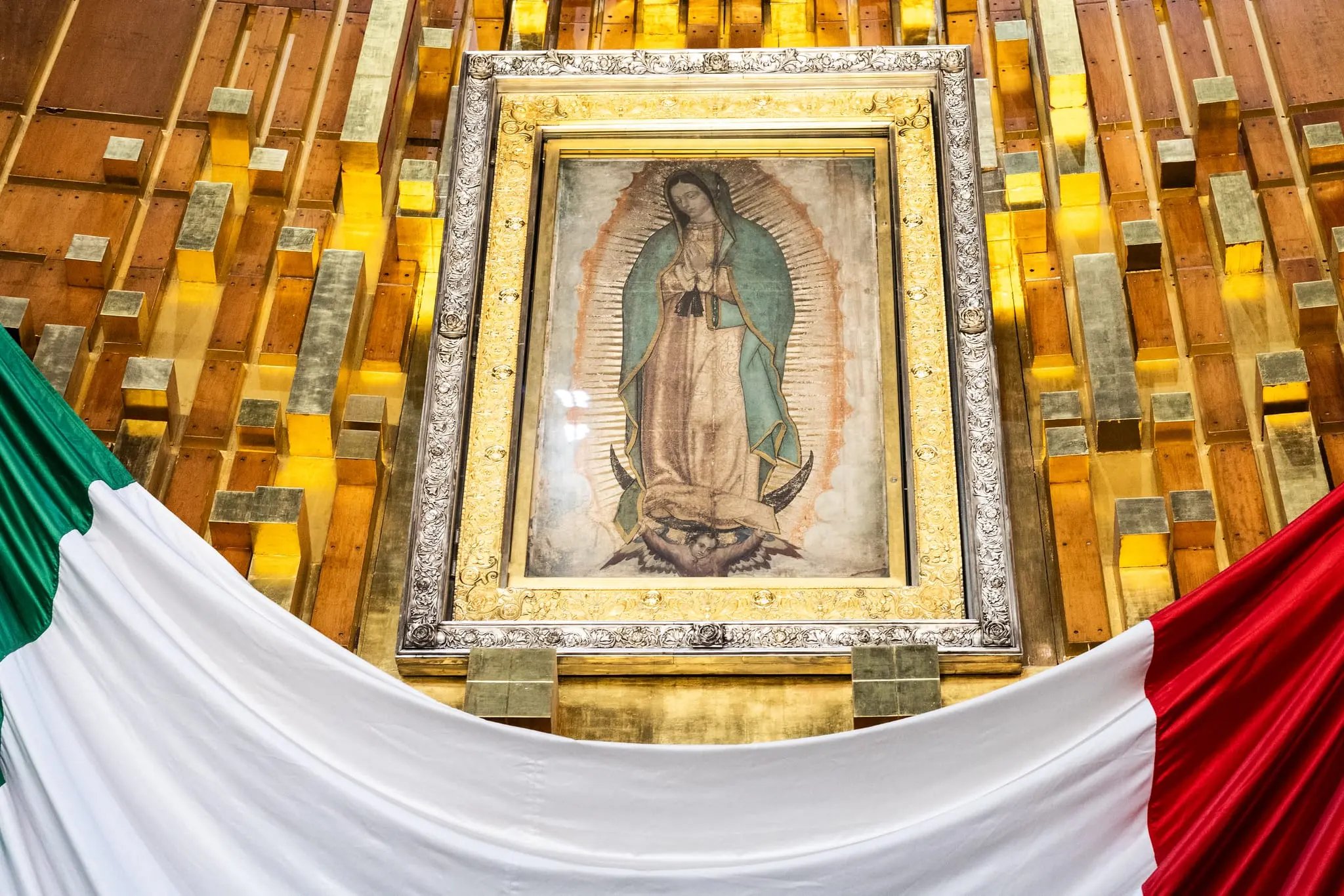
Archbishop José Gomez of Los Angeles is calling on Catholics to remember the Mexican martyrs of the 1920s, writing this week that the persecution of their families who fled a century ago still shapes the Church today and remains a warning as Christians worldwide continue to face violence.
In a column published Sept. 14 by Angelus News, Archbishop Gomez pointed to a small but significant relic in the Cathedral of Our Lady of the Angels: a fragment of the tilma bearing the image of Our Lady of Guadalupe, believed to be the only such relic in the U.S. The history of the relic is closely linked to the persecution that took place in Mexico following the imposition of a law by President Plutarco Elías Calles in 1926. The law criminalized much of the Church’s public ministry, leading to the seizure and destruction of churches and convents, the killing of priests, and the imprisonment and murder of ordinary Catholics, including teenagers. The ensuing war between the government and believers is known as the Cristero War.
Archbishop Gomez’s predecessor, Archbishop John Cantwell, was given the relic of the tilma in 1941 by the archbishop of Mexico City in gratitude for sheltering thousands of Catholics who fled to Los Angeles during the years of persecution that followed the introduction of the Calles Law.
Archbishop Gomez cautioned that “we can never take our religious freedom for granted” and urged current generations to learn the stories of the era’s martyrs. Among those he named were: Blessed Miguel Pro, a Jesuit priest executed by firing squad with his arms outstretched like Christ on the cross while declaring “Viva Cristo Rey! (Long live Christ the King!)”; Blessed Salvador Huerta Gutiérrez, a father of 12 and auto mechanic who was tortured to learn the whereabouts of his two priest brothers, but he said nothing. The next day he was led with his brother Ezequiel to their execution at the local cemetery. He asked for a lighted candle, held it in front of his chest, and cried out: "Long live Christ the King and Our Lady of Guadalupe! Shoot me so that I will die for God, because I love him”; The Servant of God María de la Luz Camacho, a 27-year-old catechist shot through the heart defending her church from anticlerical vandals; and St. José Sánchez del Río, a 14-year-old who was brutally tortured and killed after refusing to renounce his faith.
The Mexican bishops’ conference marked the anniversary with its own message, which Archbishop Gomez quoted directly, describing Christian memory as “not nostalgia for the past” but “strength for the present.” The bishops further urged Catholics to see that the martyrs’ rallying cry of “Long live Christ the King and Our Lady of Guadalupe,” is a reminder “that no human power is absolute, because God alone is the Lord of conscience and of history.”
That history remains close to the surface for many Los Angeles Catholics. In April, relics of 36 martyrs from Mexico’s Cristero War toured the archdiocese, including a stop at the cathedral that drew hundreds.
Among them was Jorge Cardenas Magallanes, who said he learned only as an adult that St. Cristóbal Magallanes, a priest who opposed armed resistance and urged reconciliation before he was killed, was his great-great-uncle. Historian Jean Meyer, who has studied the era for decades, told the gathering that a long informal silence between the Church and the Mexican state kept the full history hidden from most Catholics for years, recalling that he was denied access to Church archives as a young researcher in 1965 out of what he now calls “prudence.”
Archbishop Gomez’s column also placed Mexico’s history in a global present-day context, citing Vatican estimates that Christians remain the most persecuted religious group in the world today.
Archbishop Ettore Balestrero, the Holy See’s representative to the United Nations in Geneva, said in March that nearly 400 million Christians worldwide face persecution or violence and that roughly 5,000 were killed for their faith in 2025, an average of 13 people a day. Balestrero also pointed to subtler pressures closer to home, citing over 2,200 recorded violent incidents against Christians in Europe in 2024 alone, including prosecutions tied to silent prayer near abortion facilities.


Comments