Cardinal Pizzaballa: In the Eucharist, God’s life meets the wounds of the Holy Land
In a June 4 homily delivered for the Solemnity of Corpus Christi, Cardinal Pierbattista Pizzaballa, the Latin Patriarch of Jerusalem, urged Christians in the Holy Land to draw life from the Holy Eucharist amid the region’s great suffering, fragility, and tensions.

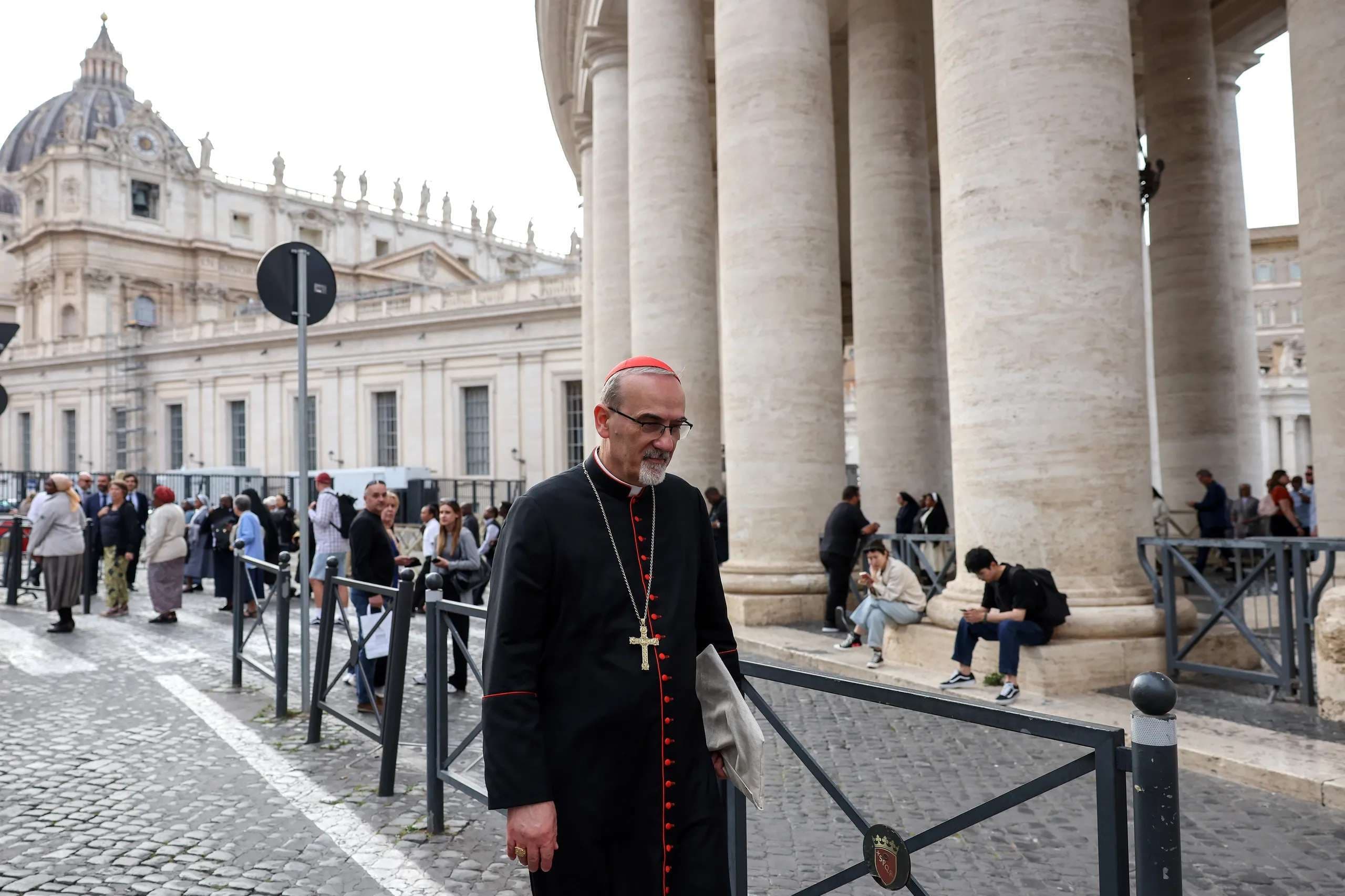
In a June 4 homily delivered for the Solemnity of Corpus Christi, Cardinal Pierbattista Pizzaballa, the Latin Patriarch of Jerusalem, urged Christians in the Holy Land to draw life from the Holy Eucharist amid the region’s great suffering, fragility, and tensions.
Speaking at the Church of the Holy Sepulchre in Jerusalem — honored as the site of Christ’s Crucifixion, burial, and Resurrection — Cardinal Pizzaballa reflected on Jesus Christ’s words in the Gospel of John: “I am the living bread that came down from heaven… whoever eats of this bread will live forever” (Jn 6:51).
As Latin Patriarch of Jerusalem, Cardinal Pizzaballa shepherds Catholics living amid the ongoing tensions and violence affecting the wider Holy Land.
Cardinal Pizzaballa said the feast centers on the mystery of divine life, which flows from the Father, is given to the Son, and is offered to humanity through the Eucharist. John’s Gospel, he said, emphasizes the word “life” — not just any life, but “the very life of God, which does not remain closed in on itself but gives, communicates, and offers itself.”
“In a land where the fragility of life is often felt, where life is not always respected as it should be, where many people carry wounds, fears, and uncertainties in their hearts,” he said, “the Word of God reminds us that life does not arise from our efforts or our fragile balances, but has a deeper source: God himself.”
Cardinal Pizzaballa described the Eucharist as Christ’s real and continuing gift of life to the Church. In the Eucharist, he said, God does not merely teach humanity about life; he becomes its nourishment.
“Receiving the Eucharist is not simply a devout act; it is welcoming the life of Christ into ourselves,” he said. “And once received, this life does not remain still.”
The Eucharist should bring about a concrete transformation in the Christian life, the cardinal explained. Just as bread becomes energy and movement in the body, he said, Christ’s life should become charity, forgiveness, and self-giving in those who receive Him.
“If we truly receive Christ within us, then something within us must change,” he said. “Love received becomes love given, forgiveness received becomes forgiveness offered, life received becomes life shared.”
While placing the feast within the context of suffering in the Holy Land, Cardinal Pizzaballa said Corpus Christi does not invite Christians to polemics or discouragement, but to a deeper way of seeing — one formed by the gaze of God.
“Amid tensions, divisions, and hardships of this land, the Eucharist reminds us that God’s logic is different: it is not the logic of holding back, but of giving; not the logic of closing oneself off, but of sharing,” he said. “It is a logic that may seem fragile in the eyes of the world, but in reality, it is the only one capable of truly building.”
The patriarch said the Eucharist does not erase the region’s problems, but it changes the way Christians live within them. The Sacrament calls the faithful to safeguard life, offer concrete gestures of peace, and resist relationships shaped by fear.
“There is a deep connection between this place and the Eucharist,” Cardinal Pizzaballa said of the Holy Sepulchre. “Here we see to the fullest what ‘a body given’ means: a body handed over on the cross, a body laid in the tomb, but also a body that the Father has restored to life. Here we understand that gift is not loss, but a passage to fullness.”
The mystery of Corpus Christi, he said, proclaims that the life given by God is stronger than sin, violence, and death itself.
“The gift passes through the cross, but does not stop there. The gift generates life,” Cardinal Pizzaballa said. “And this is the great proclamation of today: the life given by God is stronger than everything that contradicts it.”
He concluded by asking for “a simple yet essential grace: not only to receive Christ, but also to allow ourselves to be transformed by Him.”
“Let us pray for the grace never to become accustomed to this gift, but to rediscover its newness each time,” Cardinal Pizzaballa said. “Here in Jerusalem, may we become men and women who live not for themselves, but according to the logic of the Gospel: receiving in order to give, living in order to give life.”
He also asked the Virgin Mary, whom he called a “Eucharistic woman,” to intercede for the faithful.

Comments