Op-ed urges Pope Leo to reconsider Vatican's China policy amid reported crackdown
A human rights advocate urges Pope Leo to reconsider Vatican policy on China, citing the country's severe Christian persecution.

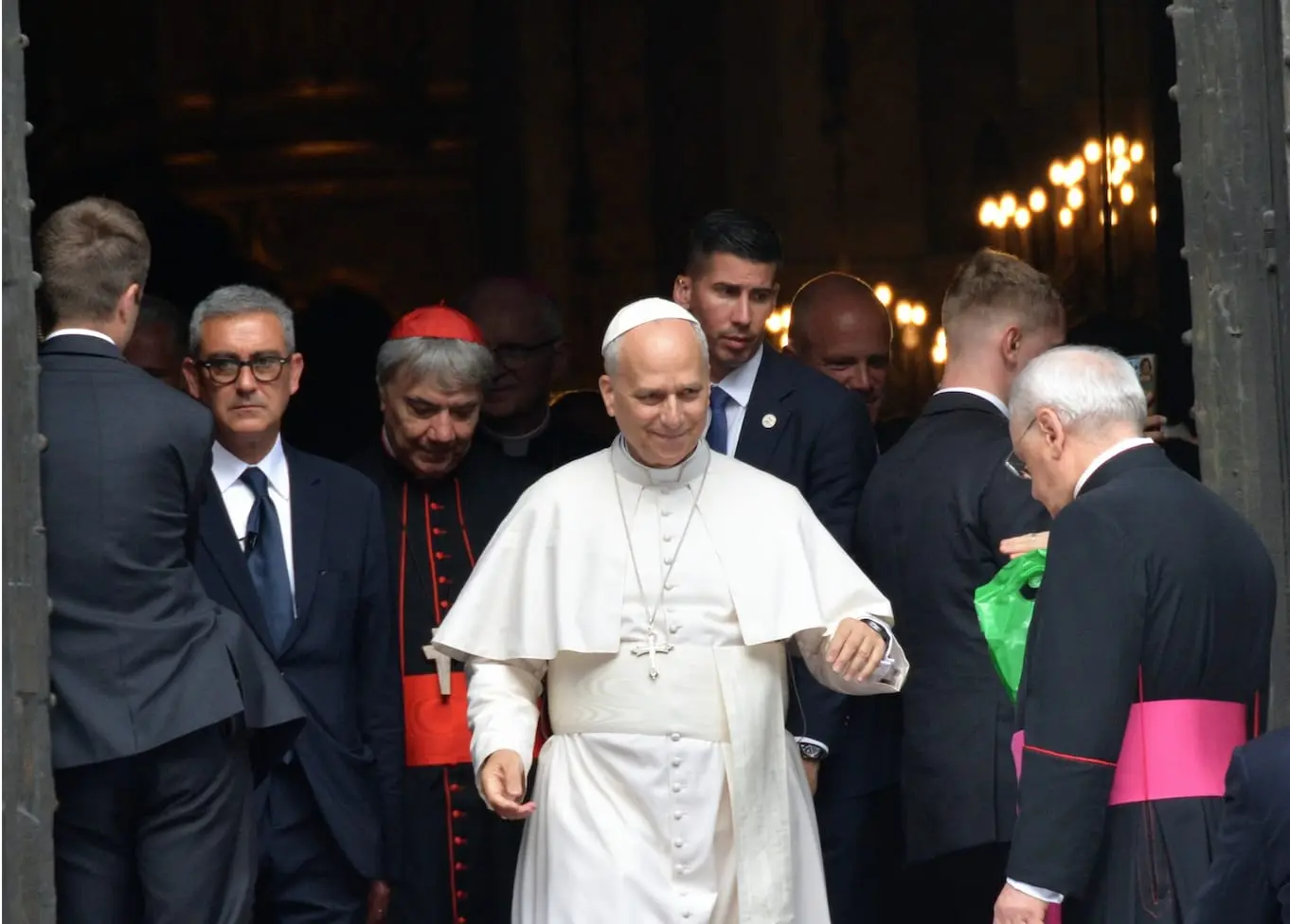
A human rights advocate is urging Pope Leo XIV to reconsider the Vatican's approach to China, arguing that Beijing's treatment of Christians has reached its worst point in decades and that the Holy See should take a tougher stance before renewing its agreement with China on bishop appointments.
In a July 16 op-ed published by Union of Catholic Asian News, Fortify Rights Senior Director Benedict Rogers wrote that persecution of Christians under Chinese leader Xi Jinping has intensified to levels "not seen perhaps since the Cultural Revolution" and the Vatican's response has been "disturbing."
"It is no exaggeration to say that this is the darkest time since the Mao era for Christians — Catholics and Protestants — and it shows no sign of easing any time soon," Rogers wrote.
Rogers cited a recent Telegraph report detailing arrests of Christians attending unregistered churches, arguing the campaign reflects what he described as an effort to force loyalty to Xi over religious belief. He said China's decade-old policy of "Sinicization of religion" has resulted in state-controlled churches displaying images of Xi alongside or instead of religious imagery, installing surveillance cameras, and destroying crosses and churches.
The commentary also highlighted the recent release of Pastor Ezra Jin after nearly nine months in detention, calling it a reason to intensify advocacy for other imprisoned Christian leaders rather than ease pressure on Beijing. Rogers noted that he and his colleagues worked alongside Jin’s daughter to press for the pastor’s release and noted that President Donald Trump also raised Jin's case during a private meeting with Xi.
While Jin’s release “means the world” to his family, the development “is but a fig-leaf covering far wider, darker, and more intense repression of others, including the continued detention of eight other Zion Church pastors and leaders,” Rogers warned.
“As I wrote just over a week ago, we must not allow Pastor Jin’s release to be an excuse to rest. We must take his release as evidence that advocacy — and prayer — can work, and we must redouble our efforts to free many others jailed for their faith in China,” he continued.
Turning to the Vatican, Rogers argued "now is the time" for a "complete rethink" of Sino-Vatican relations.
"At a time when the Chinese regime is intensifying persecution of Christians to a level not seen perhaps since the Cultural Revolution, the silence from Rome is disturbing," he wrote.
Rogers called on Pope Leo to pray publicly for Christians in China during the Sunday Angelus and specifically mention imprisoned Hong Kong Catholic publisher Jimmy Lai, a Catholic and outspoken pro-democracy advocate who was sentenced to 20 years in prison earlier this year under China’s national security law.
Rogers commended Pope Leo for receiving Lai’s wife and daughter at a General Audience in October 2025, saying the Pope set an excellent example in this gesture; he also urged the Pope to build on this by praying publicly for Lai. As Zeale News reported, in the wake of the sentencing, Pope Leo said March 3 he “can't comment” on the imprisonment of Lai.
He also urged Pope Leo to signal that the Vatican's agreement with Beijing on the appointment of bishops, which is scheduled for renewal in 2028, could be suspended unless religious freedom conditions improve, including the release of jailed Catholic bishops, priests, and Protestant pastors.
The commentary also criticized the U.S.-China Catholic Association, which Rogers said has faced accusations of advancing the Chinese Communist Party's interests. While emphasizing that he supports dialogue with the Chinese people, Rogers argued engagement with Beijing should place religious freedom at the center of any future discussions.
"Few people — and certainly not me — would be against dialogue, but the question is: on whose terms and with what purpose?" Rogers wrote. "If it is an honest dialogue about human rights and religious freedom ... then it might well play a helpful role. But if it is simply another meaningless kowtow at Beijing's altar, then it deserves all the opprobrium it gets."
Rogers concluded by urging the Vatican and Catholic organizations engaged with China to make religious freedom the central priority in future relations with Beijing while maintaining carefully considered channels of communication.


Comments