Cardinal Pizzaballa washes priests’ feet during Holy Thursday Mass, speaks of ‘a love that humbles itself’
At the Church of the Holy Sepulchre — the site of Christ’s crucifixion, burial, and Resurrection — on April 2, Cardinal Pierbattista Pizzaballa, the Latin Patriarch of Jerusalem, celebrated Holy Thursday Mass, during which he washed the feet of priests, a ritual resembling how Christ washed the feet of His apostles at the Last Supper.

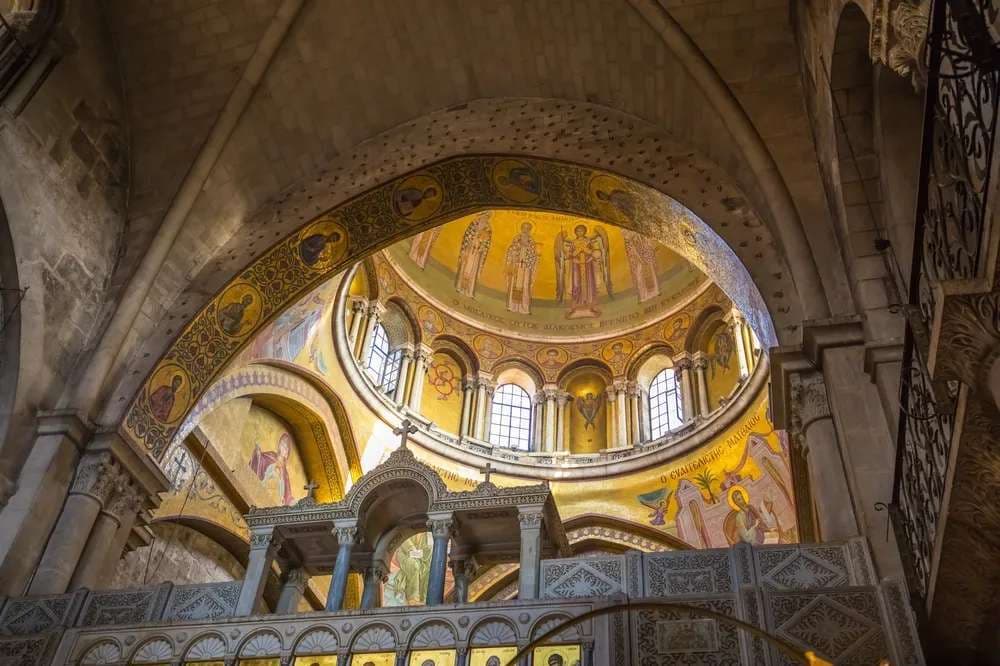
At the Church of the Holy Sepulchre — the site of Christ’s crucifixion, burial, and Resurrection — on April 2, Cardinal Pierbattista Pizzaballa, the Latin Patriarch of Jerusalem, celebrated Holy Thursday Mass, during which he washed the feet of priests, a ritual resembling how Christ washed the feet of His apostles at the Last Supper.
In the homily, Cardinal Pizzaballa noted that Saint Peter initially refused to allow Christ to wash his feet — not out of modesty, but out of refusal for “a Lord who bends down.” However, Christ tells “Unless I wash you, you will have no part with me,” — using the word “part” to imply not a role, but communion, according to Cardinal Pizzaballa. This communion requires allowing oneself to be loved by Christ and allowing oneself to be served, so as to in turn, be able to serve others.
Peter wanted to “set the conditions of love,” but Cardinal Pizzaballa emphasized: “True love does not remain at a distance. It comes down. It touches. It exposes itself. In this, we can all recognize ourselves. We too often wish for a God who would lift us up without unsettling us, who would restore our dignity without passing through our fragility.
“And yet today, here, we are asked to do something far more demanding: to allow ourselves to be loved to the very end. To let Christ bend down precisely where we feel shame. To let him enter our poverty, our inconsistencies, our sins. Only in this way can we truly have a part with him.”
He then drew on the relationship between the celebration of the Eucharist and the washing of the feet, stressing that following Christ necessitates following His way of life.
As Scripture relates, Christ says over the bread, “This is my body, which is for you.”
“‘For you.’ Not for himself. Not for self-assertion. Not to defend a cause. ‘For you’ means a body handed over, a body given, a body that holds nothing back,” Cardinal Pizzaballa said. “That body, at the supper, takes the form of a body that bends down.”
“The Eucharist cannot be separated from the washing of the feet,” he continued. “They are not two different moments; they are two expressions of the same love. The body broken on the altar is the same body that kneels before the disciples. If we separate the two, we lose the meaning of both.”
Cardinal Pizzaballa said in the homily that the faithful are called not only to adore Christ but also to take part in His way of life.
“It is not enough to look upon Jesus as he bends down; we must decide whether we want to have a part with him. And to have a part with him means accepting that our own lives will be drawn into the very movement of his life,” he said.
He noted that after washing the Apostles’ feet, the Lord instructs them to wash one another’s feet, which is not a coincidence but “an inevitable consequence.”
“Those who have a part with him take on his form. Those who enter into his Passover also enter into his way of living,” he reiterated.
To carry out this instruction from the Lord, however, one must first allow oneself to be washed, he explained, saying, “Only those who have accepted being loved in this way can love in this way. This is why the first conversion is not about doing something for others, but about ceasing to resist the love of Christ.”
Cardinal Pizzaballa challenged the faithful to reflect on the implications of the tradition of washing of the feet during Holy Thursday Mass.
“Dear friends, the question this liturgy places before us is simple and radical: do we wish to have a part with him? Not in the abstract, but concretely,” he said. “Do we want to enter into a love that humbles itself? Do we want a salvation that comes through service? Do we want a God who does not dominate, but bends down?”
Those who say “yes” begin “an exodus,” a journey to seeing reality in a radically new way, according to the cardinal. This will be a journey from self-defense to self-giving, he said, “from fear to trust, from pride to communion.”
He noted that the Church of the Holy Land is not walking along an easy path but is tested and sometimes “tempted to defend itself rather than to give itself.”
However, Jesus “does not ask us to be powerful,” Cardinal Pizzaballa said, “but to share in His life.”
Concluding, the cardinal reiterated the importance of cultivating humility, following Christ and remaining attentive to those in need.
“Today, as we celebrate the Eucharist, let us ask for an essential grace: to allow ourselves to be washed, to allow ourselves to be served, to allow ourselves to be loved without conditions,” he said. “For only in this way can we truly have a part in his life. And only in this way will our lives, little by little, take on the form of his Passover.”
.jpg&w=3840&q=75)



Comments