Iran War Day 31: Trump threatens Iran’s civilian infrastructure over Hormuz, but reportedly tells aides he is willing to end war with Strait still in Iranian control
In the early morning of the 31st day of the U.S.-Israeli war against Iran, President Donald Trump threatened to destroy civilian infrastructure in Iran if the Middle Eastern nation does not open the Strait of Hormuz. That evening, however, the Wall Street Journal reported the President had told aides he is willing to end the war without securing the waterway.

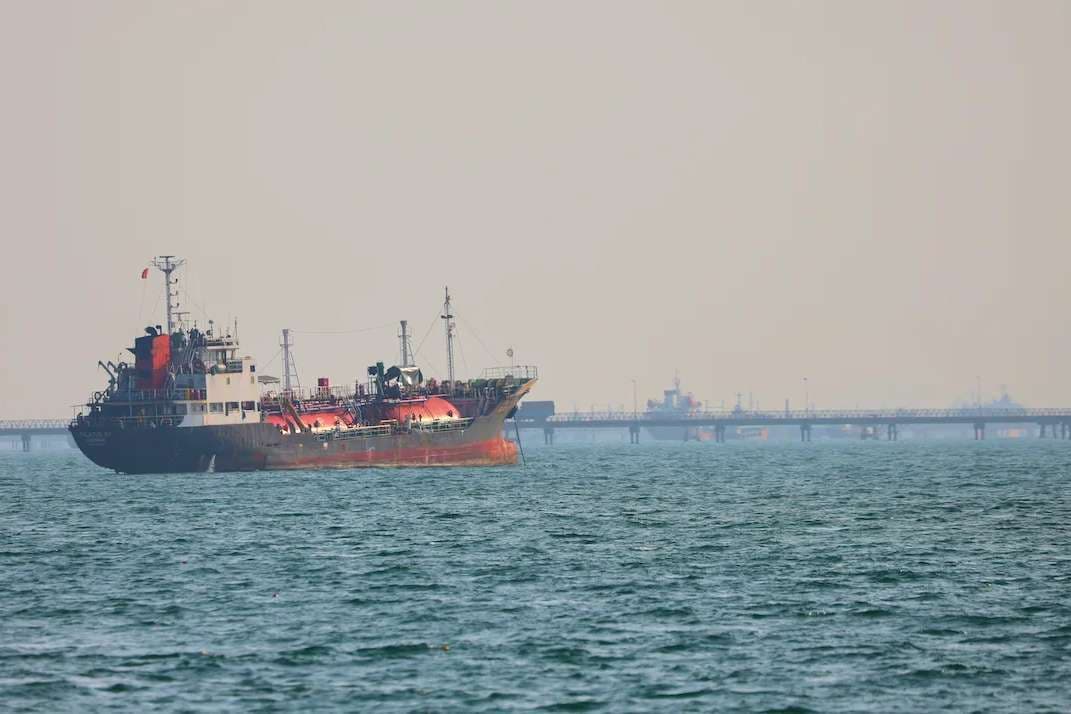
In the early morning of the 31st day of the U.S.-Israeli war against Iran, President Donald Trump threatened to destroy civilian infrastructure in Iran if the Middle Eastern nation does not open the Strait of Hormuz. That evening, however, the Wall Street Journal reported the President had told aides he is willing to end the war without securing the waterway.
Trump threatens massive attacks on civilian infrastructure, including electric & water plants
In a Truth Social post the morning of March 30, Trump said the U.S. has made “great progress” in “serious discussions with a new, AND MORE REASONABLE, REGIME” in Iran. He also threatened the "complete obliteration" of Kharg Island and “all” of the nation’s electric plants, oil wells, and desalination plants unless they immediately open the Strait of Hormuz for business.
Later in the day, White House Press Secretary Karoline Leavitt faced questions about whether Trump’s threat to target desalination plants – which are considered civilian infrastructure because they supply drinking water – amounts to a war crime under international law. Leavitt said that “of course this administration and the United States armed forces will always act within the confines of the law.”
“But with respect to achieving the full objectives of Operation Epic Fury,” Leavitt added, “President Trump is going to move forward unabated, and he expects the Iranian regime to make a deal with the administration.”
Trump previously said he would extend his deadline to April 6 for Iran to reopen the Hormuz Strait or face massive U.S. strikes on its power plants. Trump’s latest remarks come as thousands more troops arrive in the Middle East. U.S. officials told the Washington Post that the Pentagon is also preparing for what could become weeks of ground operations inside Iran, the outlet reported March 28.
WSJ report: Trump expresses openness to leaving Iran in control of the strait
The Wall Street Journal reported the evening of March 30 that Trump had “told aides he’s willing to end the U.S. military campaign against Iran even if the Strait of Hormuz remains largely closed.” The outlet cited unnamed administration officials in its report.
Leaving the strait under Iranian control would likely extend “Tehran’s firm grip on the waterway and leaving a complex operation to reopen it for a later date,” the report pointed out.
“The longer the strait remains closed, the more it will roil the global economy and boost gas prices,” WSJ added. “Multiple countries, including U.S. allies, are reeling from the downturn in energy supply that once flowed freely through the chokepoint. Industries that rely on items such as fertilizer to grow food or helium to make computer chips are suffering from shortages.”
Trump identifies Iranian official leading negotiations with US
Trump told the New York Post that the U.S. is negotiating with Iranian Parliamentary Speaker Mohammad Bagher Ghalibaf and added that the U.S. will “find out in about a week” whether Ghalibaf is willing to work with the administration. He said there has been a “total regime change” and the new people Washington is talking to have been “much more reasonable” than “regimes of the past.”
Trump also said Iran’s new Supreme Leader, Mojtaba Khamenei – the son of the late Ayatollah Ali Khamenei – is seriously injured. Khamenei has not been publicly seen since the initial Feb. 28 U.S.-Israeli strikes on Iran. Trump added that Khamenei is “probably” still alive but “in extraordinarily bad shape.”
Asked by a reporter March 30 how the administration is ensuring it is negotiating with the right Iranian officials, Leavitt suggested that the killing of past negotiators who displeased the Trump administration will serve to ensure good relations going forward.
Washington will make sure those involved “are being held accountable to their word,” she said, and “if they are not, the President has laid out the military consequences that the Iranian regime will see if they don’t hold true to the words that we are hearing privately.”
“[These] folks are appearing more reasonable behind the scenes than some of Iran’s previous leaders,” she concluded, “who are no longer on planet Earth because they lied to the United States and they strung us along in negotiations, and that was unacceptable to the President.”
Rubio says Strait of Hormuz will open ‘one way or another,’ lays out US objectives in war
In a March 30 interview with Al Jazeera, U.S. Secretary of State Marco Rubio said the four goals of the Iran conflict are to destroy Iran’s air force, destroy its navy, reduce the number of missile launchers that it has, and destroy its weapons factories.
“All of this so that they can never hide behind it to acquire a nuclear weapon,” he said. “That was our objective from the beginning. That remains our objective now.”
As Zeale News previously reported, on March 2, Trump said Washington’s four goals were to destroy Iran’s missile capabilities and launch capacity; sink its naval vessels; ensure the regime never obtains a nuclear weapon; and prevent it from continuing to “arm, fund, and direct terrorist armies outside of their borders.” Zeale News also reported that in a separate Feb. 28 video announcement shortly after news broke of joint U.S.-Israeli strikes on Iran, Trump indicated that the purpose of the new war is not only to “ensure that Iran does not obtain a nuclear weapon” but also regime change.
Iran threatens to target homes of US and Israeli military and political officials in Middle East
The spokesman for Tehran’s Khatam al-Anbiya military command headquarters said Tehran will target residences of American and Israeli military commanders and political officials in the Middle East, according to NBC News. The spokesman said the attacks would be in retaliation for “terrorist actions” and for the “targeting of residential homes of Iranian citizens in various cities” in Iran by the U.S. and Israel.






Comments