Catholic congressman sounds alarm on global religious persecution: ‘We must act’
U.S. Rep Chris Smith, R-N.J., warned Feb. 4 that religious persecution worldwide is a “festering and exploding” crisis that demands strong U.S. leadership.

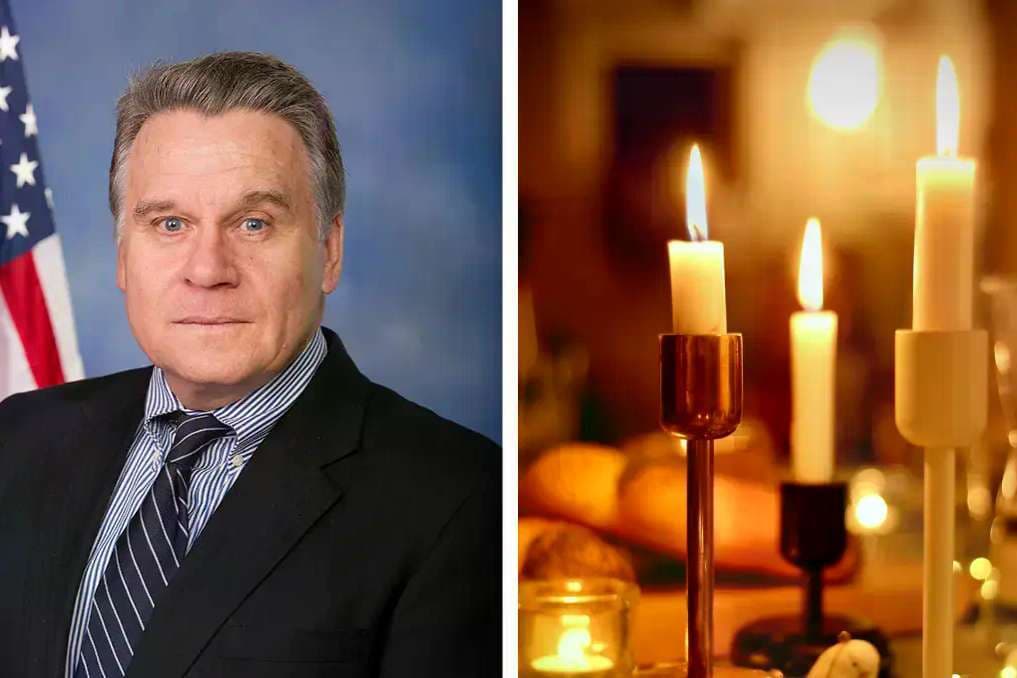
U.S. Rep Chris Smith, R-N.J., warned Feb. 4 that religious persecution worldwide is a “festering and exploding” crisis that demands strong U.S. leadership.
Smith, a Catholic who chairs the House Foreign Affairs Subcommittee on Africa, made the remarks during a congressional hearing titled “Defending Religious Freedom Around the World.” The hearing examined religious freedom violations in countries, including China, North Korea, Nigeria, and Tanzania, where millions face imprisonment, torture, or death because of their faith.
Religious liberty is America’s “first freedom,” Smith said in opening, pointing to the First Amendment’s protections for conscience and free exercise of religion. He argued the right is universal, not uniquely American.
“Yet, all around the world today, religious persecution is festering and exploding. What has been unconscionable for decades and centuries has gotten worse,” Smith said. “Billions of human beings, made in the image of God, live in countries where their God-given right to freely exercise their religion is restricted — many to the point of incarceration, torture, and execution.”
Smith cited data from the Open Doors 2025 World Watch List, which reports that more than 380 million Christians suffer high levels of persecution and discrimination for their faith.
He pointed to countries with authoritarian regimes that he said view independent religious belief as a threat: China, Russia, Nicaragua, North Korea, Belarus, and Cuba. Smith also cited countries enforcing strict interpretations of Islamic law, including Afghanistan, Iran, and Pakistan, along with parts of Nigeria. He also listed Syria, where religious minorities face escalating violence.
“Anything outside of the ubiquitous state — especially the search for deeper spiritual truths that speak directly to the human soul — is automatically a threat to these regimes,” he said.
Much of Smith’s remarks focused on China, where he accused the Chinese Communist Party of widespread abuses against people of faith, including Uyghur Muslims, whom he said are “suffering a genocide,” and underground Christian communities.
Smith recalled meeting Catholic Bishop Su Zhimin during a 1994 visit to China, describing how the bishop was beaten, starved, and imprisoned for decades because of his faith. Despite his immense suffering, Bishop Su prayed for China’s leaders and those who persecuted him.
“He prayed not just for the persecuted church, but for the conversion of those who hate, torture, and kill,” Smith said. “His witness and his faith absolutely amazed me. Love those who hate you, as Christ did from the cross.”
According to Smith, Bishop Su was arrested just a few years after their meeting and has not been heard from since.
“Xi Jinping is crushing people of faith with torture, jailing, rape, and murder,” Smith said. “We must act.”
Smith also raised concerns about North Korea, where he said an estimated 30,000 Christians are held in political prison camps and even possessing a Bible can result in execution, according to the U.S. Commission on International Religious Freedom.
Turning to Africa, Smith said Nigeria remains a critical concern regarding religious freedom. He praised President Donald Trump for designating Nigeria a “Country of Particular Concern” in October, a decision that he said was long overdue.
“The CPC designation is a phenomenal first step, but in statute,” he added, “it is accompanied by 15 different policy tools — including sanctions and other economic penalties that can and must be employed to improve the situation on the ground.”
Smith also called attention to Tanzania, citing reports that Catholic clergy, Christian leaders, and political opponents have been assaulted or abducted, along with the closure of thousands of churches.
“Countries whose governments engage in — or tolerate — severe, systemic, and egregious violations of international religious freedom against their own people merit extra scrutiny and diplomatic pressure from the United States,” he said.
He called on the State Department to issue a full list of CPC designations and urged renewed U.S. leadership to confront religious persecution worldwide.
“More than ever before, vigorous U.S. leadership and diplomacy are needed to address religious freedom violations globally,” he said, “and end persecution of Christians and all other vulnerable religious groups.”

.jpg&w=3840&q=75)

Comments