Drug policy researcher: Daily marijuana use now exceeds cigarette and alcohol use, addiction patterns resemble tobacco
New federal data show that more Americans use marijuana daily or near-daily than smoke cigarettes or drink alcohol at the same frequency. Charles Fain Lehman argues that marijuana’s concentration among habitual users and its potential health and political trajectory make it more comparable to cigarettes than alcohol.

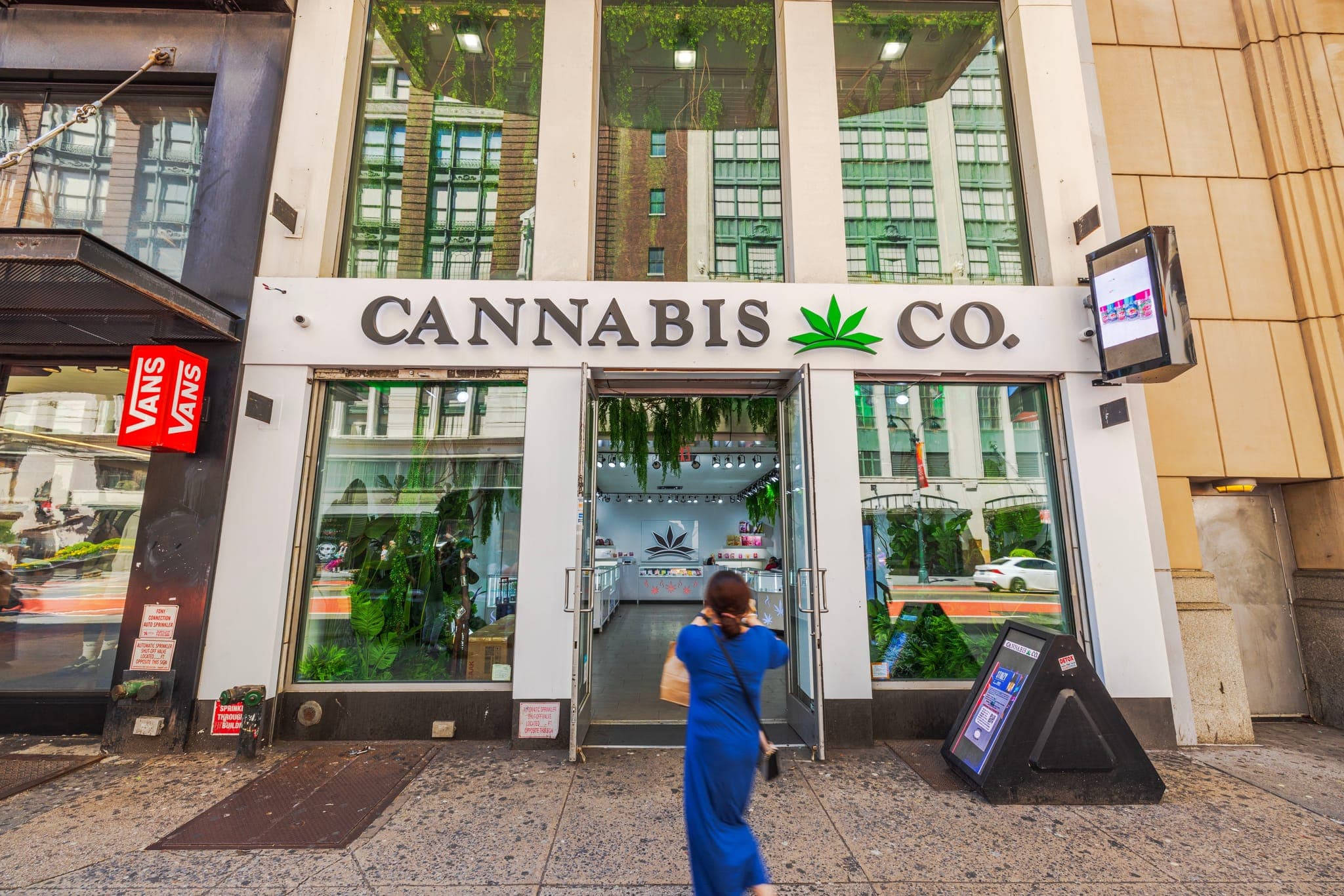
Marijuana increasingly resembles cigarettes more than alcohol because a disproportionate share of its consumption comes from habitual users, many of whom develop dependence, drug policy researcher Charles Fain Lehman argued in an Aug. 3 analysis.
Lehman — a senior fellow at the Manhattan Institute — wrote in his Substack, The Casual Fallacy, that new federal data support that comparison, showing that more Americans now use marijuana daily or near-daily than smoke cigarettes daily or consume alcohol at a similar frequency.
He pointed to figures from the 2025 National Survey on Drug Use and Health showing 21.4 million daily or near-daily marijuana users, compared with 19.9 million daily cigarette smokers and 17.2 million daily or near-daily alcohol drinkers.
The survey defines daily or near-daily marijuana and alcohol use as consumption on at least 300 days during the previous year. It classifies daily cigarette smokers as respondents who smoked on all 30 days of the previous month.
According to data Lehman cited from the Foundation for Drug Policy Solutions, about 19.3 million Americans met the criteria for marijuana-use disorder in 2025, making it the second-most common substance-use disorder after alcohol-use disorder, which affected 25.7 million people.
Although alcohol-use disorder was more prevalent in absolute numbers, Lehman noted that marijuana users were more likely to meet the criteria for a disorder. About 31% of the 61.5 million people who reported using marijuana in the previous year had marijuana-use disorder, compared with roughly 15% of the 173 million past-year alcohol users who had alcohol-use disorder.
>> AP News report finds higher numbers of marijuana addicts, fewer people seeking recovery <<
Daily or near-daily users make up about one-third of marijuana consumers and roughly 40% of cigarette smokers, but only about 10% of alcohol drinkers, according to Lehman’s analysis. He argued that those figures show casual alcohol use is “far more common than casual use of cigarettes or marijuana.”
Among past-month users, he wrote, alcohol consumption is concentrated among people who drink relatively infrequently, while marijuana and cigarette use clusters more heavily among daily consumers.
He predicted that marijuana will increasingly be viewed as analogous to cigarettes: a product disproportionately consumed by a relatively small group of chronic users, rather than one broadly consumed on an occasional basis.
The comparison also extends to marijuana’s potential social and health costs, Lehman argued. While alcohol can cause immediate harm through intoxication, including accidents, violence, and interpersonal conflict, he suggested that much of marijuana’s burden may accumulate over time among long-term, heavy users. He cited research linking marijuana use to heart attacks, strokes, and respiratory damage, as well as studies examining possible links to lung cancer and schizophrenia.
“Marijuana is more like cigarettes than like alcohol, in other words, insofar as the costs imposed by legalization will be generated mostly by a small number of chronic users, rather than a large number of casual users,” he argued. “The average alcohol use session is far riskier, socially speaking, than the average cigarette or marijuana use session; I think it is likely that the harms of pot will end up being cumulative.”
He also argued that the rising potency of marijuana strengthens the cigarette comparison. Frequent users can develop tolerance and may prioritize the amount of THC they receive for the price, giving sellers an incentive to cater to heavy consumers with increasingly potent products.
That pattern differs from alcohol, which is available in a wide range of strengths, he wrote. Lower-THC marijuana products remain less prominent, resembling the relatively narrow range of nicotine levels available in cigarettes.
Lehman also suggested that marijuana could eventually follow cigarettes politically. Decades of anti-smoking campaigns, regulation, and falling smoking rates shrank the political constituency for tobacco, allowing governments to impose increasingly strict limits on its sale and use.
“The basic reason why we can’t (and, in my view, shouldn’t) prohibit alcohol is that almost everyone uses it,” Lehman wrote. “Repealing the 21st Amendment would probably reduce total harm across society, but it would also be profoundly undemocratic. Alcohol is the vice we’ve decided to live with, and that’s more or less that.”
Although marijuana legalization currently enjoys broad public support, Lehman argued that frequent users could become an increasingly isolated political minority if casual consumption remains limited and public concern about the drug’s effects grows.
“Marijuana is like cigarettes, not alcohol,” he concluded. “Which suggests to me that marijuana might, after long enough, find itself in the same unenviable political position in which cigarettes are found today.”
Lehman’s article comes amid continued debate over marijuana policy. President Donald Trump has moved in recent months to loosen federal restrictions on medical marijuana products and pursue the broader rescheduling of the drug.
In April, Acting Attorney General Todd Blanche signed an order moving marijuana contained in Food and Drug Administration-approved products and marijuana regulated under qualifying state medical licenses from Schedule I to Schedule III, making it a “less dangerous” drug. The Department of Justice also initiated an expedited hearing to consider rescheduling the drug more broadly.
CatholicVote has repeatedly warned against such moves. CatholicVote President and CEO Kelsey Reinhardt told Zeale News in August 2025 that “today’s cannabis” is a “high-potency, brain-altering substance linked to anxiety, psychosis, and addiction.”
“God granted us dignity beyond every other creature,” Reinhardt said at the time. “We are made in His image and likeness in that we have reason and rational thought. Altering our ability to reason removes us from access to the truth – most importantly, the ultimate truth of God Himself.”





Comments