Dublin celebrates International Safe Abortion Day as lawmakers weigh scrapping mandatory waiting period
Both the March for Choice and the celebration of International Safe Abortion Day in Dublin come just days after Ireland’s national health agency recommended eliminating a three-day waiting period before abortions.
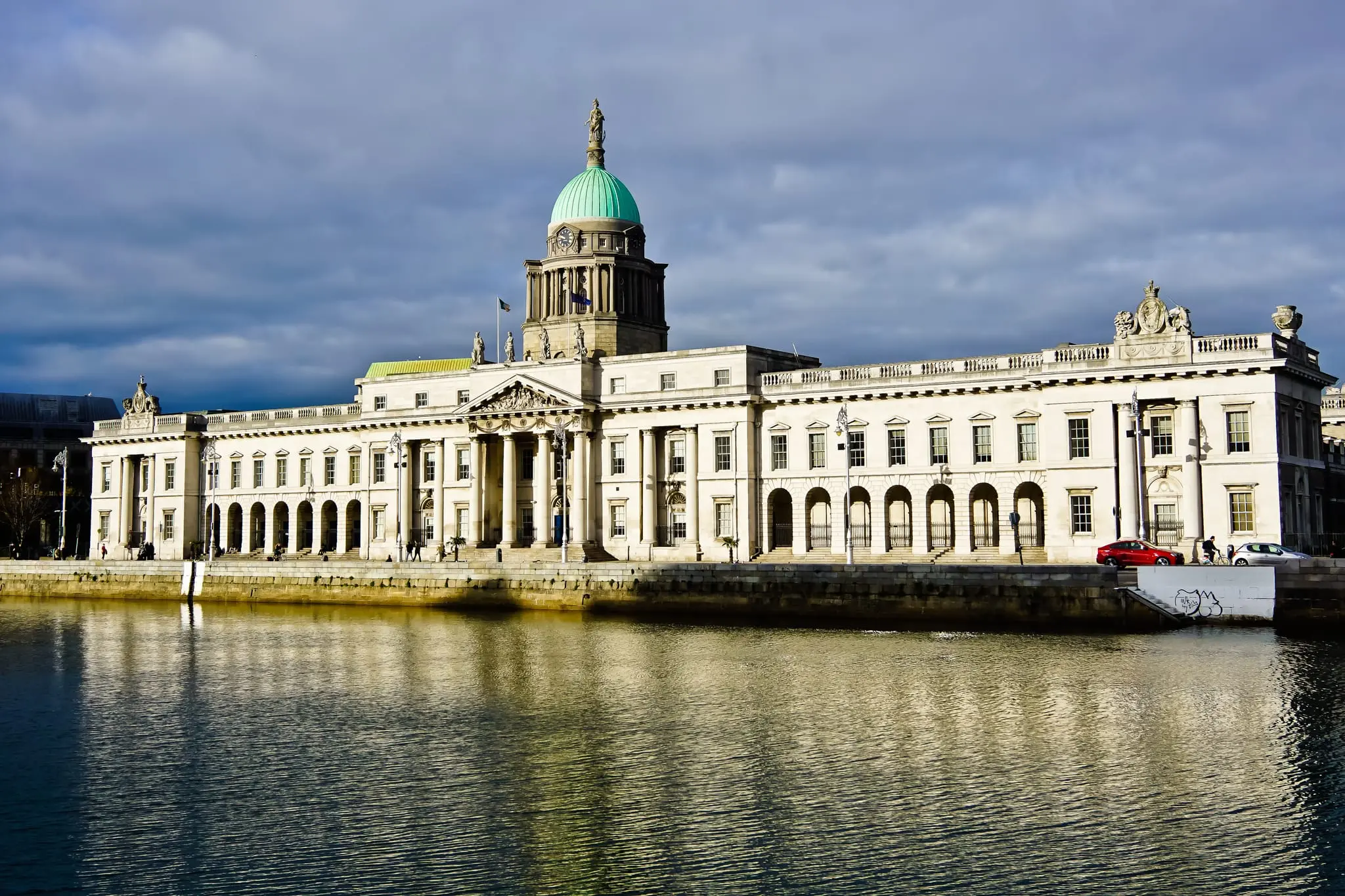
Historic landmarks in Dublin, Ireland, were lit up green Sept. 28 — not to honor Irish heritage but to celebrate abortion. Trinity College and the Dublin mayor’s residence were illuminated in green lights as part of a Europe-wide initiative recognizing “International Safe Abortion Day” and calling for broader, more liberalized access to abortion.
The International Safe Abortion Day initiative in Ireland was spearheaded by the National Women’s Council of Ireland (NWCI), which was among the activist organizations responsible for the legalization of abortion via referendum in 2018. Much of NWCI’s funding comes from the Irish government — specifically, the Department of Children, Equality, Disability, Integration and Youth.
NWCI partnered with the New York-based Center for Reproductive Rights (CRR) on the International Safe Abortion Day initiative. CRR has received grant funding from billionaire George Soros’ Open Society Foundations.
Prominent landmarks and government buildings were illuminated in green across Europe, including in Barcelona, Brussels, Edinburgh, London, and Paris. Belfast City Hall in Northern Ireland was also supposed to be lit up, but the plans failed due to local regulations.
The event recognizing International Safe Abortion Day followed the Sept. 26 March for Choice in Dublin. Organized by the Abortion Rights Campaign in partnership with Trans and Instersex Pride Ireland and Disabled Women Ireland and attended by roughly 100 people, the march began at the Department of Health building to Leinster House, where the Irish legislature meets.
The march centered on the Irish legislature’s deliberations over whether or not to eliminate a mandatory three-day waiting period prior to an abortion. Ireland’s Health Service Executive (HSE) reportedly told the legislature last week that “there is no clinical requirement for a mandatory three-day waiting period.” Speakers at the pro-abortion march called for the removal of the waiting period.
“It proposes this idea that women haven't thought about their decision before they go to their [doctors],” Lauran Kilmartin from Abortion Rights Campaign Ireland said at the march. “There should be a reflection period, but it shouldn't be forced on the people who have made their decisions.”
NWCI executive director Corrinne Hasson said, "We have come so far but we have so [much] more still to do."
"Whenever a woman goes to ask for an abortion, they have already thought about it,” she added. "In this day and age women should be allowed to make their own choices."
Eilís Mulroy, campaign manager of the Pro-Life Campaign Ireland and CEO of the pro-life non-profit VIE, told Zeale News that the March for Choice was “extremely poorly attended,” while the 2026 March for Life in Dublin was attended by thousands.
“The pro-abortion lobby is now leveraging all of their institutional and media support to remove the life-saving mandatory three-day waiting period from Ireland’s abortion law,” she said. “This provision has saved thousands of lives.”
A recent poll conducted by Amárach Research and commissioned by the Pro-Life Campaign found that a majority (55.3%) of the Irish public support keeping the three-day waiting period in place, while only 44.7% support abolishing it.
Since being decriminalized in 2018, abortion has claimed the lives of nearly 60,000 unborn children in Ireland. According to HSE’s annual reports, the number of abortions has risen steadily from more than 6,000 in 2019 to more than 10,000 in 2023, 2024, and 2025.
“Despite the setback of the pro-abortion win in the 2018 referendum, Ireland still has a very strong and motivated pro-life movement,” Mulroy said, adding that one-third of voters opposed the decriminalization of abortion in the 2018 referendum.
“Of those who voted to repeal our pro-life amendment in 2018, many did so in the belief that the Government would introduce a ‘limited’ or ‘moderate’ abortion law,” she said. “However, the abortion numbers demonstrate just how extreme the impact of Ireland’s abortion law has been: over 10,000 babies die from abortion on average each year.”





Comments