EXCLUSIVE: Assumption feast affirms motherhood and the dignity of life, Marian shrine rector says
Father Tony Stephens said Mary’s faith and humility offer Catholics a model for receiving God’s will and bringing devotion into family life.

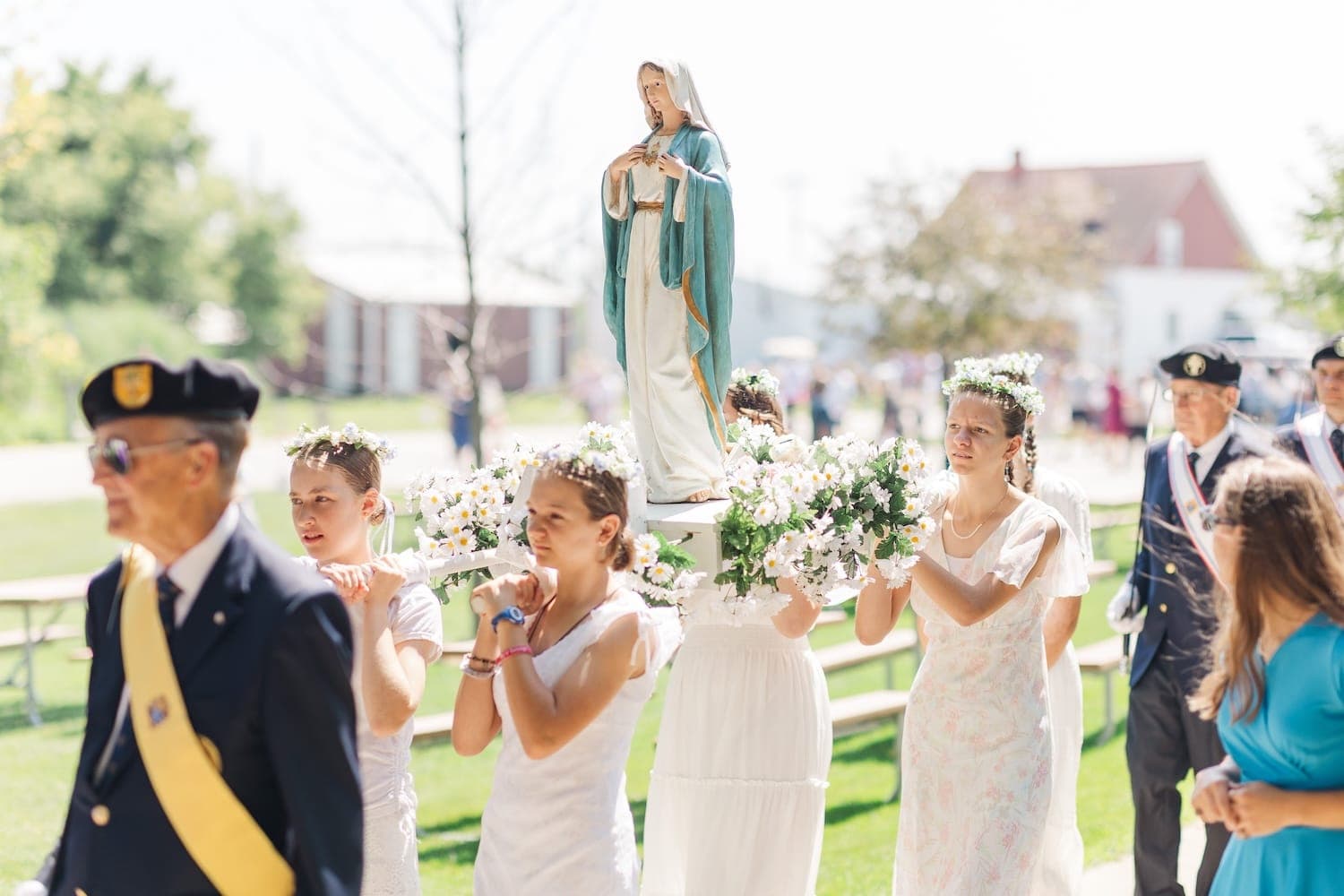
The rector of the only Church-approved Marian apparition site in the U.S. is inviting the faithful to look at the Assumption of the Blessed Virgin Mary as an enduring witness to the dignity of motherhood, the human body, and life itself.
Father Tony Stephens, rector of the National Shrine of Our Lady of Champion in Wisconsin and a priest of the Fathers of Mercy, spoke with Zeale News in an Aug. 11 interview about the meaning of the Assumption and the shrine’s longstanding devotion to the feast, which is celebrated Aug. 15.
The feast’s affirmation of the dignity of motherhood, Father Stephens said, is rooted in Mary’s identity as the Mother of God.
“We have this great reverence and respect for the Mother of God,” Father Stephens told Zeale News. “We have respect for motherhood in general. Mothers have a special place in our lives.”
The shrine has long been inspired by this reverence, beginning with Servant of God Adele Brice, the Belgian immigrant to whom the Blessed Virgin Mary appeared in 1859.
“Sister Adele loved the Feast of the Assumption,” Father Stephens said. “She loved Our Lady, but she really loved the Feast of the Assumption. And so, it has always held a place of prominence here at the shrine.”
>> EXCLUSIVE: Green Bay bishop on declaring a Marian visionary as a new servant of God <<
Brice’s mission became a living expression of that same maternal care through her instruction of children in the faith.
“[Our Lady] said to Adele, ‘You must teach the children in this wild country what they need to know for salvation,’” Father Stephens recalled. “‘Go and fear nothing. I will help you.’”
The Assumption teaches that Mary was taken body and soul into heaven at the end of her earthly life. Father Stephens outlined how this dogma is appropriate for the Mother of God.
“The way that we revere the Body and Blood of Jesus,” Father Stephens said, “but also the body that bore him into this world, we have great respect for her body as well.”
He said that witness carried particular significance when Pope Pius XII formally defined the Assumption in 1950.
“In the century that saw the most destruction of human bodies, of humanity, with World War I, Marxism, Nazism, World War II, and the communist upheavals … the human body matters,” he said.
Against that history of destruction, the Assumption offers a different vision of the human person. In Mary, taken body and soul into Heaven, the feast affirms the dignity of the body and reveals that Heaven is meant not for the soul alone but, at the Resurrection, for the whole human person, body and soul.
In the latter half of the century, he added, that disregard for human life took new forms through abortion and euthanasia.
Father Stephens said threats to human dignity persist today in gender “reassignment” surgeries and what he described as the “deconstruction of the human body.”
“I think the Marian dogma,” he said, “speaks especially to motherhood and respect for the human body and human life in general.”
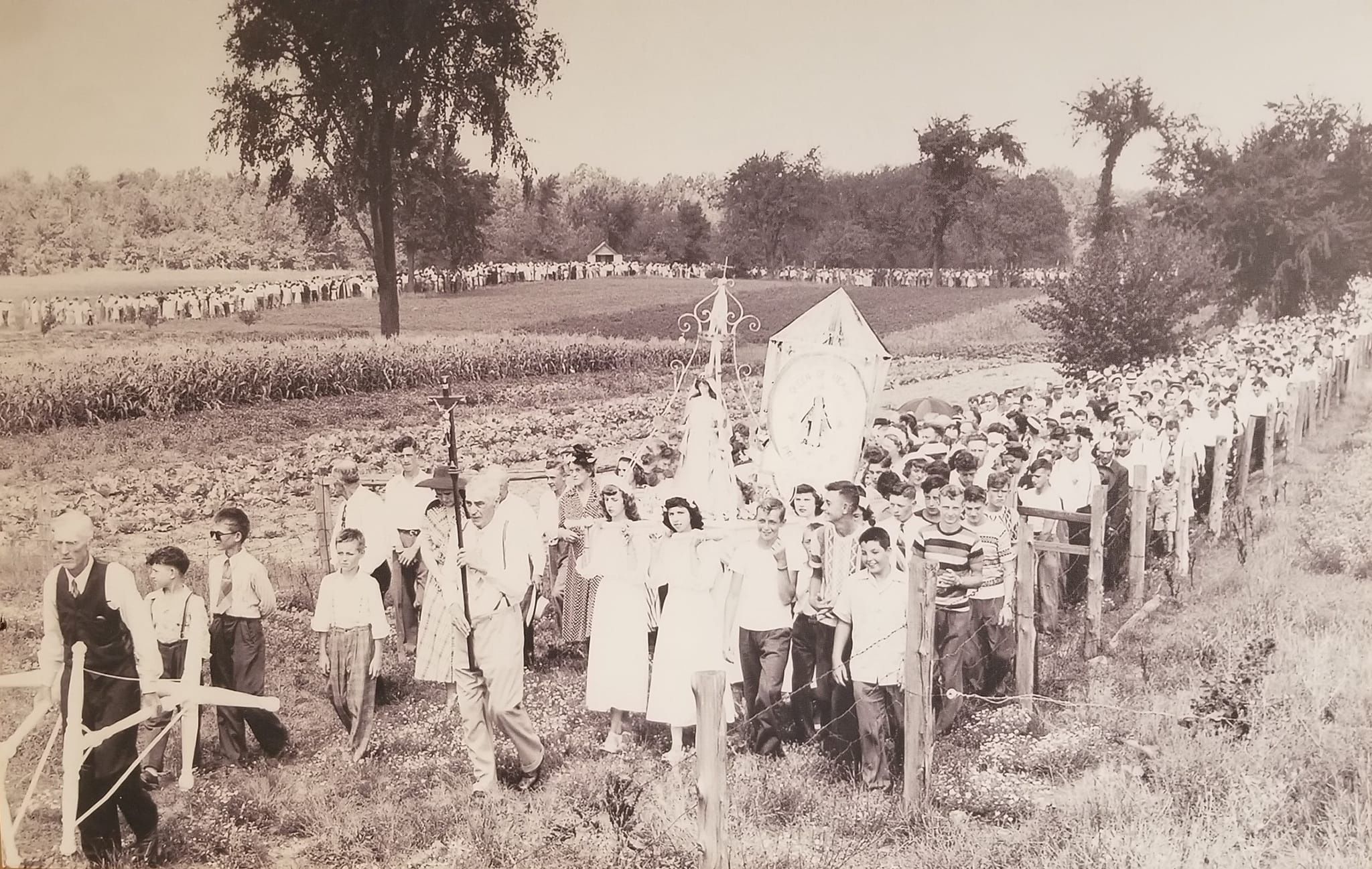
At the shrine, that witness finds public expression in Assumption processions that have drawn thousands of pilgrims, including an estimated 15,000 people on one occasion. Between 1,500 and 2,000 pilgrims are expected for the Aug. 15 Eucharistic Marian procession, he told Zeale News.
.jpg)
Father Stephens encouraged families to cultivate that same faith through simple practices of Marian devotion in the home.
“Maybe that’s a decade of the Rosary, or maybe it’s the whole Rosary, depending on what the children are capable of,” he said. “There’s the rhythm of it, but also just the habit of praying the Rosary, and for the kids to see the parents praying.”
He also encouraged families to give a favorite Marian image a prominent place in their home.
“Every family needs to have a Marian image,” Father Stephens said. “There’s nothing that says, ‘This is a Catholic home,’ like having an image of the Blessed Virgin Mary there.”
Those devotions, he explained, are ultimately meant to bring families closer to Christ.
“Mary wants to lead us to Jesus,” he said. “She doesn’t want to get in the way of our relationship with her Son. That’s the last thing she wants.”
Comments