EXCLUSIVE: Green Bay bishop on declaring a Marian visionary as a new servant of God
Bishop David Ricken of the Diocese of Green Bay, Wisconsin, recently declared a new servant of God whom he says catechists can look to for inspiration as they share Christ with others.

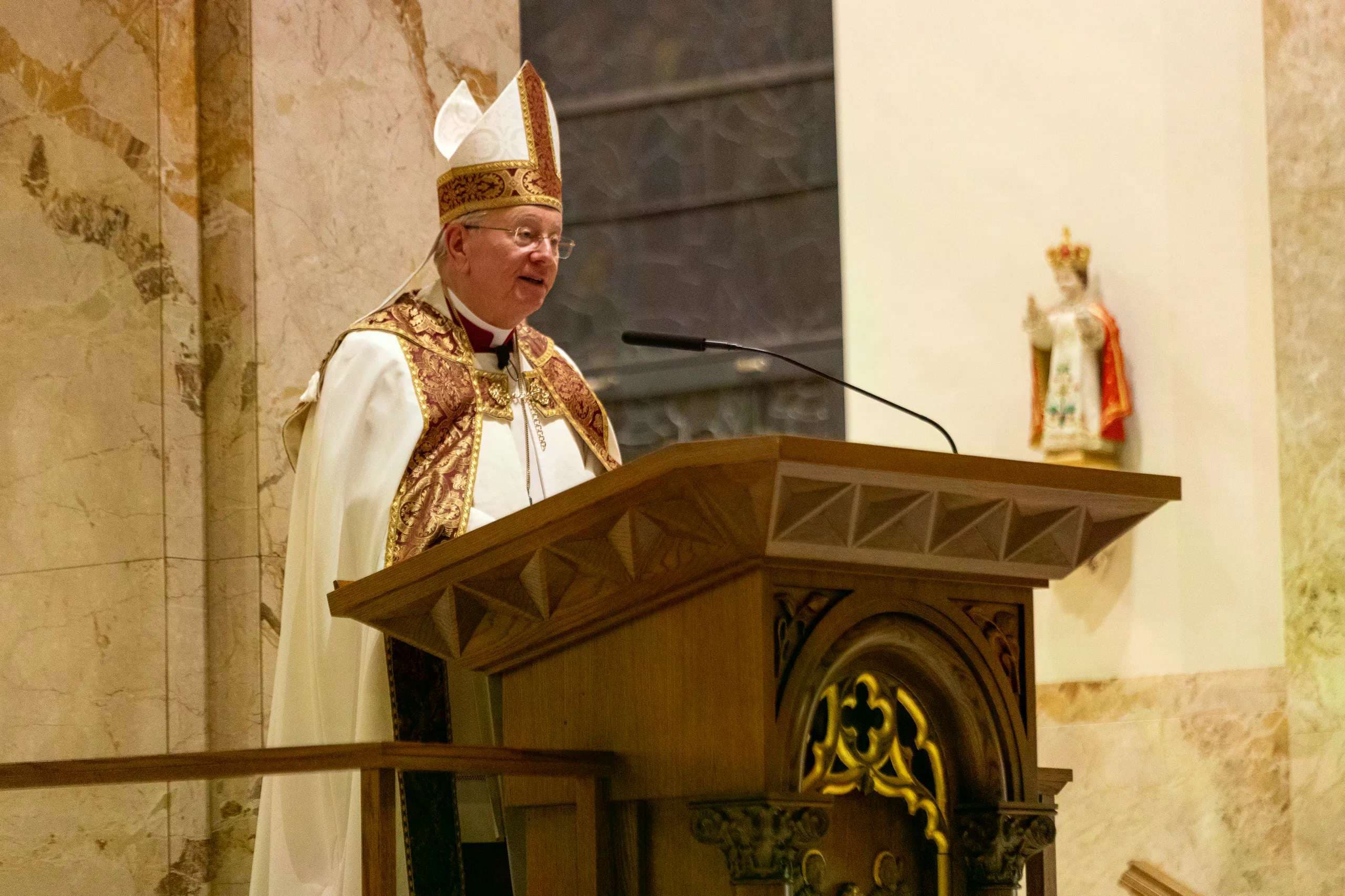
Bishop David Ricken of the Diocese of Green Bay, Wisconsin, recently declared a new servant of God whom he says catechists can look to for inspiration as they share Christ with others.
In a Feb. 5 interview with Zeale News, Bishop Ricken shared about the life and legacy of Adele Brice, the 19th-century Belgian immigrant to whom Mary appeared in the northeastern area of the state.
Bishop Ricken issued a decree Jan. 30 declaring Adele Brice a servant of God and officially opening her cause for canonization. In 2010, Bishop Ricken declared Adele’s visions of Our Lady to be authentic, marking the only Church-approved Marian apparition in the U.S. The Shrine of Our Lady of Champion now stands at the site of the apparition.
Pilgrims often come to pray at the tomb of Adele at the shrine, and Bishop Ricken said that having served in Green Bay for the past 18 years, he has “heard a lot of stories of answered prayers from Adele.”
“And the Blessed Mother is that plus, many, many, many times more,” Bishop Ricken said. “She is constantly answering prayers there. It’s almost become daily, since the approval in 2010, things have really, really amplified.” Before 2010, he said, about 10,000 people would come to the shrine per year; now, the shrine welcomes more than 200,000 pilgrims annually.
Pilgrims also can pray in a room at the shrine where the apparitions occurred. Bishop Ricken noted “it’s a beautiful, simple, humble place,” where the Blessed Mother’s presence is felt deeply.
What comes next for Adele’s cause for canonization?
The United States Conference of Catholic Bishops voted in June 2024 in favor of opening Adele’s cause of canonization. In January, Bishop Ricken requested for the faithful to begin contributing evidence for the investigation to the diocese.
Now that Adele has been named a servant of God, the next step is the diocesan phase of investigation. Bishop Ricken explained that he had to establish a diocesan commission for this, and set up a tribunal, which is a “church investigation team.” The tribunal has several groups of experts who look into certain aspects of the life of the person being considered for sainthood. Historians will study documents, such as baptismal records and records about where she lived. Their goal is to create a more thorough historical account of Adele’s life than what is currently available.
A group of trained theologians and Marian experts will study the writings of Adele, who, although was unlettered, dictated to her fellow religious sisters on occasion, according to the bishop. The theologians will analyze the theological aspects and fidelity to Church teaching.
“They also look for heroic virtue, meaning a deep love for God, love for others, faithful living of the Gospel, and a strong and radical commitment to the Christian life,” Bishop Ricken said. “I think they’ll find that example in spades about Adele.”
Finally, the diocese will interview families who have witness statements that were passed down to them from people who knew Adele and listen to generational accounts.
After all of this information is collected, the case will be sent to the Vatican for the next phase determining whether she can be declared venerable.
“It's beautiful, it's a lot of fun doing this, because you just see how the Blessed Mother [and] the Holy Spirit is working in people's lives,” Bishop Ricken said. “To me, that's the most fulfilling thing: to see people discover Christ, discover [that] the Catholic Church is the main place where they can come to for solace, for healing, for confession, for forgiveness, for moving on with their lives in a more positive direction. So, it's a real privilege and humbles me every day to think I've been invited to be part of this.”
‘Go and fear nothing, I am with you’: When Mary appeared to Adele
Born in 1831, Adele came to the U.S. at the age of 24 with her parents to live on a land settlement in the northeastern region of Wisconsin, according to Bishop Ricken. The U.S. government had offered the land to Belgian immigrants to develop it into farms, he explained.
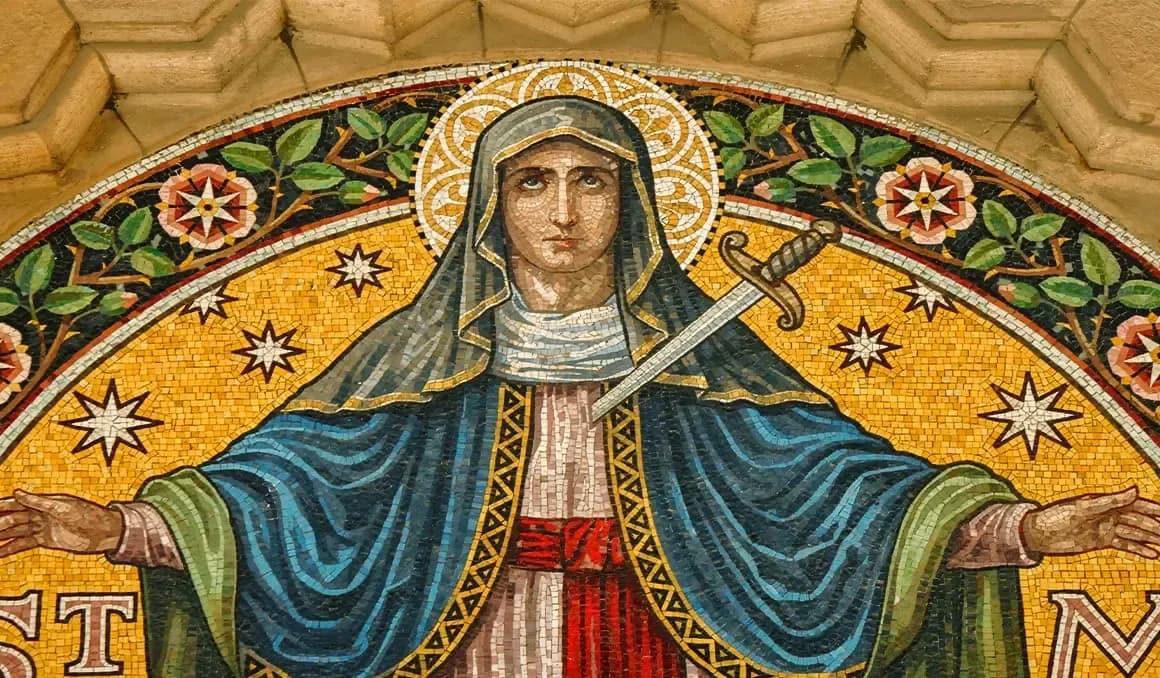
In 1859, Adele was walking along a trail in the woods to bring wheat to a local flour mill, when she saw a beautiful lady. Bishop Ricken explained that the sight startled Adele because she did not know who the lady was and wondered if she was a soul from purgatory.
Adele did not stop to engage with the lady but continued on to the flour mill, completed her task there, and then went to her confessor to ask what to do about who she had seen in the woods. Her confessor advised Adele to ask the woman who she is and what she wanted of Adele.
Adele did exactly this on her way home, as she saw Our Lady again. Mary identified herself as the Queen of Heaven, and then gave Adele “a mission to teach the catechism to the children in this ‘wild country,’ she called it,” Bishop Ricken said. Our Lady told Adele: “Teach them to make the sign of the cross, prepare them for the sacraments, and go and fear nothing, I am with you.”
Adele carried Mary’s instructions out with diligence, sometimes walking up to 25 miles a day to catechize families in the area, Bishop Ricken said. Adele would go “door to door” and complete chores for families in exchange for permission from the parents to teach the children about the faith.
Bishop Ricken emphasized that Adele showed great courage in carrying out Our Lady’s instruction, noting that she did what Our Lady asked despite not having a strong education herself. Parents began to listen in to Adele’s catechesis as well, which often led to conversions or reversions to the faith. Bishop Ricken posited that Adele converted a local county “almost single-handedly.”
Adele started a lay Franciscan community and built a school and convent on the property where the Marian apparitions happened. She later joined a religious community, having promised to do so interiorly at her First Communion.
A model for young adult catechists
Adele died in 1896, and Bishop Ricken said that at the shrine of Our Lady of Champion, the site of the apparitions, Adele’s legacy still lives on. The bishop noted that several virtues Adele exemplified “day-to-day” were obedience, patience, and perseverance.
“Things didn’t come easily, it was very hard work in fulfilling that mission, but she persevered. Those were some of her great qualities,” Bishop Ricken said. “And the fact that she must have loved the Blessed Mother very much, and Jesus very much.”
“Otherwise, how could she be motivated to do this incredible, important but difficult job of [cultivating] the respect for this place where she had this apparition and call souls to it,” Bishop Ricken said.
Bishop Ricken added that while this characteristic isn’t quite “a classical virtue,” Adele offers a profound witness through her catechetical work.
“To me, she’s a model for young adult women of what it means to be, what we call today, an evangelizing catechist,” Bishop Ricken said. This means that “you introduce people to Jesus and help them to know HIm. That’s the evangelization part.”
The catechesis part is accompanying them in learning, growing in the faith, and cultivating understanding and holiness, the bishop said. He noted he’s shared this perspective with the Green Bay diocesan catechesis director, Kately Javier, who has found it deeply helpful in how she understands and carries out her role. He said Javier frequently visits the shrine and has a devotion to Adele and Our Lady.
“So, little did we know, that through Adele’s perseverance and her virtuous life, she’s serving in our day, in 2025, so fruitfully and so productively,” Bishop Ricken said. “So that’s a sign there’s something very virtuous going on.”
He noted that every moment of teaching is an opportunity for catechists to share about their relationship with Jesus and to talk about the Lord.
“And as you introduce people to Jesus and help them to love Him, then you take them into the catechetical component of teaching the scriptures particularly, how to pray, and that’s the accompaniment piece,” he said.
Where to start if you’ve never had a devotion to Mary
In light of Adele having a deep devotion to Our Lady, Bishop Ricken offered advice for those who may be interested in growing in the same devotion but are unsure of where to begin.
“Pray the rosary,” Bishop Ricken said. He shared that he got to know the Blessed Mother when he was a child and he would pray this with his mother in difficult moments. He said that he had asthma as a child, and he did not have an inhaler, so he struggled a lot to breathe. He noted that his mother, who was a convert to Catholicism, loved the rosary.
“And she prayed the rosary with me, and after a while, I would really calm down, and I could get my breath and relax,” Bishop Ricken said. “But I realized my mom was really reflecting the Blessed Mother.”
He said the rosary has been his companion his whole life, and he now prays it multiple times a day.
He encouraged people to pray the rosary when they are in need of peace or working through difficulties. The Blessed Mother “loves when people come to her and ask for help,” Bishop Ricken added. He also advised to start small: Memorize the Hail Mary prayer first, pray a decade of the rosary a day, and eventually build up to praying all five decades daily.
An invitation to find peace of soul: How to go on pilgrimage to the shrine
People are welcome to make a pilgrimage to the Shrine of Our Lady of Champion as an individual or in a group, Bishop Ricken said, noting that it is up to the individual how they feel led to come.
On the first Saturday of May, the diocese will hold a 22-mile walking pilgrimage from the Shrine of Saint Joseph in Green Bay to the Shrine of Our Lady of Champion. Last year, 7,000 people attended. Bishop Ricken lightheartedly remarked that that high number is how he knows his effort is not to credit for the turnout, but rather is the work of the Blessed Mother.
He also emphasized that people don’t need a formal program or extensive planning to make the pilgrimage. He said there is “a spirit of peace” across the whole campus, and encouraged people to “just come and experience it and see what happens.”
Many pilgrims he has talked to say that they experience peace of soul at the shrine, Bishop Ricken said.
“Everybody’s so distracted, and so on edge and tense, and just coming there — myself, I go out there fairly often because I know that when I arrive there, all that tension and stress is going to disappear, and almost, all you have to do is give it to the Blessed Mother, and it just kind of goes [away],” the bishop said.
Bishop Ricken recalled an instance where he was at the shrine’s church, where he encountered a young man, who he described as having a mohawk haircut, ear piercings, and “a motorcycle outfit.” The bishop asked the young man what brought him to the shrine, to which he replied, “the sign of the road, man, the sign on the road.”
The bishop told the man he was glad he saw the shrine’s sign and visited. He continued the conversation by asking him what he found there.
The man replied with one word: “peace.”
Bishop Ricken remarked that one never knows who the Blessed Mother will draw to the shrine or how she will, but visiting is “just a beautiful experience.”

.jpg&w=3840&q=75)
Comments