Newly ordained priest reflects on faith, death, and hospital ministry
Three weeks after his ordination, Father Charles Marie Rooney, O.P., was called to the bedside of a dying patient. He had just begun orientation at Memorial Sloan Kettering Cancer Center in New York when an emergency interrupted the meeting.

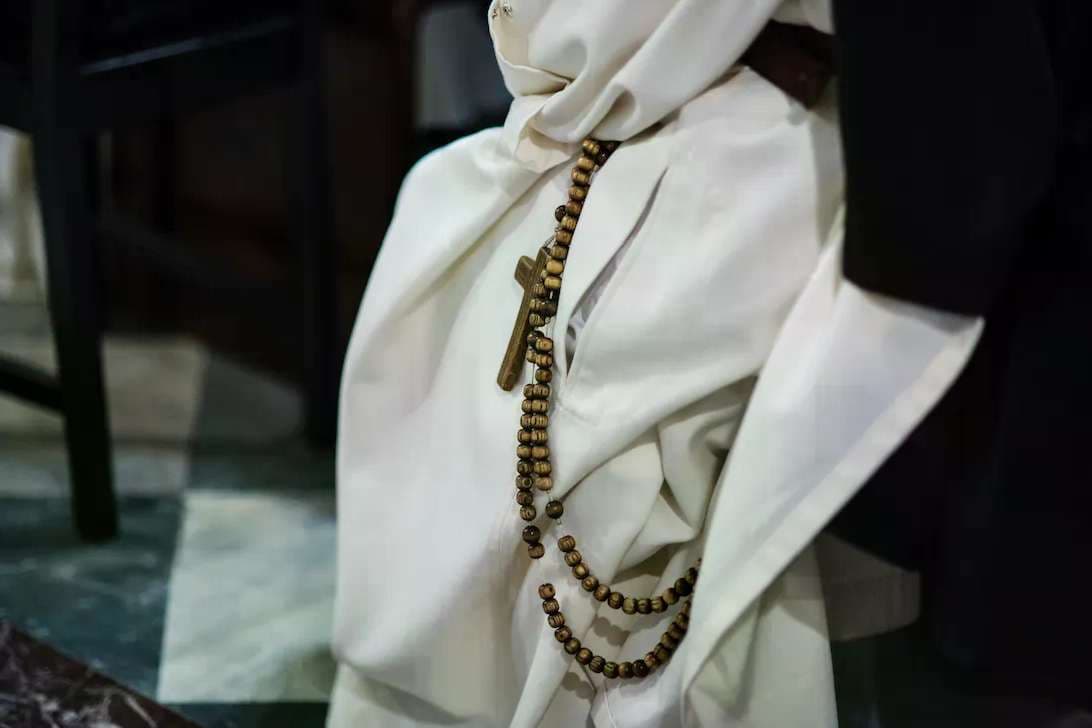
Three weeks after his ordination, Father Charles Marie Rooney, O.P., was called to the bedside of a dying patient.
He had just begun orientation at Memorial Sloan Kettering Cancer Center in New York when an emergency interrupted the meeting.
“I was not the priest on duty,” Fr. Rooney later recalled, “but I was the priest most immediately available. So I was instructed to go up — orientation could wait.”
That moment opens “Cancer and the Cure of Souls,” an essay by Fr. Rooney published Feb. 2 by First Things. The article draws on his first months of priesthood and a summer assignment with the Dominican Healthcare Ministry in Manhattan, New York.
Fr. Rooney, ordained in 2024, spent two months visiting patients across several New York City hospitals, including Memorial Sloan Kettering Cancer Center. In the essay, he describes hospital ministry as a setting where priestly identity is immediately tested.
“For the new priest, hospital ministry is a plunge into the deep,” Fr. Rooney wrote. The hospital was unfamiliar ground, far removed from the rhythms of parish life.
“The smells and bells of the patient floor are not those of the sanctuary,” he wrote, noting how his Dominican habit and rosary marked him as an unusual presence among medical staff – denoting “a different kind of physician-ship.”
Much of Fr. Rooney’s essay focuses on the tension between modern medicine’s achievements and the limits it cannot escape. The cancer center, he observed, is marked by energy, competence, and hope: “Doctors conduct research and perform trial treatments that are available nowhere else, and adept and cheerful nurses wear T-shirts that read, ‘imagine a world without cancer.’”
Yet, even in this hopeful environment, the reality of death remains unavoidable.
“Modern medicine, with all its marvels, can heal and enhance human life,” Fr. Rooney wrote, “but, in the end, only delays the inevitable.”
Fr. Rooney paid particular attention to cancer, which he describes as distinct from other causes of death. Unlike infections or external injuries, cancer arises from within the body itself.
“Cancer is life turning against itself at its core,” he wrote. “By their immortality, cancer cells reap our mortality.”
Fr. Rooney built from that biological description to his theological claim that runs throughout the essay: that physical illness, even unto death, can expose what he calls the “true sickness” — separation from God — and the possibility of healing beyond medicine.
“I have cancer,” an elderly woman told him from her hospital bed. “But cancer is not the sickness. Cancer is the cure. Because cancer brings you close to God.”
Fr. Rooney wrote that hospital ministry places priests in direct conversation with death in a way parish life often does not. “When a priest leads an OCIA class or a marriage preparation meeting, death is mostly an abstraction. It is something we need saving from, yes, but something still far off,” he wrote. “In the hospital, however, and especially the cancer ward, the Catholic priest must deal with death directly.”
Patients, he observed, respond variously. Some prepare openly. Others remain stoic. Others are resistant. But, he argued, “no one can avoid ultimate questions,” especially when illness strips away distractions.
“No diagnosis, and no response to treatment, is an accident in his loving plan,” Fr. Rooney wrote. “God really has appointed death as our ultimate and universal punishment since Adam, though only to unveil a greater glory.”
Fr. Rooney shared the story of Jack, a 23-year-old man suffering from neuroblastoma, whom Fr. Rooney visited repeatedly during his first weeks at the cancer center. Jack’s condition was deteriorating, but Fr. Rooney said the young man’s faith had deepened significantly after his diagnosis.
“The result was that Jack began to see and embrace God’s purposes at work in and through his sufferings,” Fr. Rooney wrote, describing how Jack spoke openly about faith with family members, friends, and medical staff.
Fr. Rooney prepared Jack with the sacraments and accompanied him as he died. He described Jack’s passing as “a holy death,” shaped by both suffering and trust.
Had Jack recovered — an outcome many had prayed for — his life would have been “too human, too this-worldly, too predictably heroic,” Fr. Rooney wrote. “God’s ways are more mysterious, more cruciform, more sublime.”
Fr. Rooney emphasized the priest’s specific role at the end of life — not as counselor or clinician, but as minister of the sacraments.
“The responsibility of the Catholic priest is to point to the glory of God,” he wrote, “and to make this glory really present through the sacraments.”
At the bedside, Fr. Rooney said, faith rather than sight becomes decisive.
“The preeminent virtue that the priest must bring to the hospital, then, is living faith,” he wrote. “We walk by faith and not by sight,” a reality he said is felt “never more intensely than at the hour of our death, the hour of glory.”
Readers can find Fr. Rooney’s full essay at First Things by clicking here.
Comments