EXCLUSIVE: British pro-lifer under 11-month police investigation warns Americans of ‘spiritual battle’
British pro-life advocate Isabel Vaughan-Spruce says a nearly yearlong police investigation into her silent prayer near an abortion facility reflects a growing spiritual and ideological conflict in the United Kingdom (UK) — one she believes Americans should not ignore.

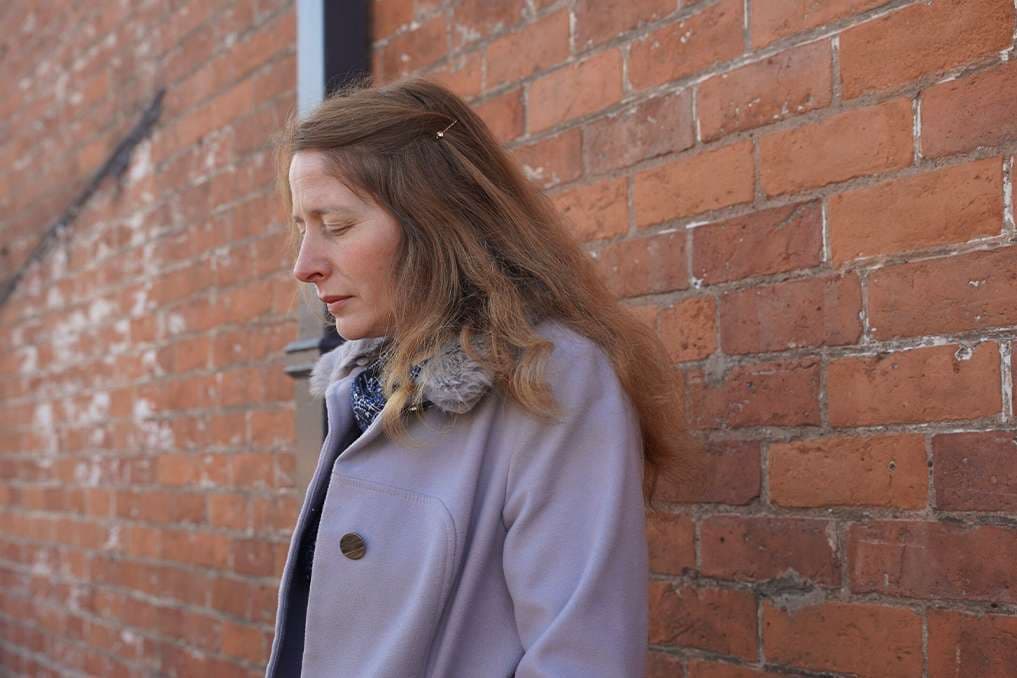
British pro-life advocate Isabel Vaughan-Spruce says a nearly yearlong police investigation into her silent prayer near an abortion facility reflects a growing spiritual and ideological conflict in the United Kingdom (UK) — one she believes Americans should not ignore.
Vaughan-Spruce, a Catholic, gained national attention after Birmingham police arrested her twice in 2022 for silently praying inside a local “buffer zone.” The UK criminalizes harassment within about 500 feet of abortion facilities. She was acquitted in one case, and prosecutors later dropped the second.
Earlier this year, police opened a new investigation into Vaughan-Spruce for silent prayer under the UK’s 2024 national “safe access zones” law. The national law criminalizes “intentionally or recklessly” influencing abortion decisions or causing “harassment, alarm, or distress” within roughly 500 feet of an abortion facility.
Police referred Vaughan-Spruce’s case to the Crown Prosecution Service, which typically makes charging decisions within days.
Eleven months after learning she was under investigation, Vaughan-Spruce says authorities still have not told her whether they plan to charge her.
What led to the renewed investigation?
Vaughan-Spruce told CatholicVote in a Dec. 11 interview that she only learned she was under investigation after attempting to file a complaint alleging intimidation and harassment against police officers. She said the complaint followed repeated encounters in which officers accused her of harassing passersby, causing distress, and potentially violating the “safe access zones” law.
After she submitted the complaint, authorities informed her they could not review it because an investigation against her remained open.
“I was told they couldn't investigate my complaint against the police because they were investigating me, and investigating my complaint against the police might effectively jeopardize their investigation,” she said. “And that's still where we are 11 months later. I still can’t make a complaint.”
Vaughan-Spruce said that, during multiple encounters, officers offered different explanations for why her presence was allegedly unlawful.
“One time they said, you're not allowed to protest, even though I've made it clear I'm not protesting,” she said.
On another occasion, she said officers claimed that her mere presence was unlawful even though she stood on a public residential street where people regularly passed by.
“At one point, they said that just knowing who I am could constitute causing people harassment,” she recalled. “Does that mean that if anyone knows who I am, that I'm causing them harassment, and then where am I allowed to go?”
Vaughan-Spruce said the prolonged investigation, combined with inconsistent explanations from officers, has made the case feel “ideologically fueled” rather than rooted in any “genuine legal concerns.”
Longstanding hostility toward Christians and pro-lifers
Vaughan-Spruce said hostility toward Christians and pro-lifers in the UK long predates “buffer zone” and “safe access zone” laws.
She described incidents from years ago in which volunteers praying outside a Birmingham abortion facility were spat on, threatened, or physically assaulted. She said that while volunteers documented those incidents on video and brought them to the police, officers routinely declined to act.
“When I said to the police officer on one occasion, ‘Why aren't you doing anything about this?’ The police said to me, ‘Well, if you don't want to be assaulted, you don't have to come out of your house,’” she recounted.
Vaughan-Spruce believes such responses reflect a broader pattern: a deep-seated problem in the treatment of Christians and pro-lifers.
“Those of us who are pro-life, or those of us who might be more active in living out our Christian faith, are being treated as second-class citizens,” she said.
She also warned that the free speech battle has created a chilling effect. One mother told Vaughan-Spruce that when she asked her young daughter to pray with her while walking down the street, the girl hesitated and asked, “Are we allowed to pray on the street?”
“To me, that shows people feel they’re not safe within their own heads to kind of think what they want. It's that ludicrous,” she said, noting that the mother and daughter were free to pray and were not inside a buffer zone.
She warned that once prayer becomes suspect, nothing remains safe.
“If something as wholesome and good as prayer is being treated as something criminal,” she warned, “nothing is really safe. And we're seeing that. People are being investigated over social media posts and things that are coming from an ideology rather than anything that really constitutes criminal content.”
Her warning to Americans: ‘Nip it in the bud’
Vaughan-Spruce urged Americans not to assume similar speech restrictions could not emerge in the U.S.
“We do need to make sure that these things are nipped in the bud,” she said, later adding, “It really is time to speak up. Don't wait for it to be you.”
“Discrimination rarely exists in isolation for long,” she added. “It might be one group that's being targeted, or even just one individual being targeted, but if that is unjust, we can be sure that if it’s not challenged, it will spread. And that's what's happening.”
The underlying spiritual battle: ‘You can’t compromise with Satan’
For Vaughan-Spruce, the conflict extends beyond the political realm into a deeper spiritual battle.
“You can't compromise with Satan,” she said. “I'm not trying to demonize any individual, but I'm saying this is where it's coming from. Ultimately, I don't have enemies in people. I think it's the spiritual enemy.”
She warned that Christians too often attempt to accommodate ideas they know are wrong: “We are trying to compromise with Satan.”
“We have to realize that right from the start. We have to draw a line and say, ‘We're not stepping over that. We're not compromising at all. We're not even getting the tips of our fingers dirty in this battle.’”
While Christians are called to act peacefully and gently, she said, “we’re not called to be doormats.”
“We do need to speak up,” she added. “We do need to use our voice and to use the lights that we've got, or we will lose them.”
Why the location of prayer matters: Abortion facilities are a ‘modern day Calvary’
Some of Vaughan-Spruce’s critics have leveled that she does not need to pray outside abortion facilities and should instead pray at home or in a church. But, as she explained to CatholicVote, praying outside abortion facilities is central to her mission.
“I see abortion centers as a modern-day Calvary, where innocents are being put to death, very unjustly,” she said. “There are probably very few things that are a better comparison of Calvary nowadays than the abortion center, and I would like to think that if I had lived at the time of Jesus, I would have gone to Calvary.”
As a Catholic, Vaughan-Spruce said she looks to the Virgin Mary as her model.
“When Jesus was dying on the cross, his mother, Mary, didn't just stay at home and think about what was going on there. She didn’t go to the temple and pray there,” she said. “She actually stood at the foot of her son's cross in solidarity with him. She was just simply there with her son.”
Praying at abortion facilities is an act of solidarity with the unborn “having their rights taken from them” and with the women “who are being lied to about abortion,” she said.
She pointed to Christ’s words during the Crucifixion, when He entrusted Mary and John to one another.
“When the crucifixion was happening, Jesus looked down from the cross at Mary and at His Apostle, John, and he said to Mary, ‘Mother, this is your son. Son, this is your mother.’ And I imagine that if I'm standing there, Jesus is looking down from the cross and saying to me, ‘Isabel, these are your brothers and sisters.’”
“There's nowhere else that I can be to more fittingly be in solidarity with them,” she said.
Vaughan-Spruce added that physical places have always mattered to people — from roadside memorials to pilgrimage sites — and this can be seen especially in the lives of Catholics.
“Christ in the Eucharist came to us in place and time, physically, as a human, and that's very relevant,” she said. “We need to bask in the goodness of God. And then going to the abortion center, we need to try and bring some of that there.”




Comments