EXCLUSIVE | Founder of ministry supporting persecuted Christians in Nigeria calls violence level unprecedented
Brad Brandon spoke about the context behind the attacks in Nigeria and his firsthand experience caring for afflicted communities. He urged the faithful in the U.S. to spiritually support the persecuted Christians and to continue raising awareness.
Note: The following article contains distressing content. Reader discretion advised.
Christians in Nigeria have faced violent persecution for a number of years, but 2026 has seen an unprecedented volume of attacks, according to the founder of a ministry that supports affected communities in the northern part of the country.
“It’s the worst that I have ever seen it,” Brad Brandon, who founded Across Nigeria 11 years ago, told Zeale News in a July 21 interview.
Caring for these persecuted Christians is one of the two main focuses of Across Nigeria, Brandon explained. In particular, according to Brandon, the ministry currently cares for about 570 widows, all of whom have lost their husbands due to the violence.
He estimated that the frequency of attacks on Christian communities or villages, often perpetrated by co-opted Fulani militants and the Islamist militant group Boko Haram, has risen to almost one per day.
On July 19, Brandon explained, one of the communities they minister to was attacked and 22 people were killed. He recalled another instance from two months earlier, when multiple attacks occurred on the same day. Across Nigeria had been called to a community, with predominantly widow residents, because an attack was occurring.
Upon arrival, they found 14 people “had been massacred,” said Brandon, who was ministering in Nigeria at the time of the attack. “We dug a mass grave, we buried them, helped everyone we could there. While we were doing that, another attack was happening in another village, not too far away.”
He said they immediately drove to the other village and found 10 people had been slaughtered. They buried them and helped where they could.
“About an hour after we left at the end of the day, they were attacked again,” Brandon said. “The same village, for the second time in one day, and five people were killed.”
Brandon, who spends about half of the year in Nigeria and the other half in the U.S., also commented on the difficulty of processing the volume of attacks.
“While I was there, it was every time I turned around, there was another attack, another slaughter, massacre happening, I couldn’t even keep up with them,” Brandon said.
Across Nigeria: Ministering to Christians in need and Fulani communities
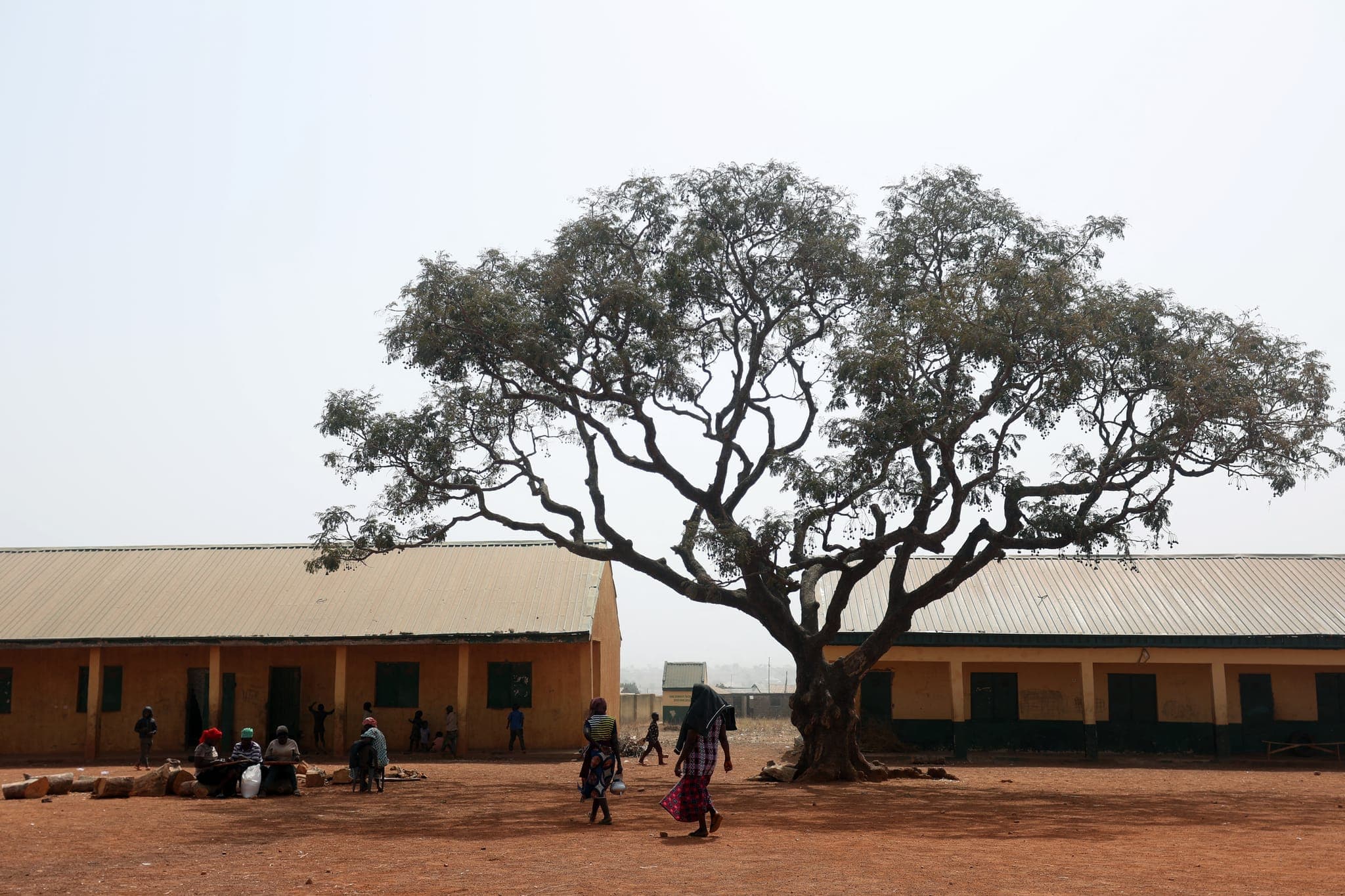
Many Christians also face displacement, having lost their homes due to the attacks, according to Brandon. He told Zeale News that about 3.5 million Christians are currently in refugee camps in northern Nigeria.
>> Suspected terrorists abduct students, women from historic Christian town in Nigeria <<
However, this is not the only community that Across Nigeria strives to support. The other main focus of the ministry, Brandon continued, “is equally important, and that is reaching Muslims with the Gospel of Jesus Christ.” He explained that a major challenge in Nigeria is gaps in educational resources, which is something extremist groups exploit to recruit vulnerable Fulani Muslims. Across Nigeria currently operates 15 schools and strives to evangelize.
“We believe as an organization that the solution to the problems in Northern Nigeria is the Gospel of Jesus Christ,” reiterated Brandon, who was a pastor in the northeast U.S. before starting Across Nigeria. “So, we operate schools that cater to Fulani Muslims and we bring aid to Muslim communities who need clean drinking water, medical aid, and we look for opportunities to talk to them about the Gospel of Jesus Christ.”
He explained that the outreach is relational-based, rather than a disconnected, agenda-focused approach.
“[We] just look for ways to love them,” Brandon said. He said that building the relationships and friendships can take years, but ultimately, the ministry just aims to “show them that we care about them and that we love them and that God loves them.”
Making a distinction between Fulani communities and Fulani militants
Brandon explained that there is a key distinction to be made between the perpetrators of the anti-Christian attacks, often Fulani militants, and Fulani people. He noted there is a significant stigmatization of Fulani people in the media, which incorrectly blankets all of them as terrorists, violent, or radical Muslims. He explained that there are 17.5 million Fulani people and that the majority of them are peaceful.
“We have relationships with thousands of Fulani Muslim communities across northern Nigeria, and I can personally attest to the fact that most of them are very peaceful people,” Brandon said.
Further, they are an underserved group of people, he emphasized, whose children have a literacy rate of less than 1% and less than 8% among adults. He said they are rural and not “technologically savvy,” which Islamic extremists try to take advantage of.
“Around the world, radical Islam targets under-served groups like that to radicalize them and then send them out to do acts of terrorism,” Brandon said. “And that’s what’s happening among the Fulani people right now.”
A small percentage of them have been co-opted by terrorist groups, and they carry out a significant amount of the violence, according to Brandon.
Brandon later elaborated on the importance of improving the socioeconomic conditions in the region, saying that many people are drawn into radical Islam because of such poor conditions. He said where socioeconomic conditions are improved, there is a measurable difference in rates of violence.
“Wherever we’ve built a Fulani school in Northern Nigeria, after about two or three years, the violence decreases by about 60-70%,” Brandon said.
What drives the attacks?
Brandon also said it would be an oversimplification to say the entire conflict is about religion. There are some ecological-caused tensions as well, according to Brandon. He cited climate change as a factor, noting that the Sahara desert is growing and encroaching further south into Nigeria.
This reduces grazing ground for Fulani communities’ cattle, which then wander onto Christian farms and consume crops, resulting in “a lot of tension,” Brandon said. “Sometimes they want to take over that property, so they have areas to graze their cows.”
Socioeconomic issues also are a factor, Brandon continued. The region is an area “where people live on less than a dollar a day,” he said. “They’re in desperate conditions and people who are in those kind of conditions will do desperate things to survive.”
However, he said he thinks the overarching context and backdrop is a religiously motivated conflict.
“Christians are five times more likely to be killed than any other group in northern Nigeria,” he said, adding that “72% of all the Christians killed in the world are killed in northern Nigeria, within a 300 mile radius of our field office there. So it’s very clear that Christian villages, communities, and individuals are being targeted, where other groups are not.”
There is also Muslim-on-Muslim violence, Brandon continued. “But what I see is it’s the radical Muslims who are killing Muslims who don’t hold their radical beliefs.”
“But even beyond that, Christians are disproportionately being targeted,” he reiterated. The “catalyst” as he described it “seems to be radical Islam versus Christianity.”
International response, and what more the Nigerian government must do
The international attention to the situation in Nigeria has continued to grow amid advocates’ calls for action. In October 2025, answering calls from a number of Catholics and U.S. government leaders, President Donald Trump declared Nigeria a “country of particular concern,” a designation that came several years after the Biden administration removed it from the CPC list. The President said Christianity faces “an existential threat in Nigeria” and vowed that “something must be done.”
>> Nigerian-American expert: Trump finally calls Nigeria’s Islamist violence what it is <<
The U.S. has taken some military action against perpetrators of the persecution as well. In late December 2025, Trump announced that the U.S. launched a strike against ISIS terrorist camps in northwest Nigeria, as Zeale News reported. Trump said the ISIS terrorists “have been targeting and viciously killing, primarily innocent Christians, at levels not seen for many years, and even centuries.”
Brandon commented that the U.S. strike “certainly helps,” while noting that improving the socioeconomic conditions is crucial as a long-term factor.
Zeale News asked Brandon if the Nigerian government is responding sufficiently to the anti-Christian attacks.
“Absolutely not,” he replied. “They’re doing very little.” He said that amid observing the issue grow for the past 15 years and ministering with Across Nigeria for the past 11, “the Nigerian government has never responded appropriately.”
Military and security typically arrive at villages around two or three hours after attacks occur, he estimated. He said there is “really no effort” or “very little effort” by the Nigerian government “to bring any kind of security or to try to quell the attacks that are happening in the north.”
“In fact, I think you could make a pretty good case to say that they’re complicit in a lot of these things,” Brandon added. He said he has seen some reports on the ground that “Boko Haram will drive by military outposts and the soldiers in those military outposts do nothing. They watch Boko Haram drive in, attack a village, they watch Boko Haram drive out, and they don’t intervene.”
“That tells me they’re being given stand down orders from the top,” Brandon added.
>> Nigerian bishops cry out over worsening attacks, say government failing to protect citizens <<
As international outcry grows, Nigeria has responded in part by spending toward efforts to improve its image, according to Brandon. He said that in 2025 “we uncovered that the Nigerian government had paid a Washington-based lobby firm $9 million…. They basically hired this lobby firm for $9 million dollars to sort of clean up their global image with Congress and the White House.” He alleged that there is financial motivation to improve the image, stating that about $550 billion was divested from Nigeria in 2024 from foreign investors.
“I think the Nigerian government’s concern is to clean up their global image so that they can attract those investor dollars back,” Brandon speculated. “But they’re doing it at the expense of people who are being killed every day in northern Nigeria.”
He emphasized that the Nigerian government should put funds toward improving socioeconomic conditions for its communities rather than international expenditures. An additional way the Nigerian government can protect Christian communities is by deploying security forces and troops into the hardest-hit areas, he added, citing Benue State and Plateau State as current especially afflicted locations. The government should also build outposts in afflicted areas.
“They should be making it impossible for Fulani militants, Boko Haram, and ISWA to be attacking communities because of their military presence in the area,” he added.
What can people in the U.S. do to help?
Brandon said one of the main ways people in the U.S. can help those in Nigeria is continuing to talk about the situation.
“Don’t be silent on the issue,” he said. “Evil needs the cover of darkness to continue doing what it’s doing.”
He emphasized that whether one speaks about it at church, at a bible study, at work, or a podcast, the size of the audience doesn’t matter.
Lastly, he emphasized that spiritual support is essential.
Brandon urged: “Pray for the persecuted there.”



Comments