Feast of St. John Paul II honors pope whose teachings on love and human dignity shaped the Church
The Polish pontiff's understanding of love and the human person grew from his early ministry and became central to teachings that continue to influence Catholic life.

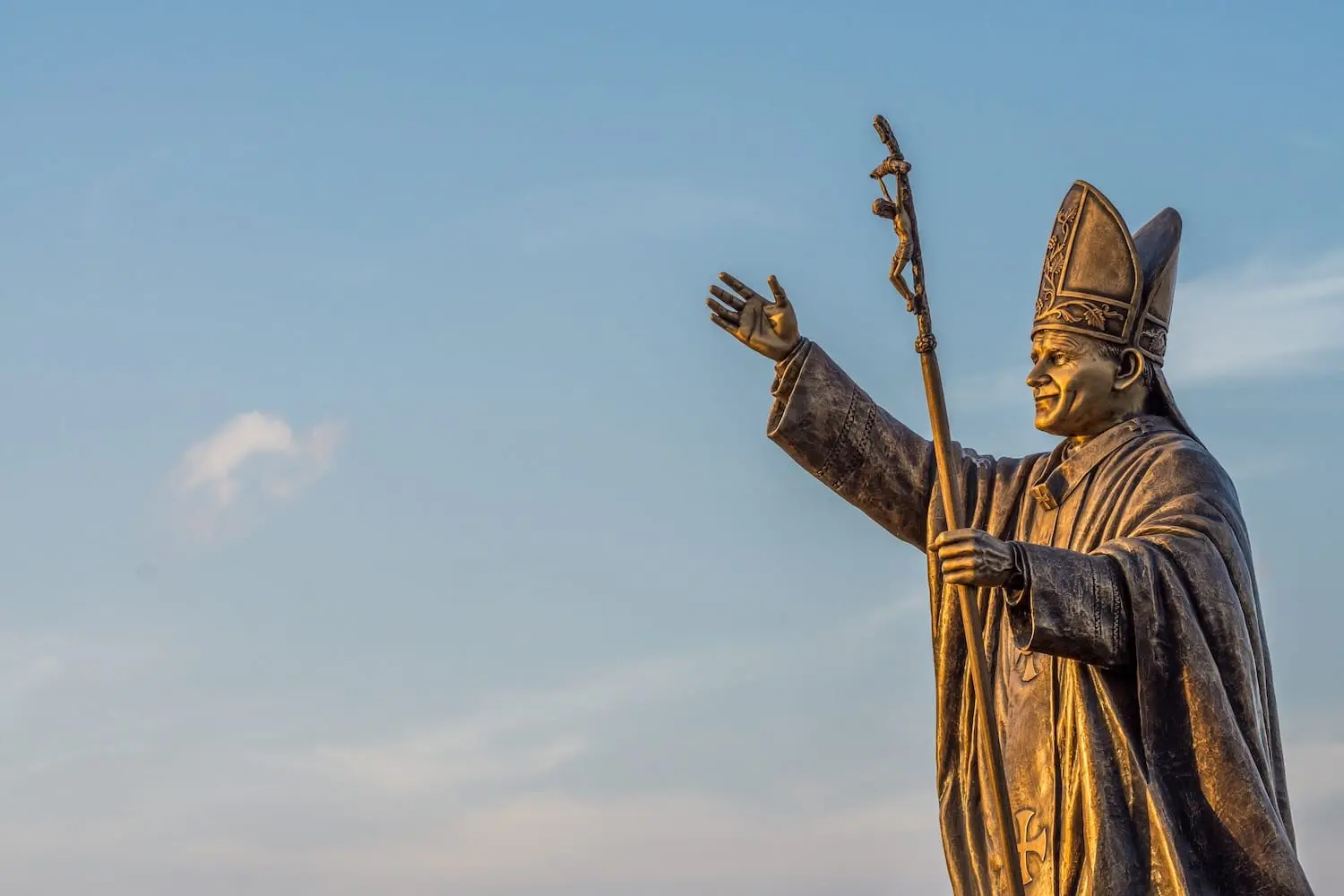
Catholics celebrate the feast of St. John Paul II Oct. 22, remembering the Polish pope whose nearly 27-year pontificate helped shape the Church's understanding of human dignity, marriage, family life, and the call to holiness.
Known for his devotion to the Blessed Virgin Mary and his efforts to bring the Gospel to people around the world, Pope John Paul II also left a lasting theological legacy rooted in the belief that human life finds its fullest meaning in Christ and in love for others.
Born Karol Józef Wojtyła in Wadowice, Poland, in 1920, the future pope experienced profound losses early in life, losing his mother, older brother, and father before entering the priesthood.
During World War II, he worked in a quarry and chemical factory under Nazi occupation while pursuing his vocation through an underground seminary in Krakow. He was ordained a priest in 1946.
Wojtyła's ministry to young adults often extended beyond the parish. He accompanied university students on mountain hikes, using their time together to discuss faith, marriage, and Christian living.
His love of skiing and the outdoors remained with him throughout his life. The friendships he formed with young people also helped shape his understanding of marriage, human relationships, and the meaning of love.
These questions would later find a place in his teaching as pope. Beginning in 1979, Pope John Paul II devoted a series of Wednesday audiences to exploring the biblical understanding of the human body and the relationship between man and woman.
Later known as the theology of the body, these reflections explored what the creation of man and woman reveals about human relationships and God's purpose for the body. The pontiff presented love as a calling to seek another person's good rather than one's own interests alone.
His understanding of self-giving love extended beyond marriage, reflecting a broader conviction that every person possesses an inherent dignity that must be respected and protected.
Throughout his pontificate, Pope John Paul II developed these themes in writings that addressed some of the most pressing moral and spiritual questions facing the Church.
In Evangelium Vitae, published in 1995, he defended the sacredness of human life and called for its protection from conception until natural death. His 1993 encyclical Veritatis Splendor examined the foundations of Catholic moral teaching, while Fides et Ratio, released in 1998, explored the relationship between faith and reason.
His concern for the spiritual lives of young people also led him to establish World Youth Day, bringing generations of Catholics together in prayer and encouraging them to follow Christ with courage.
The Polish pope’s own life offered a witness to the forgiveness and sacrificial love he preached. After surviving an assassination attempt in St. Peter's Square in 1981, he forgave the man who shot him and later visited him in prison.
In his final years, the pope faced increasingly serious health difficulties, continuing his ministry amid visible physical suffering. He died April 2, 2005, at age 84.
Pope Francis canonized Pope John Paul II on April 27, 2014, alongside Pope John XXIII. His feast falls on Oct. 22, the anniversary of the inauguration of his papacy in 1978.
The legacy of St. John Paul II extends beyond his travels, writings, and decades of leadership. From conversations with students in the Polish mountains to his teachings as pope, he returned to a conviction that shaped his understanding of the Christian life: Every person is made for love, and that love finds its deepest expression in giving oneself to God and others.




Comments