How St. Teresa of Calcutta defended every life without fear
On the occasion of her Sept. 5 feast day, Zeale News looks at the spiritual and practical contributions Mother Teresa made to protecting life at every stage.
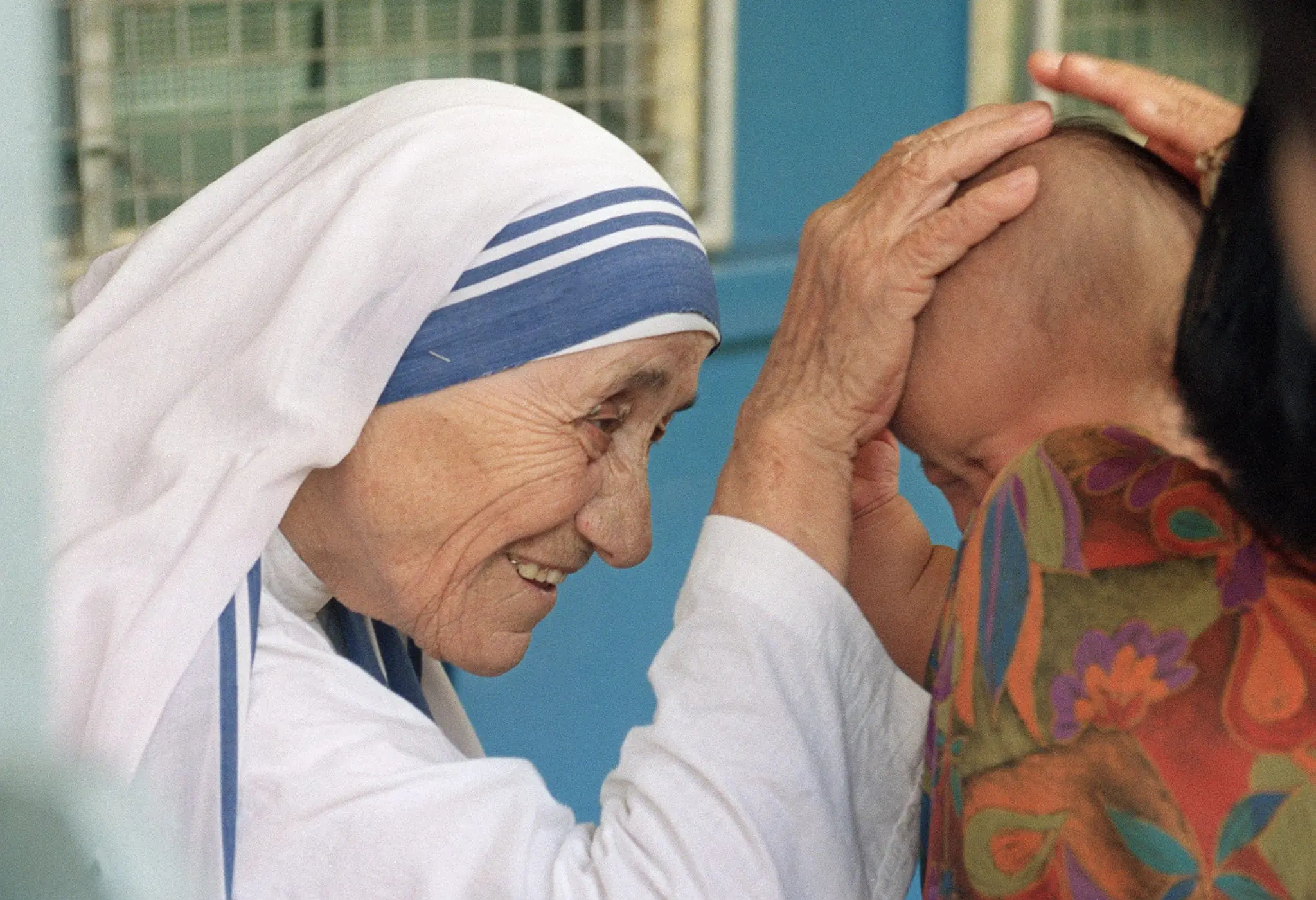
Saint Teresa of Calcutta’s feast day falls on Sept. 5, and among the causes she’s remembered for defending most consistently is the protection of human life at its most vulnerable points, the child not yet born and the person nearing death.
At the heart of Mother Teresa’s spirituality and her formation of the sisters in loving life at every stage and in every condition is her reflection on Jesus’ words on the cross, “I thirst.”
When Mother Teresa spoke at the National Prayer Breakfast in 1994, she offered the thousands of people in attendance a soul-stirring glimpse of her prayer life.
“When he was dying on the Cross, Jesus said, ‘I thirst.’ What did he thirst for?” she asked. “Jesus is thirsting for our love, and this is the thirst of everyone, poor and rich alike. We all thirst for the love of others, that they go out of their way to avoid harming us and to do good to us.”
And then she added, “This is the meaning of true love, to give until it hurts.”
In her matter-of-fact manner, Mother Teresa made her point even stronger. “But the greatest destroyer of peace in the world today is abortion,” she said, “because it is a war against the child, a direct killing of the innocent child, murder by the mother herself. And if we accept that a mother can kill even her own child, how can we tell other people not to kill one another?”
Peggy Noonan, the well-known columnist for The Wall Street Journal, was at the breakfast and recalled the shift in the room. The response was, “Well, silence. Cool deep silence in the cool round cavern for just about 1.3 seconds. And then applause started on the right hand side of the room, and spread, and deepened, and now the room was swept with people applauding, and they would not stop for what I believe was five or six minutes. … But not everyone applauded. The president and first lady [Bill and Hillary Clinton], seated within a few feet of Mother Teresa on the dais, were not applauding. Nor were the vice president and Mrs. Gore. They looked like seated statues at Madame Tussauds.”
Mother Teresa’s desire to love Jesus by welcoming new life, the poor, and the dying goes back even further. When she accepted the Nobel Peace Prize in Oslo in December 1979, roughly half her acceptance speech focused on abortion. Delivering her remarks before Norway’s King Olav V and a room of international dignitaries, she boldly said that legalized abortion made a nation poorer than any measure of material poverty could. Such societies, she said, had grown “afraid of the unborn child.” She tied the point to the Gospel scene of the Visitation, noting that John the Baptist, still in his mother Elizabeth’s womb, leapt for joy at the presence of the unborn Christ. That, she said, was evidence that even before birth a child could recognize and respond to God.
In a Sept. 4 email to Zeale News, The Mother Teresa Center in Rome shared another story from a Missionary of Charity priest who had frequent personal contact with Mother Teresa.
In 1979 Mother Teresa received the Nobel Peace Prize. . . Passing through Rome on her return to India, she came to our seminary and gave us a talk. . . . It seems that the day following the event of the Peace Prize, a priest came for Mass in the convent where Mother was staying, as MCs were not yet in Norway. After Mass the priest told Mother that he had listened to the broadcast of her speech the night before and had become quite upset. Mother had spoken out against abortion for the first time, and she had spoken strongly that abortion was nothing less than murder, and how can a young woman commit murder like that? The priest said that she would just alienate young women by speaking in that fashion. Mother said to us, “I just looked at Father and said, ‘Father, Jesus said, “I am the Truth, [Jn 14:6]” and it is for you and me to speak the truth. Then it’s for those who listen to accept or reject it.’” Mother believed in the radicalism of the Gospel message and she loved souls too much to be influenced by human respect.
Mother Teresa’s love for life also showed up in how she formed the Missionaries of Charity religious order. In addition to the normal vows of poverty, chastity and obedience, Missionaries of Charity take a fourth vow: wholehearted, free service to the poorest of the poor.
In 1952, she opened Nirmal Hriday (Immaculate Heart), a home in Calcutta where the dying — many found abandoned on the street — could receive care and die with someone present rather than alone. Around the same period, she opened Nirmala Shishu Bhavan (Children’s Home of the Immaculate Heart), a home for abandoned and orphaned children, which became the base for the adoption ministry she described in her National Prayer Breakfast talk decades later.
“I will tell you something beautiful,” she said. “We are fighting abortion by adoption — by care of the mother and adoption for her baby. We have saved thousands of lives. We have sent word to the clinics, to the hospitals and police stations: ‘Please don't destroy the child; we will take the child.’ … By adopting a child, these couples receive Jesus but, by aborting a child, a couple refuses to receive Jesus.”
The theological thread connecting all the Missionaries of Charity’s ministries was that every person, in any condition, bears the image of God and is owed love on that basis alone, not on the basis of being useful, healthy, or wanted. She taught her sisters to look for Christ in what she called his distressing disguise: in the newborn no one would claim or in the dying man no one would sit with in his final hours.
St. Teresa of Calcutta was canonized in 2016 by Pope Francis, and the Missionaries of Charity she founded continue to run homes for the dying and abandoned children in more than 130 countries.

.jpg&w=3840&q=75)


Comments