In Cameroon, Pope Leo reflects on Christ’s self-giving love, encourages young Catholics
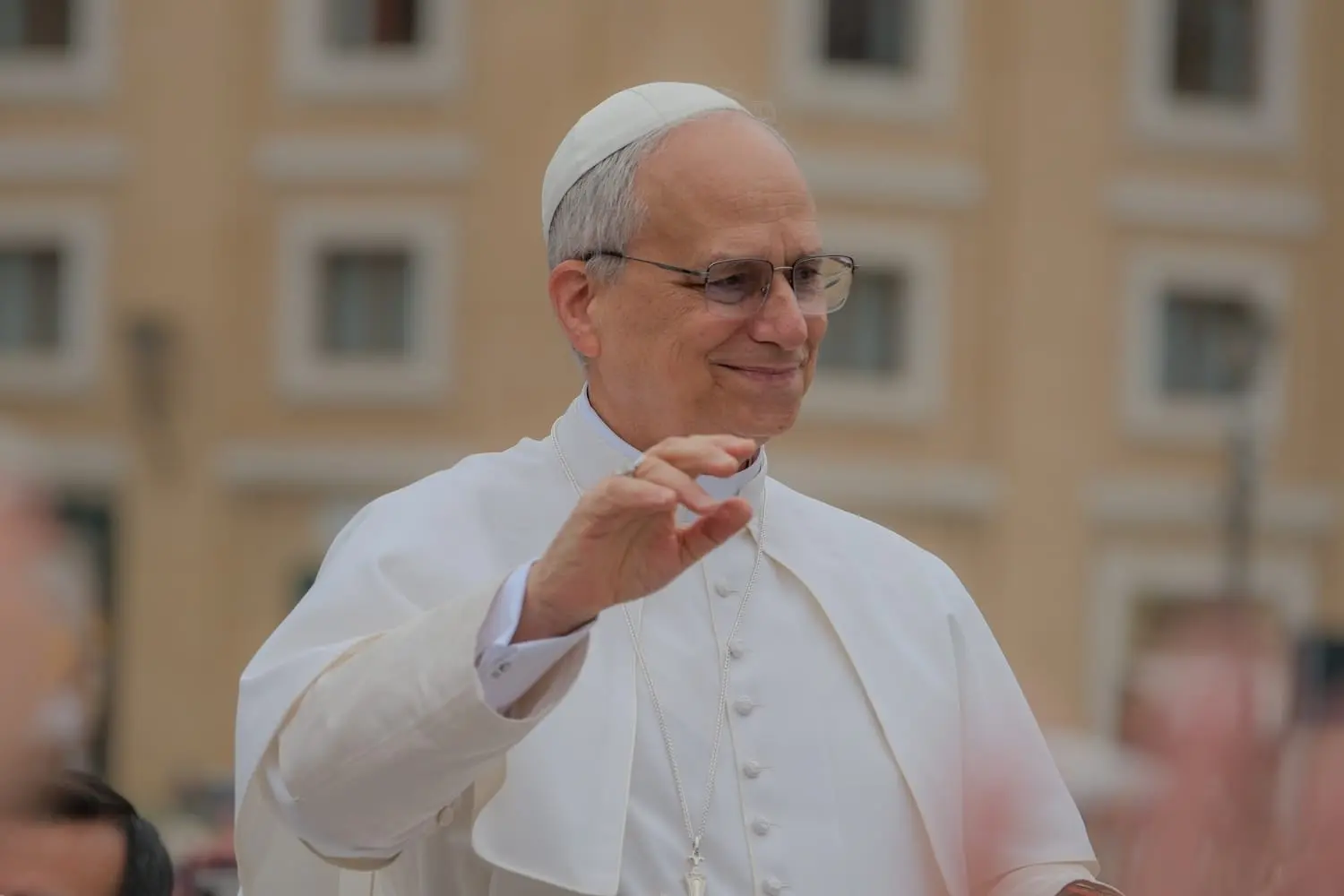
On the fifth day of his 11-day apostolic journey across Africa, Pope Leo XIV celebrated Mass in Cameroon’s economic capital of Douala on April 17, drawing an estimated 120,000 faithful, whom he invited during his homily to respond to human need with acts of solidarity, faith, and Eucharistic devotion.

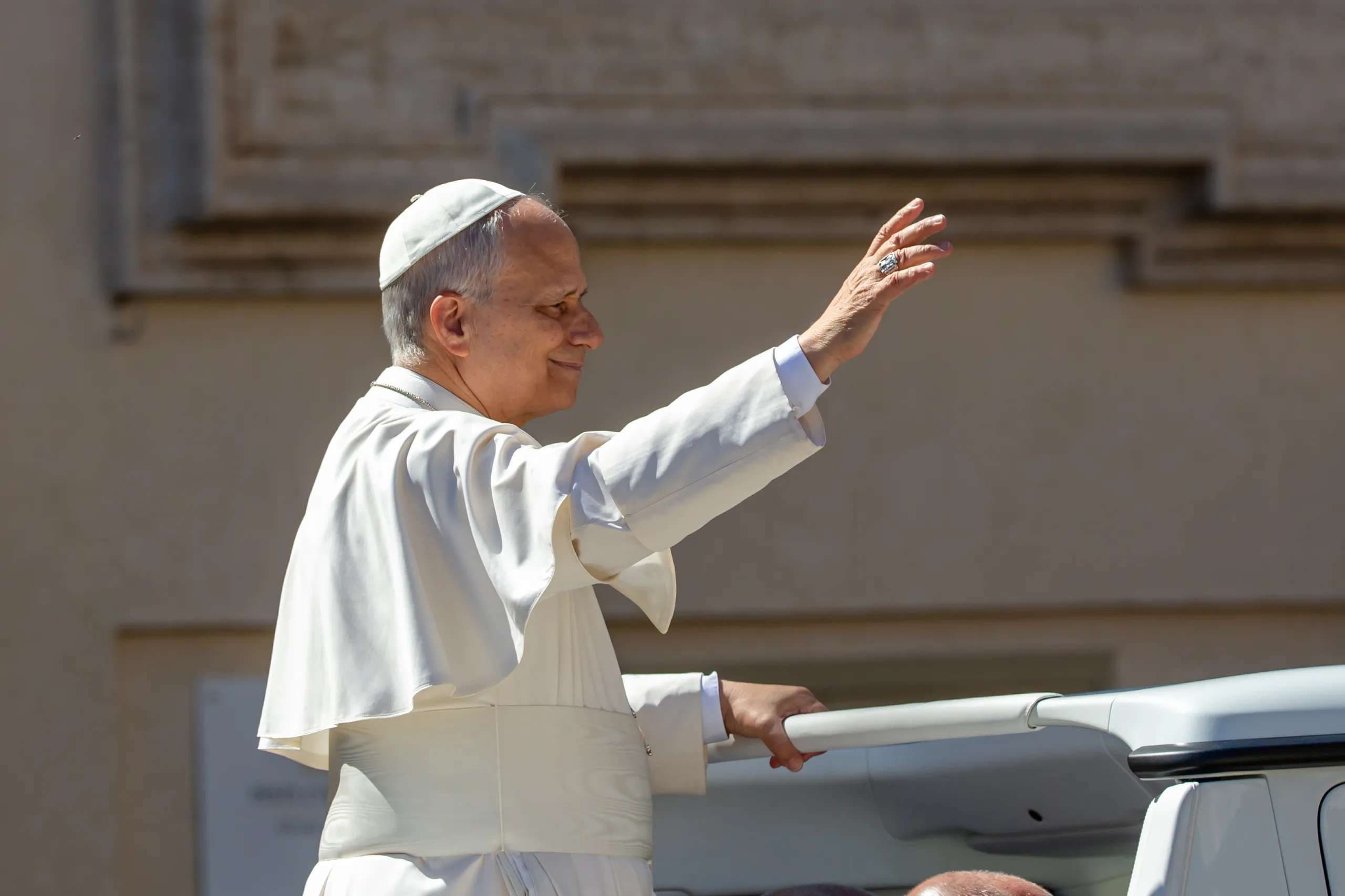
On the fifth day of his 11-day apostolic journey across Africa, Pope Leo XIV celebrated Mass in Cameroon’s economic capital of Douala on April 17, drawing an estimated 120,000 faithful, whom he invited during his homily to respond to human need with acts of solidarity, faith, and Eucharistic devotion.
Reflecting on John’s Gospel account of the miracle of the multiplication of the loaves and fishes, the Pope said Christ’s question to the disciples — how they would provide for the crowd’s needs — is directed at all the faithful today.
“Observing this disproportion, Jesus asks us today, just as he asked his disciples then: how will you solve this problem? Look at all these hungry people, weighed down by fatigue. What will you do?” he said.
Pope Leo said Jesus’ miracle reveals that what appears insufficient can become abundant when it is shared, emphasizing that human need points to both dependence on God and responsibility toward others.
“A serious problem was solved by blessing the little food that was present and sharing it with all who were hungry,” he said. “The multiplication of the loaves and the fish happened while sharing: that is the miracle!”
True abundance, the Holy Father added, comes when resources are given freely, describing the miracle as a sign that “there is bread for everyone if it is given to everyone” and “if it is taken, not with a hand that snatches away, but with a hand that gives.”
He said the miracle shows the faithful both “how God provides humanity with the bread of life” and “how we can share this sustenance with all men and women who, like ourselves, hunger for peace, freedom, and justice.”
“Each act of solidarity and forgiveness, every good effort, becomes a morsel of bread for humanity in need of care,” Pope Leo noted.
The Pope also underscored the centrality of the Eucharist, saying that nourishment for the body must be accompanied “with equal charity” by nourishment for the soul. Christ, he said, continues to strengthen the Church through the gift of his Body, sustaining the faithful in times of fear and suffering.
“This food is Christ himself,” he said, “who always gives his Church abundant sustenance and strengthens us on our journey by giving us his Eucharistic Body.”
He said the altar where the faithful gather for the Eucharist stands as a “proclamation of hope amid the trials of history and the injustices we see around us,” revealing God’s love and inviting the faithful, through Christ, to “share what we have, so that it may be multiplied in ecclesial fellowship.”
Directly addressing the young people of Africa, Pope Leo urged them to take an active role in shaping their communities by bringing the bread of life to their neighbors and providing them with “the food of wisdom and deliverance from all that does not nourish them.”
“Do not give in to distrust and discouragement,” he said. “Reject every form of abuse or violence, which deceives by promising easy gains but hardens the heart and makes it insensitive.”
He acknowledged the contrast between Cameroon’s natural resources and the poverty many people experience, encouraging the faithful to recognize that deeper wealth is found in “faith, family, hospitality, and work.”
The Pope called on youth to embrace their vocation, warning them not to waste their potential on paths that do not serve the common good.
Concluding his homily, Pope Leo invited all Christians to proclaim the Gospel through concrete acts of justice, peace, and faith.
“Proclaiming the Risen Jesus means leaving signs of justice in a suffering and oppressed land, signs of peace amid rivalry and corruption, signs of faith that free us from superstition and indifference,” he concluded.
After the Mass, the Pope made a private visit to St. Paul Catholic Hospital in Douala, where he imparted his blessing on everyone present and their loved ones, and he visited patients in their rooms, according to Vatican News.
Pope visits students in Central Africa: Catholic universities assume ‘a responsibility of the highest order’
Later on April 17, Pope Leo spoke at the Catholic University of Central Africa, an institution founded in 1989 by the Association of Episcopal Conferences of Central Africa. He called on university students and professors to build lives rooted in truth, moral integrity, and a spirit of encounter.
Pope Leo described the Catholic universities as “true communities of life and research,” where students and professors shared in a “fraternity in knowledge.” He called them to proclaim the Gospel and the Church’s doctrine by promoting “a culture of encounter, in generous and open cooperation with all the positive forces that contribute to the growth of universal human consciousness.”
“At a time when many in the world seem to be losing their spiritual and ethical points of reference, finding themselves imprisoned in individualism, superficiality, and hypocrisy,” Pope Leo said, “the university stands out as a privileged place of friendship, cooperation, and, at the same time, of interiority and reflection.”
Drawing on the ideas of Saint John Henry Newman, Pope Leo noted that the university’s goal has always been the search for Truth and described faith as a “kindly light” that complements reason and science.
Quoting Pope Francis’ encyclical Lumen Fidei, Pope Leo said, “The gaze of science thus benefits from faith: faith encourages the scientist to remain constantly open to reality in all its inexhaustible richness.”
He said Africa has a key role to play in “broadening the overly narrow horizons of a humanity that struggles to hope.”
Researchers, Pope Leo said, should pursue interdisciplinary, international, and intercultural perspectives while reflecting on faith in the context of contemporary challenges often “marked by injustice, inequality, conflict, and both material and spiritual degradation.”
He pointed to the university’s motto — “In the service of truth and justice” — and called for the formation of free consciences marked by a “holy restlessness.” This, he said, allows Christian faith to transform individuals and societies, inspiring prophetic change in the face of poverty and other contemporary struggles by “encouraging a continual search for God that is never satisfied.”
The Pope acknowledged an erosion of moral values in many societies, including Cameroon, where practices once seen as unacceptable are sometimes casually approved due to social, economic, and political pressures.
He encouraged young African Catholics not to fear “new things,” but to become “pioneers of a new humanism,” especially in the digital age, while cautioning against the darker side of technological progress.
On artificial intelligence, Pope Leo noted that these systems shape mentalities and environments, often in ways that reduce real human encounters.
“Within digital environments — structured to persuade — interaction is optimized to the point of rendering a real encounter superfluous; the otherness of persons in the flesh is neutralized, and relationships are reduced to functional responses,” he remarked. “Dear friends, you, however, are real persons! Creation itself has a body, a breath, a life to be listened to and safeguarded.”
Catholic universities, he said, bear a high responsibility within this sphere: not just to transmit specialized knowledge, but to form minds capable of discernment and hearts ready for love and service.
“Above all, it [the university] prepares future leaders, public officials, professionals, and other actors in society to carry out with integrity the responsibilities entrusted to them, to exercise their duties with uprightness, and to situate their activity within an ethical framework at the service of the common good,” Pope Leo said.
Finally, Pope Leo highlighted humility as the principal virtue that must animate the university community.
“Whatever our role or our age, we must always remember that we are all disciples — that is, fellow learners with one Teacher, who so loved the world that he gave his life,” he concluded. “I thank you, and I impart to you my heartfelt blessing!”
.jpg&w=3840&q=75)

Comments