Pope Leo opens visit to Algeria with focus on peace and justice
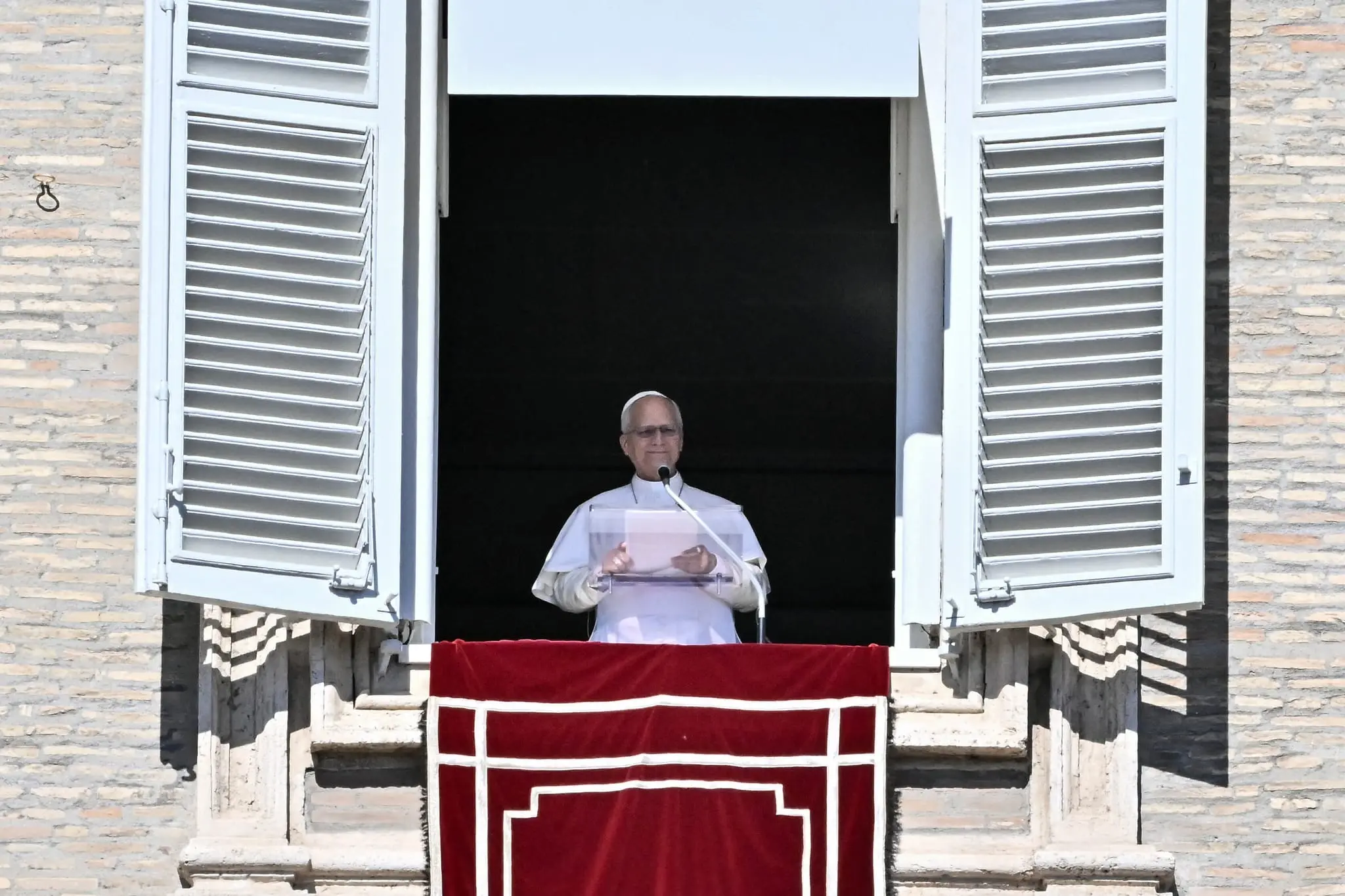
On the first day of his historic three-day Apostolic Journey to Algeria, Pope Leo XIV honored the nation’s independence martyrs and declared that “the future belongs to men and women of peace,” as he urged the country to become a bridge of justice, dialogue, and human dignity in a divided world.

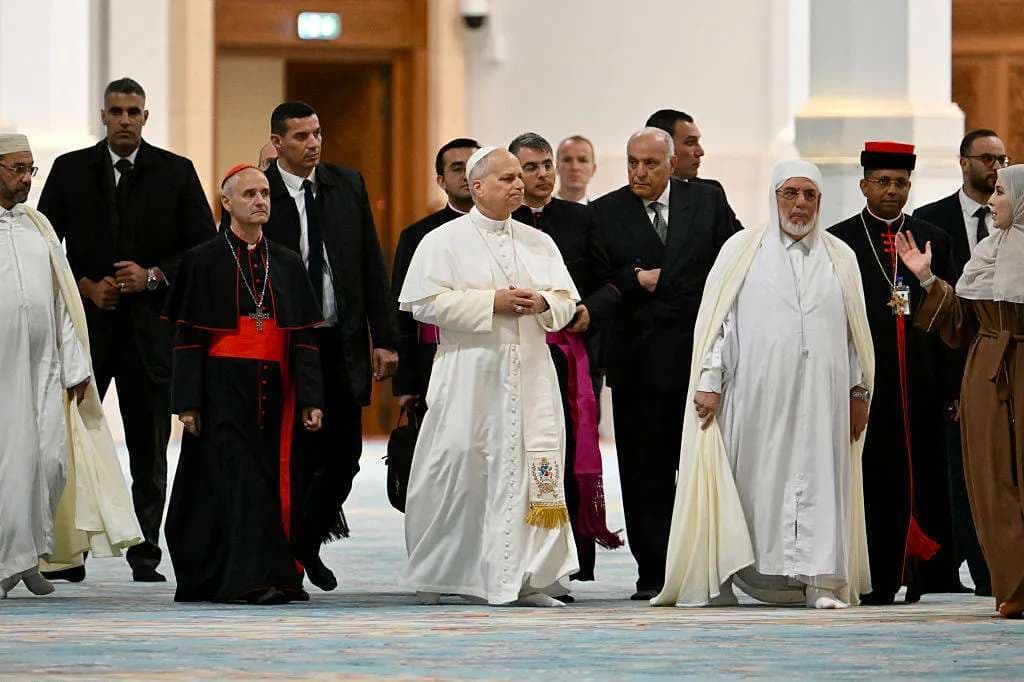
On the first day of his historic three-day Apostolic Journey to Algeria, Pope Leo XIV honored the nation’s independence martyrs and declared that “the future belongs to men and women of peace,” as he urged the country to become a bridge of justice, dialogue, and human dignity in a divided world.
As Zeale News previously reported, the Pope’s trip to the North African nation is aimed at highlighting the legacy of Saint Augustine, who was born in the 4th century in Tagaste in modern-day Algeria, and the Christian presence in the region. The trip marks the first papal visit to Algeria, a Muslim-majority country with roughly 10,000 Catholics, and serves as an opportunity to dialogue with the Muslim world.
Aboard his flight from Rome to Algeria, Pope Leo told reporters he believes St. Augustine “offers a very important bridge in interreligious dialogue,” according to Vatican News. He also said visiting the country is a blessing for himself, the Church, and the world, because “we must always seek bridges to build peace and reconciliation.”
Pope Leo visits Algerian monument, addresses people gathered
After arriving in the country, Pope Leo visited the Martyrs’ Monument, or “Maqam Echahid,” which honors those killed in Algeria’s 1954-1962 war for independence from France. There, the Pontiff laid a wreath in tribute to those who gave their lives for the nation’s freedom. He also gave his first public address in the country, in front of some 2,000 people gathered at the site.
In his remarks, Pope Leo said he was grateful to return to Algeria after having already visited the region “twice as a spiritual son of St. Augustine.” Later in the day, Pope Leo explained he visited Annaba — which is near the remains of ancient Hippo — in 2001 and 2013.
During his address, he said he came to visit the people of Algeria “first and foremost as a brother who is delighted to be able to renew, through this meeting, the bonds of affection that bring our hearts closer together.”
“Algeria is a great country, with a long history rich in traditions, dating back to the time of Saint Augustine and well before,” he said. “It is also a painful history, marked by periods of violence.”
But, Pope Leo added, “the nobility of spirit” of the Algerian people has enabled them to endure historical trials “with courage and integrity,” especially during their struggle for independence. Reflecting on that legacy, he encouraged all people to “remember that God desires peace for every nation: a peace that is not merely an absence of conflict, but one that is an expression of justice and dignity.”
He said such peace can only come through forgiveness, which allows people to “face the future with a reconciled spirit.” While acknowledging that forgiveness can be difficult, Pope Leo warned that “we cannot add resentment upon resentment, generation after generation” as conflicts throughout the world “continue to multiply.”
“The future belongs to men and women of peace,” he said. “In the end, justice will always triumph over injustice, just as violence, despite all appearances, will never have the last word.”
Turning to Algeria more specifically, Pope Leo said, “In this land, where cultures and religions intersect, mutual respect is the path that enables everyone to walk together. May Algeria, firm in its roots and steadfast in the hope of its young men and women, continue to contribute to stability and dialogue within the international community and along the shores of the Mediterranean.”
The Holy Father added that a nation that “loves God possesses true wealth,” saying that the Algerian people “cherish this jewel as one of their treasures.”
“Our world needs believers like this — men and women of faith who thirst for justice and unity,” he said, adding, “it is a great gift and a sacred duty for us to declare with conviction that we are always united as brothers and sisters, children of the one God.”
Pope Leo also invoked Christ’s question from the Gospel of Matthew, “For what will it profit a man, if he gains the whole world and forfeits his life?” (Mt 16:26) and said those honored at the monument had already answered it by giving their lives up for “the love of their own people.”
“True freedom is not merely inherited,” he said. “It is chosen anew every day.”
In closing, Pope Leo recited the Beatitudes from Christ’s Sermon on the Mount recorded in the Gospel of Matthew.
Pope Leo delivers address to Algerian civil authorities
After his first address, Pope Leo met with Algerian President Abdelmadjid Tebboune, other government officials, the nation’s civil society, and the diplomatic corps and encouraged them to promote dialogue, solidarity, and a vibrant civil society rooted in respect for human dignity.
Speaking to some 1,400 civil authorities gathered at the Djamaa el Djazair Conference Center in Algiers, the Holy Father described himself as a “pilgrim of peace,” adding that “we are brothers and sisters, for we have the same Father in heaven.”
He praised Algeria’s culture of reconciliation, solidarity, hospitality, and community, pointing in particular to the nation’s tradition of almsgiving (sadaka) as a “common and natural practice among you.” The Pontiff noted that the word sadaka can also mean justice, “in the sense that we do not keep things for ourselves, but share what we have as a matter of justice.”
“The one who accumulates wealth and remains indifferent to others is unjust. This view of justice is both simple and radical for it recognizes the image of God in others,” he said. “Indeed, a religion without mercy and a society without solidarity are a scandal in God’s eyes. Yet many societies that consider themselves advanced are plunging ever deeper into inequality and exclusion.”
He added, “Africa knows all too well that people and organizations that dominate others destroy the world, which the Most High has created in order that we might all live together.”
The Pope urged civil leaders to embrace dialogue and compassion in order to build a more just society.
“By respecting the dignity of everyone and allowing yourselves to be moved by the pain of others, instead of multiplying misunderstandings and conflicts, you can surely become protagonists of a new chapter in history,” he said. “Today, this is more urgent than ever in the face of continuous violations of international law and neocolonial tendencies.”
In the speech, Pope Leo invoked the teachings of his two predecessors to emphasize the importance of building a more just global economy. Citing Pope Benedict XVI’s encyclical Caritas in Veritate, he said globalization, if properly guided, can promote a chance for large-scale wealth redistribution. If poorly managed, however, it risks deepening poverty and inequality and triggering a global crisis. He also quoted Pope Francis’ Fratelli Tutti, saying that the world needs “a model of social, political, and economic participation” that strengthens institutions by “including the excluded in the building of a common destiny.’”
He encouraged Algeria’s leaders “not to fear this outlook but to promote a vibrant, dynamic and free civil society, in which young people in particular are recognized as capable of helping to broaden the horizon of hope for all.”
“The true strength of a nation lies in the cooperation of everyone in pursuing the common good,” he added. “Authorities are called not to dominate, but to serve the people and foster their development.”
Pope Leo said Algeria — bordered by the Mediterranean Sea and the Sahara Desert — represents a “geographic and spiritual crossroads” filled with “immense treasures of humanity.”
“For the sea and the desert have been places of mutual enrichment among peoples and cultures for millennia,” he said. “Woe to us if we turn them into graveyards where hope also dies!”
He urged leaders to “multiply oases of peace,” “denounce and remove the causes of despair,” and “oppose those who profit from the misfortune of others!”
The Pope warned against modern tensions in Algeria, saying that he has seen both fundamentalism and secularization affect Algerian society.
“Religious symbols and words can become, on the one hand, blasphemous languages of violence and oppression, or on the other, empty signs in the immense marketplace of consumption that does not satisfy us,” he said.
In closing, Pope Leo encouraged Algeria’s leaders not to be discouraged by “absurd polarizations” but to respond with clarity and purpose.
Polarization, he said, is “a sign that we are living in an extraordinary time of great renewal, in which those who keep their hearts free, and their consciences alert, can draw from the great spiritual and religious traditions new ways of seeing the world and an unshakable purpose in life.”
During the first day of his visit to the country, Pope Leo also met privately with the Augustinian missionary sisters in Bab El Oued and, in Algiers, visited the mosque and gathered with the local Catholic community at the Basilica of Our Lady of Africa — which houses relics of both St. Augustine and St. Monica.
The trip is part of a broader 11-day visit to Africa that will include stops in Cameroon, Angola, and Equatorial Guinea.



Comments