In Wednesday audience, Pope Leo urges renewed devotion to rites of liturgy
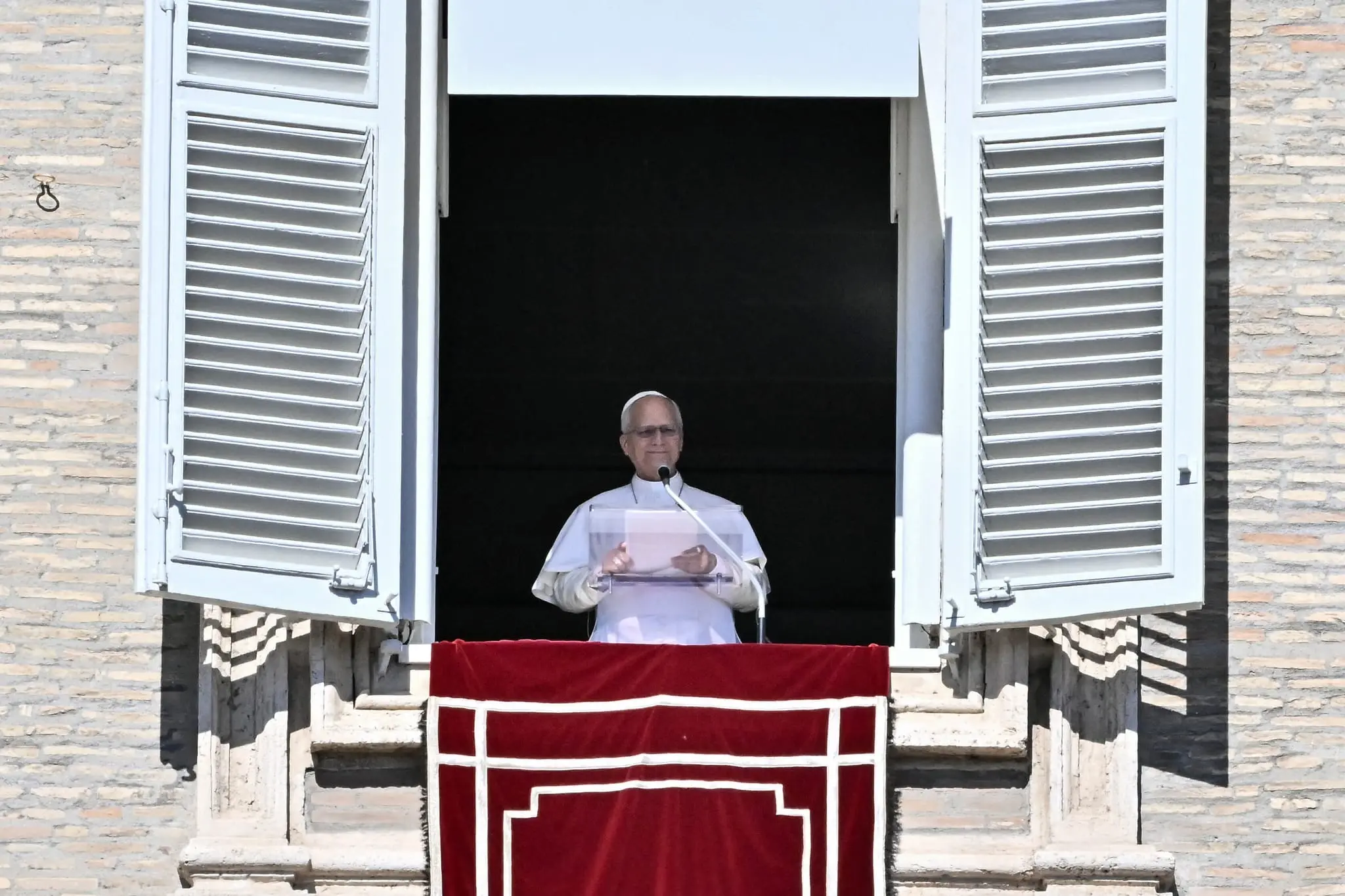
During his papal audience in St. Peter’s Square June 3, Pope Leo XIV reflected on the significance of the rite, sign, and symbol in the context of the liturgy, drawing on teachings from the constitution of the Second Vatican Council.

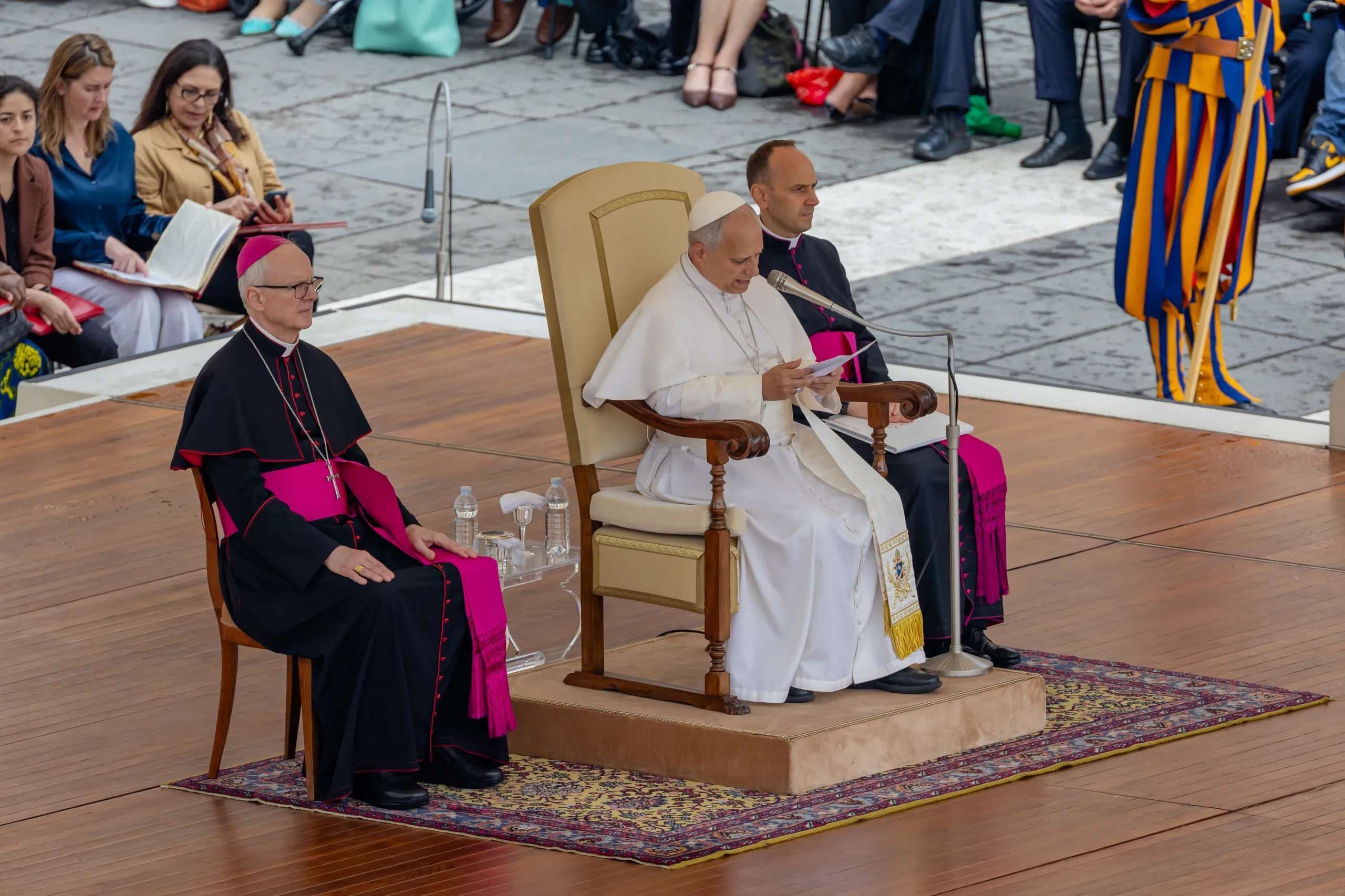
During his papal audience in St. Peter’s Square June 3, Pope Leo XIV reflected on the significance of the rite, sign, and symbol in the context of the liturgy, drawing on teachings from the constitution of the Second Vatican Council.
Focusing first on the rite of the liturgy, he emphasized that rites are not “a mere external covering of the sacramental mystery” or “a collection of arbitrary ceremonies” but are rather “the ecclesial meditation through which the divine gift reaches us.”
“The rite gives shape to liturgical action and, through it, to our lives, generating a spiritual sensibility in us that makes us capable of savouring the presence of God through Jesus Christ,” Pope Leo said.
He noted that cultivating a spiritual sensibility can only happen as a full participant in the liturgy, not as a stranger or spectator. By participating in the rite of the liturgy, the faithful are more attuned to God’s word and the gift of community, Pope Leo added.
The Pontiff cautioned against rebelling against defined gestures and prayers set out by the rite, saying that though they can “sometimes be at odds with our individual tendency towards spontaneity,” they are meant to interrupt “our frenetic activities, leading us back to what is essential.”
In a world that focuses on productivity, Pope Leo said that abiding by and honoring the set actions of the rite offers “another experience of time and space” that gives the heart space to regenerate and recognize the workings of the Holy Spirit.
Shifting to the signs and symbols of the liturgy, the Pope cited the Second Vatican Council’s constitution: “The sanctification of the man is signified by signs perceptible to the senses, and is effected in a way which corresponds with each of these signs.”
Pope Leo connected the constitution to the Catechism, which states that signs have their basis in the Creation story and the Old Testament but are ultimately fulfilled in Jesus. He also highlighted the difference between a sign and a symbol, noting that signs become symbolic when they refer to broad meanings rather than a specific idea. He also pointed out that symbols are practical actions, such as genuflecting, that transport those who perform them into a spiritual reality.
Pope Leo concluded his address with a call for renewed devotion to the liturgy in order to be open to encountering God.
He added, “We need to allow ourselves to be educated by the rites of the liturgy, caring for the beauty of our celebrations with a delicate touch and without arbitrariness, and committing ourselves to an authentic mystagogy.”

Comments