Reevaluating ‘traditude’: How Gen Z men can truly transform the culture
Young men today are increasingly eager to take on the challenge of rebuilding what decades of aggressive secularism has stripped away from society. But as we engage this battle, we must embrace our baptismal mission as priests, prophets, and kings as the fundamental blueprint of authentic masculine virtue.
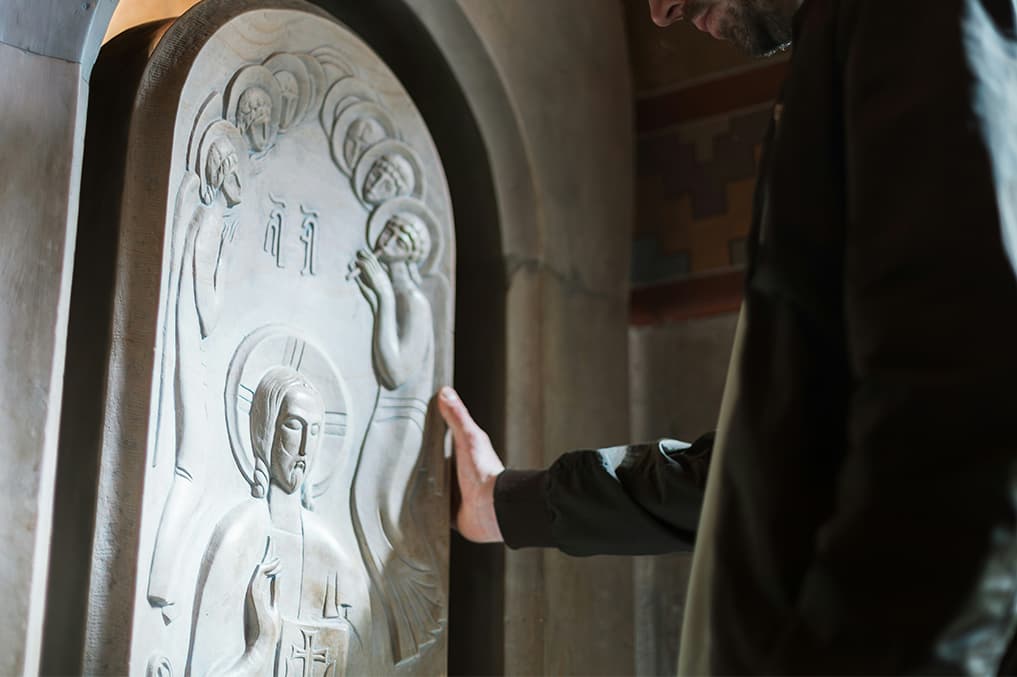
There is an undeniable, roaring fire burning in the hearts of young men today. After decades of cultural drift and hollow secular promises, a new generation is drawing a line in the sand and returning home to the Catholic Church. We are seeking truth, beauty, and tradition. More than anything, we are eager to take on the challenge of rebuilding what decades of aggressive secularism has stripped away from society.
But how does God want us to fight this fight?
When we look online, we find endless “own the libs” and “burn the heretics” content designed as a knee-jerk response to a culture that marginalizes men. As a result, there’s now developed a proud culture of “rad-trads,” but too frequently this new culture comes with an off-putting dose of what some call “traditude.”
Searching for answers
I get the impulse. Eight years ago, before I began to realize just how vast the treasury of our faith is, I was just as eager to take up that fight for restoration. But I quickly realized there were heavy questions that still needed real answers, and there were plenty of shallow, reactionary answers all around me.
Thank God I was steered toward Franciscan University and was able to complete my graduate education in Catholic Studies. I wish everyone could experience a truly transformative education like that. It grounded me. It taught me that without deep formation, it is incredibly easy to mistake an angry political club for the Mystical Body of Christ.
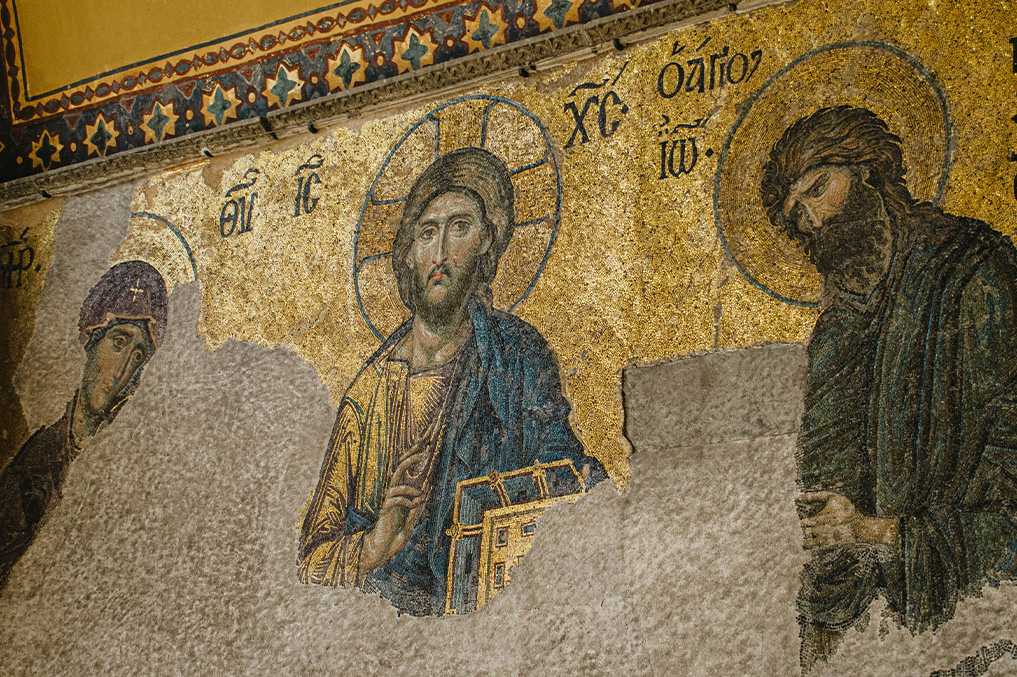
The most important lesson I learned early on is that if we want to change the culture, we have to throw out the secular playbook and return to our true baptismal identity. Political commentators and rad-trad podcasters will try to claim your absolute loyalty, but for baptized Catholics, God has anointed us for a higher, threefold mission: priest, prophet, and king. This isn’t a title reserved for a select, elite few; it is your fundamental blueprint for authentic masculine virtue.
The blueprint: Priest, prophet, and king
When we weaponize the faith merely to win online debates or feed our own egos, we actively distort these three holy offices.
- The priest consecrates: As a priest, you are called to offer spiritual sacrifices and consecrate your entire life to God. When you pray before a meal, you set that food apart. When you step into a secular, non-religious workplace and work hard to provide for your family, you are sanctifying that space. We fail this office when we treat the world as purely an enemy to be destroyed rather than a creation to be redeemed.
- The king governs: A king carries himself with true nobility, dignity, and self-mastery. He governs his passions rather than letting his anger govern him. A true king knows when to turn the other cheek and when a situation calls for fierce resistance. We fail this office when we put our own pride above being peacemakers, or conversely allow the fear of a worldly strongman to cripple us.
- The prophet witnesses: A prophet is a living mouthpiece for God’s truth, by word and deed. Your daily choice to live morally, reject evil, and stand your ground is a massive prophetic statement. We fail this office when we run away like the prophet Jonah from the very people God is calling us to reach because we’ve decided they aren't part of our chosen club.

The cost of "traditude"
When we weaponize our intellect and lose our charity, our prophetic witness collapses into "traditude." This rigid, elitist disposition wears the mask of holiness, but it is driven by haughtiness. At its core, it is a symptom of insecurity — a desperate attempt to project power by pressuring others to affirm our superiority and bend to our will. We gain nothing by playing the strongman; we only align ourselves with the very pride that God will take down.
“God resists the proud, but gives grace to the humble.” (James 4:6)
Not long ago, I was at a wedding where I struck up a conversation with an Anglican bridesmaid. She told me a heartbreaking story: She had been deeply drawn to the Catholic Church and had even enrolled in RCIA. But during the process, she encountered a group of young Catholic men oozing with traditude. Their approach was so arrogant, rigid, and exclusive that it made her incredibly anxious. She walked away from the Church because of them. They failed their prophetic office because they chose to act like elitist gatekeepers rather than joyful guides.
Thankfully, the story didn't end there. The wedding we were attending was for a friend who lives out his faith as a true king and prophet — with genuine humility, good humor, and deep intellectual backing. Witnessing him and his wife’s joyful, integrated life gave her a fresh look at the Catholic faith. By the end of the night, she told me she was actively reconsidering entering the Church.

No hiding in the past: Meeting the world where it is
A common trope of traditude is to look at the modern landscape and pin every single societal collapse on post-1960s Catholicism. But if we are being honest, a few liturgical changes didn't reshape society nearly as drastically as the sexual revolution and the Church’s historic unpreparedness for modernity.
Rather than embracing traditude, focus on looking for the spark of holiness and goodness in everyone you meet. Scores of non-Catholics and non-practicing Catholics possess meritorious character; everyone holds some measure of the truth, and we are all on a journey. Discussing how the truth they hold fits into the greater picture of the Church’s teachings is a great way to share the faith.
As your brother in this fight, let me be completely straight with you: You will at times fail at this high standard. I have failed plenty of times over the past eight years. You will lose your temper, fall into pride, and succumb to weakness.
But a king does not stay down in the dirt. When you stumble, you don't abandon the field; you step into the confessional. The Sacrament of Reconciliation is our spiritual locker room. It is where our failures are washed clean by grace and turned into an ever-deepening conviction. There is immense comfort in knowing that the early Church wasn't made of flawless, cradle-Catholics — it was won by the blood of martyrs and imperfect sinners who knew how to repent, receive mercy, and get right back in the fight.
The ultimate surrender
Jesus did not conquer the world by screaming at it from a safe distance or by casting off the weak. He exercised His ultimate kingly and priestly authority by surrendering His life to the Father, nailed to a cross. That crucifix is the ultimate symbol of our faith. It is not a symbol of proud defiance, but of radical, world-altering sacrifice.
The question for our generation of men is this: Will you deepen and renew daily the surrender of your life to Christ? How badly do you actually want personal conversion?
It takes very little effort to be an angry zealot behind a keyboard or a rigid judge in the back of a church. It takes profound, masculine strength to be a winsome channel of grace. Stand unapologetically for truth and goodness in society, but do it with a heart bursting with compassion and mercy. Let God do what He wants to do through you, and trust Him to take care of the rest.







Comments