Indiana bishops release letter on ‘integral ecology’ with Eucharist at the center
The Catholic bishops of Indiana — a state filled with rivers, forests, farmland, and many other examples of natural beauty — recently released a pastoral letter that considers the state’s topography as it relates to the theology of creation, Christians’ responsibility to care for it well, and the Eucharist.

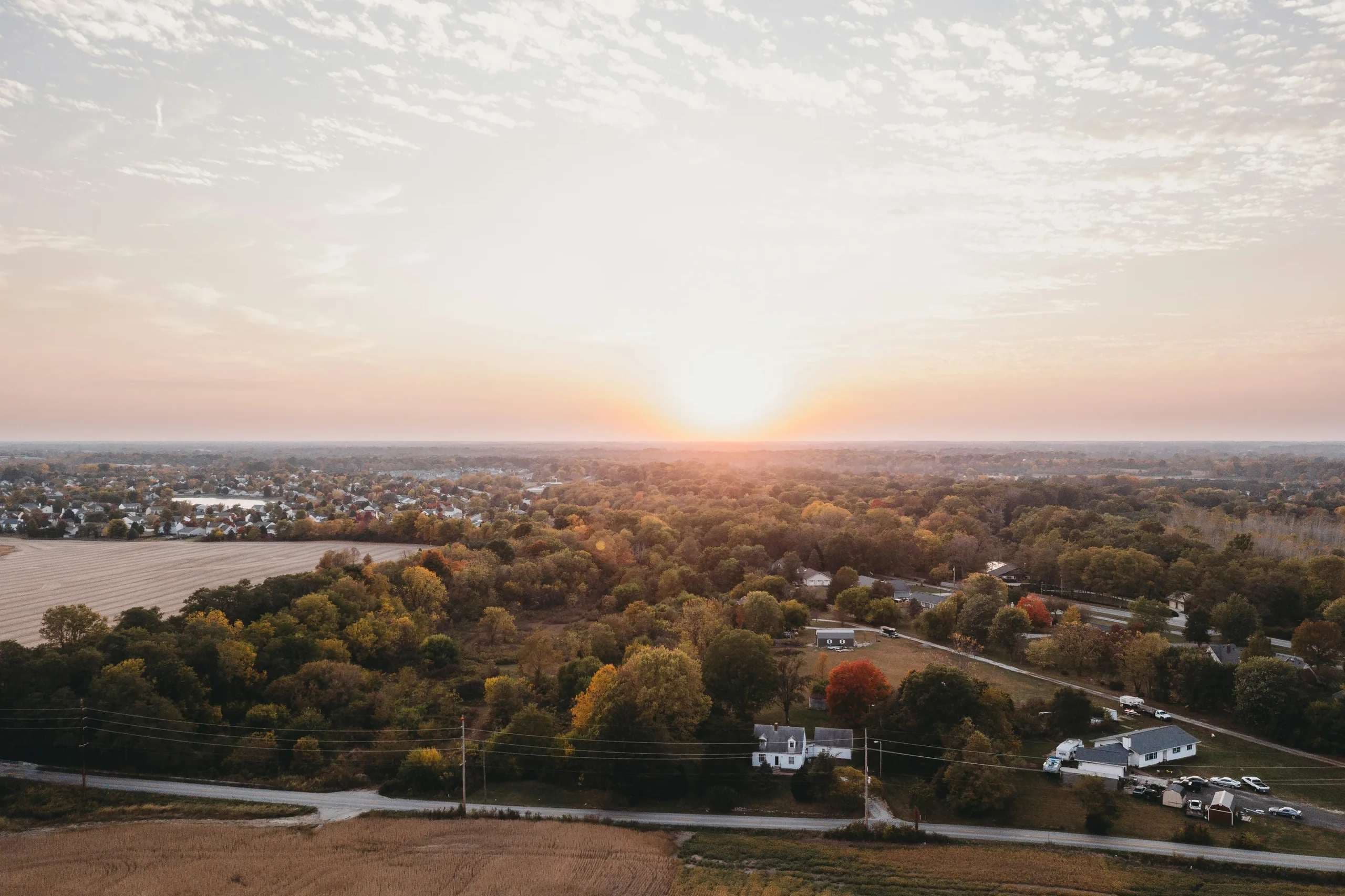
The Catholic bishops of Indiana — a state filled with rivers, forests, farmland, and many other examples of natural beauty — recently released a pastoral letter that considers the state’s topography as it relates to the theology of creation, Christians’ responsibility to care for it well, and the Eucharist.
In the letter released April 9, the bishops encouraged the faithful to live out the spiritual and corporal works of mercy as ways to cultivate better relationships with others and with creation itself. They also acknowledged that while social and ecological crises often require technological, economic, and political solutions, the bishops’ focus on the spiritual aspect remains crucial. The spiritual dimension, they wrote, “is foundational to all responses as it fundamentally affects our relationships with God, our own selves, our neighbor, and creation.”
“At the core of the ecological and social crises is a human heart enclosed in upon itself, alienated from God, our neighbor, and creation,” they continued. “The Sacred Heart of Jesus seeks to draw each human heart into communion with Himself and through Him into communion with the Trinity.”
The Eucharist is the centerpoint of the letter, which proclaims the True Presence of Christ in the sacrament and underscores how receiving Him on Sundays should affect the way people live in the world throughout the week. The bishops spotlighted the healing, sanctifying, and unifying power of the Eucharist, and elaborated also on the fact that as persons who are both body and soul — material and spiritual — the pilgrimage of life is walked through the natural world and in the spiritual home of one’s parish.
They also explained how the Eucharist, as a sacrament — which is an outward sign instituted by Christ to give grace — uses “the created world to transform and redeem us,” rather than bypassing creation in this work.
“In the Sacrament of the Eucharist, we see and experience the fullness of being both ecclesial and ecological citizens,” the bishops wrote. “The Trinity’s first gift of love is all of creation, and the second is our redemption in Jesus Christ through the Holy Spirit. Creation and redemption go together.”
“The Risen Christ who redeems us is also the Creator through whom all of creation comes into being,” they continued. “In the Eucharist, the fruit of the earth — wheat and grapes — tended by agricultural workers is transformed by the work of human hands to become bread and wine which we bring forward to the altar where the priest, through the power of the Holy Spirit, consecrates them into the Body and Blood of Jesus Christ.”
The letter reflects on agriculture, watersheds, theology of creation, environmental stewardship, and the Eucharist. The letter also addresses dynamics between the family and the environment, spotlighting the harmful effects of the birth control pill on the environment. It also encourages its state to consider ways to develop renewable energy sources while keeping future generations in mind.
Indiana is the ninth-largest farming state in the country. According to the Indiana State Department of Agriculture, in 2022 state farmers cultivated almost 14.6 million acres of farmland. According to the Indiana Catholic Conference, the letter has been in development for years and was completed in 2025.
The bishops also explained in the letter what “integral ecology means,” noting that they have previously written separately on ecology, poverty, and the Eucharist.
“Today,” they wrote, “we write from the perspective of ‘integral ecology’ that unites all three realities together.”
In a press release, Archbishop Charles Thompson of Indianapolis said that this concept of integral ecology “helps us see more clearly how human life and the natural world are deeply interconnected.”
“Here in Indiana, we delight in the beauty of creation — from our Great Lake and winding rivers to forests, prairies, wetlands, and farmland,” he wrote. “As people at home in this land and pilgrims journeying toward our true home in heaven, we are called to receive creation as a gift and to care for it with gratitude and hope.”
The letter also received praise from a Vatican dicastery leader, according to the bishops.
Cardinal Michael Czerny, prefect of the Dicastery for Promoting Integral Human Development, said in a message that he is happy to support the letter, which he said is “a thoughtful contribution to the Church’s ongoing reflection on the relationship between integral human development and care for creation.”
The letter concludes with several ways the faithful can live out good stewardship, encouraging the faithful to disconnect from the virtual world and encounter the beauty of God’s creation. The bishops called particularly for Sunday to be lived out in a renewed way as a day of rest focused on worship in the Eucharist and cultivating relationships.
“Refreshed and elevated by our encounter with the Real Presence of the Risen Lord in the Eucharist, let us go forth to encounter the real presence of one another and also the presence of the Trinity in creation. Our contemporary culture tempts us away from Real Presence to encounter another by a virtual presence through screens and electronic words,” they wrote.
They encouraged the faithful to refrain from online shopping on Sundays and to go explore the outdoors, citing specific places in Indiana to see, such as the 24 state parks and the Indiana Dunes National Park. The bishops also suggested learning the names of the local flora and fauna, writing, “Like Adam, share in the joy of naming God’s creatures.”
The bishops once again invited the faithful to encounter God through the world He created for them.
“See with sacramental vision the trace of God in all things and learn to hear God’s song of creation speaking a divine message to us,” the bishops wrote. “Develop the biblical and spiritual disposition of praising God for the gift of creation.”


Comments