Iran War day 52: Trump warns ‘lots of bombs’ if ceasefire deadline expires
With a fragile ceasefire set to expire within days, President Donald Trump warned that strikes could follow if no agreement is reached, as the U.S. pushes to restart high-stakes nuclear talks with Iran in Pakistan — even as Tehran publicly casts doubt on whether it will attend.

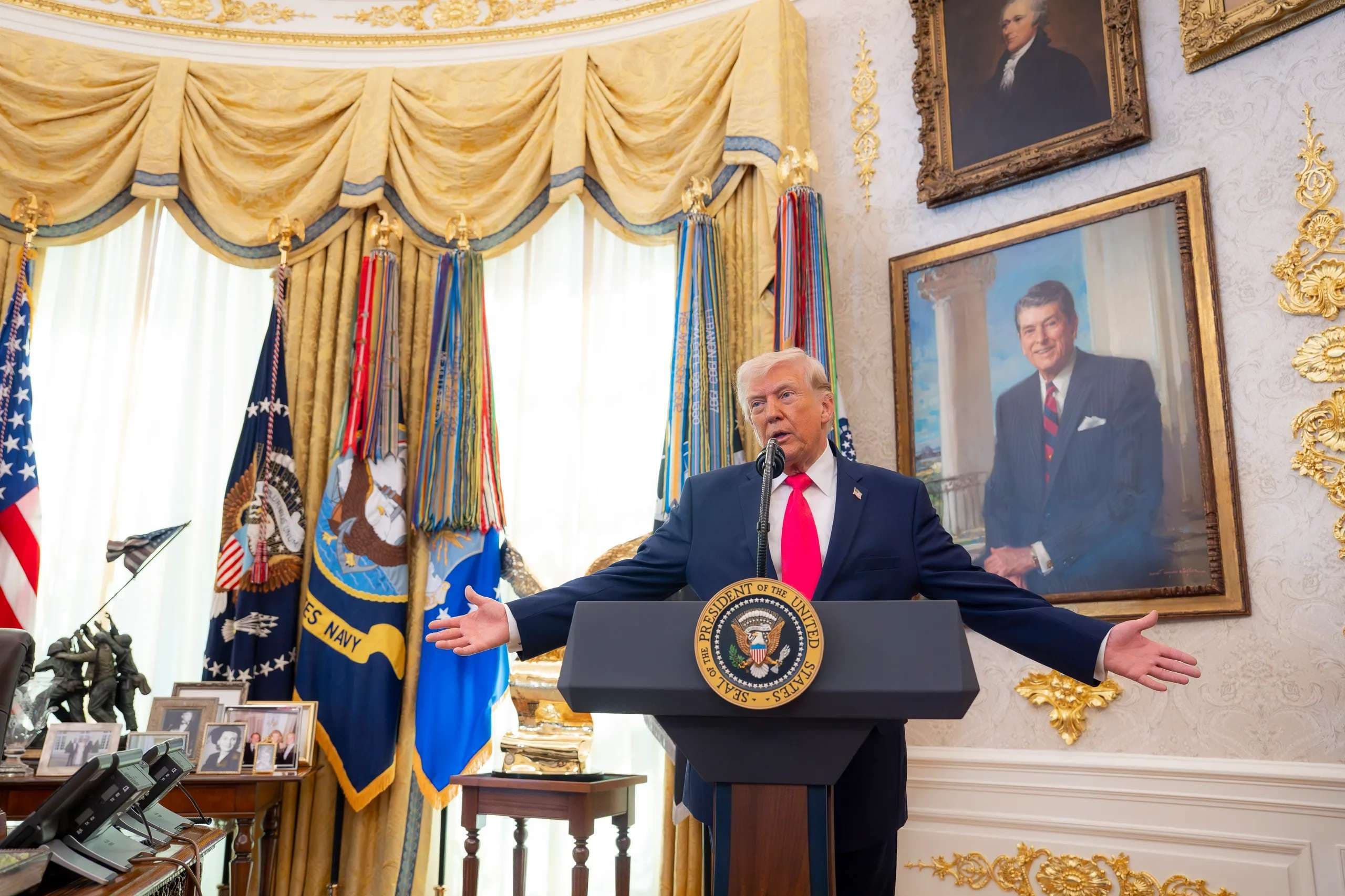
With a fragile ceasefire set to expire within days, President Donald Trump warned that strikes could follow if no agreement is reached, as the U.S. pushes to restart high-stakes nuclear talks with Iran in Pakistan — even as Tehran publicly casts doubt on whether it will attend.
A new assessment also suggests Iran’s negotiating position may be controlled by the Islamic Revolutionary Guard Corps (IGRC), a designated terrorist organization, which could complicate prospects for a deal.
‘Lots of bombs start going off’ if ceasefire expires
Trump warned in an April 20 phone call with PBS News that if April 22 comes without an agreement, "lots of bombs start going off."
The statement came as a U.S. delegation prepares for a second round of peace talks in Islamabad, Pakistan.
When asked whether Iran would still show up to the negotiations, Trump said he wasn't sure.
"They're supposed to be there. We agreed to be there, although they say we didn't," he said, according to PBS News.
He added that if Iran doesn't attend, "that's fine too."
Trump said the sole U.S. demand at the table is that Iran not obtain a nuclear weapon.
"Very simple. Iran cannot have a nuclear weapon. Very simple," he said.
Trump stated April 19 on Truth Social, “We're offering a very fair and reasonable DEAL, and I hope they take it because, if they don't, the United States is going to knock out every single Power Plant, and every single Bridge, in Iran. NO MORE MR. NICE GUY!”
The ceasefire between the U.S. and Iran was originally set to expire the evening of April 21, as Zeale News reported.
In a separate April 20 phone call, Trump told Bloomberg the ceasefire expires "Wednesday evening Washington time" — pushing the deadline to April 22, possibly buying more time for negotiations. He called an extension "highly unlikely" if no deal is reached before then.
Iran has ‘no clear prospect’ of attending negotiations
Iran signaled it has no plans to send negotiators to Islamabad for a second round of talks with the U.S.
On April 20, Iran's state news agency (IRNA), called reports of a second round of talks "not true," blaming U.S. "excessive demands, unreasonable and unrealistic demands, frequent changes in positions, constant contradictions," and the continuation of the naval blockade for stalling progress. IRNA dismissed U.S. statements on the talks as "a media game" and "part of the 'blame game' to pressure Iran."
“In these circumstances, there is no clear prospect for fruitful negotiations,” IRNA stated.
Iran’s Foreign Ministry spokesman Esmaeil Baghaei similarly accused the U.S. of violating the ceasefire from the start, citing the naval blockade of the Strait of Hormuz and the seizure of an Iranian cargo ship as breaches of the truce and international law.
Despite sending mixed signals, both sides gave clearer indications April 20 that they plan to send negotiators to Islamabad this week, according to The New York Times.
The Times reported that Vance is expected to leave Washington for Islamabad on April 21, and two Iranian officials said Mohammad Bagher Ghalibaf — who led Iran's delegation in the first round — would attend if Vance were present.
International relations analysts told Al Jazeera that Iran's public refusal to attend likely reflects a deliberate strategy of maintaining a hardline posture publicly while keeping the door open privately. Even if talks resume, officials do not expect a final deal — the most realistic outcome this round would be a ceasefire extension, with core disputes over Iran's nuclear program and the Strait of Hormuz still unresolved.
IRGC's grip on Iran's negotiations
According to a new assessment, the head of the IRGC may have had more control over Iran's negotiations than previously understood. The U.S. has designated IRGC a foreign terrorist organization.
The Institute for the Study of War and the Critical Threats Project assessed in an April 18 report that IRGC Commander Major General Ahmad Vahidi and his inner circle appear to have consolidated control over both Iran's military response and its negotiating position.
On April 17 and 18, the IRGC publicly overruled Foreign Minister Abbas Araghchi hours after he announced the Strait of Hormuz was "completely open" to commercial traffic — shutting it back down and declaring that no vessel "of any type or nationality" was permitted passage.
The report assessed that the move was designed both to pressure the U.S. economically and to demonstrate the IRGC's dominance over Iran's diplomacy.
The report also claimed that Iranian political officials negotiating with the U.S. do not appear to have independent authority to finalize a deal.
“Vahidi and individuals close to him may have effectively controlled the negotiations process throughout the war, which is traditionally a role reserved for political leaders,” it stated.
According to the report, during the first round of Islamabad talks, Vahidi reportedly tried to plant an IRGC loyalist inside the Iranian delegation over the objections of the delegation's own leaders. When Iran's foreign minister showed flexibility during negotiations, that loyalist complained to senior IRGC leaders, prompting Tehran to recall the entire delegation.
The report described the U.S. as negotiating with "a divided committee of hardliners and pragmatists that lacks a cohesive, unified position."









Comments