Justice Samuel Alito marks 20th anniversary on the Supreme Court
Justice Samuel Alito, who was sworn in as an Associate Justice of the Supreme Court on the same date in 2006, marks his 20th anniversary on the bench Jan. 31. Justice Alito has influenced and ruled on numerous cases during his two decades on the court. The ruling that most clearly cemented him as a highly significant historical figure came in June 2022, when the Supreme Court handed down its decision in the case of Dobbs vs. Jackson Women’s Health, overturning the 1973 ruling in Roe v. Wade that legalized abortion in all 50 states, and the 1992 ruling that upheld abortion as a right.
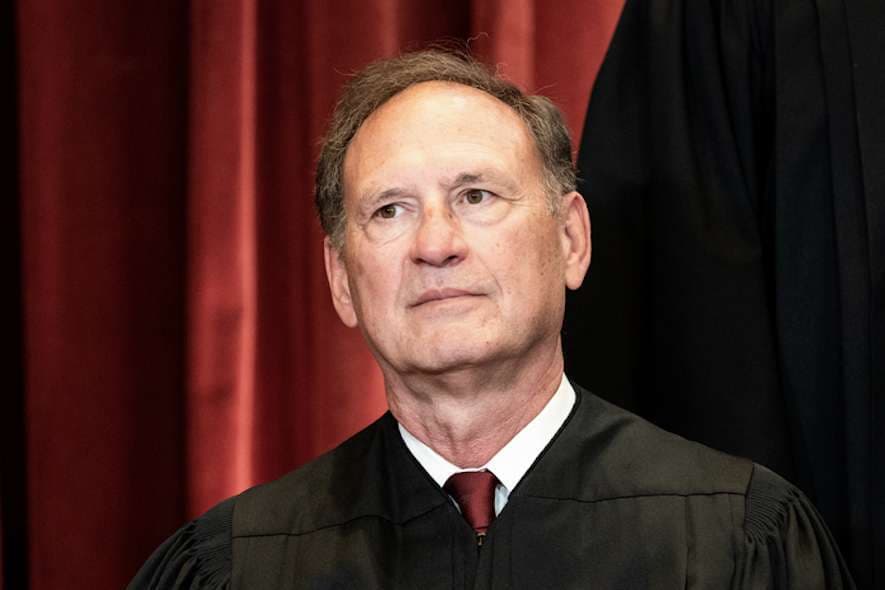
Justice Samuel Alito, who was sworn in as an Associate Justice of the Supreme Court on the same date in 2006, marks his 20th anniversary on the bench Jan. 31.
Justice Alito has influenced and ruled on numerous cases during his two decades on the court. The ruling that most clearly cemented him as a highly significant historical figure came in June 2022, when the Supreme Court handed down its decision in the case of Dobbs vs. Jackson Women’s Health, overturning the 1973 ruling in Roe v. Wade that legalized abortion in all 50 states, and the 1992 ruling that upheld abortion as a right.
Alito was the author of the Dobbs ruling: “Held: The Constitution does not confer a right to abortion,” he wrote. “Roe and Casey are overruled; and the authority to regulate abortion is returned to the people and their elected representatives.”
CatholicVote Vice President of Advocacy Josh Mercer celebrated the justice’s 20th anniversary in comments to Zeale News, he noted Alito “will be best remembered for authoring the Dobbs decision, which overturned the lawless Roe v. Wade abortion ruling. And rightly so.”
“That's certainly his crowning achievement, but he has been a leading light on all constitutional issues,” Mercer added. “Today marks twenty years of solid jurisprudence from a sterling Supreme Court justice.”
Mercer is a cofounder of CatholicVote, which on Jan. 27 launched Zeale and Zeale News. CatholicVote, in turn, grew out of the advocacy organization Fidelis, which played a role in the significant political events that led up to Justice Alito taking his spot on the court.
Clearing the way
Justice Alito’s confirmation by the Senate Judiciary Committee in January 2006 was the culmination of a political battle over what sort of jurist ought to serve as a replacement for liberal Justice Sandra Day O’Connor, who had retired in 2005.
When then-President George W. Bush first nominated White House Counsel Harriet Miers to serve on the Supreme Court, his decision sparked energetic opposition from institutions and elected officials committed to Constitutional protections for religious freedom and the sanctity of life.
Fidelis was a leader in the effort to press the Bush administration to rescind Miers’ nomination, forming a vocal coalition under the banner “Withdraw Miers.”
The Withdraw Miers campaign pointed to Miers’ “mixed record” on a number of issues, setting out a clear record of her past statements and actions that showed she did not live up to President Bush’s promises of nominating a jurist in the mould of conservative Justice Antonin Scalia.
The Withdraw Miers coalition website also recommended a short list of other potential nominees for the bench “whose judicial philosophies reflect a clear commitment to the Constitution.” On that list was a Federal Judge of the U.S. Court of Appeals for the Third Circuit: Samuel Alito.
The Alito hearings
The effort was a success: Miers withdrew herself from the nomination process, and Judge Alito was soon the nominee before the Senate Judiciary Committee.
Mercer and his colleagues, however, did not back off from the process.
To press for Alito’s nomination, Fidelis “launched an Internet-based animated advertising campaign” to “coincide with the confirmation hearings of Judge Samuel Alito,” EWTN News reported at the time. “The ad is designed to illustrate the heavy influence of left-wing groups over Senators on the Judiciary Committee, and shows how the agenda championed by these groups will likely dictate much of the attacks on Alito during his confirmation hearings.”
Then-President of Fidelis Joseph Cella decried Judiciary Committee Senators who “attack Judge Alito” based on their commitment to controversial progressive causes. “Rather than a real debate about the proper role of a judge, the law and the Constitution, Senators and many left-wing groups declare Alito unfit because he refuses to commit to enacting their policy preferences from the bench,” Cella added.
The Catholic advocacy group’s ad, its rallying cries to Catholics in the public square, and its distribution of facts about the merits of Alito’s judicial record brought increased public scrutiny of senators’ lines of questioning. After a few short days of hearings before the committee, Alito was confirmed.
Alito’s legacy
Ahead of his confirmation, some objected to his faith, pointing out that his presence on the court would mean a majority of five justices would be Catholics – Alito, along with Catholic Justices John Roberts, Antonin Scalia, Clarence Thomas, and Anthony Kennedy.
"It's irrelevant to the question of his suitability to the court," said then-Vice President of Fidelis Brian Burch ahead of Alito’s confirmation vote. "Religious faith should not be used to support or detract from the qualifications of a candidate."
Burch’s was a consensus position unlikely to be disagreed with by any American constitutional scholar or advocate of the civil rights and religious freedom that are essential to the American political order.
But Alito may be seen as an example to Catholic citizens that living out the truths of one’s faith in public life can be supremely compatible with serving one’s country.


Comments