Maduro pleads not guilty, reports detail deaths in U.S. operation in Venezuela
Venezuelan leader Nicolás Maduro and his wife Cilia Flores pleaded not guilty in a New York federal court Jan. 5 to charges of narco-terrorism. Separate reports in recent days have detailed deaths and damage in Venezuela from the Jan. 3 U.S. military operation that culminated in the capture of the presidential couple in Caracas.

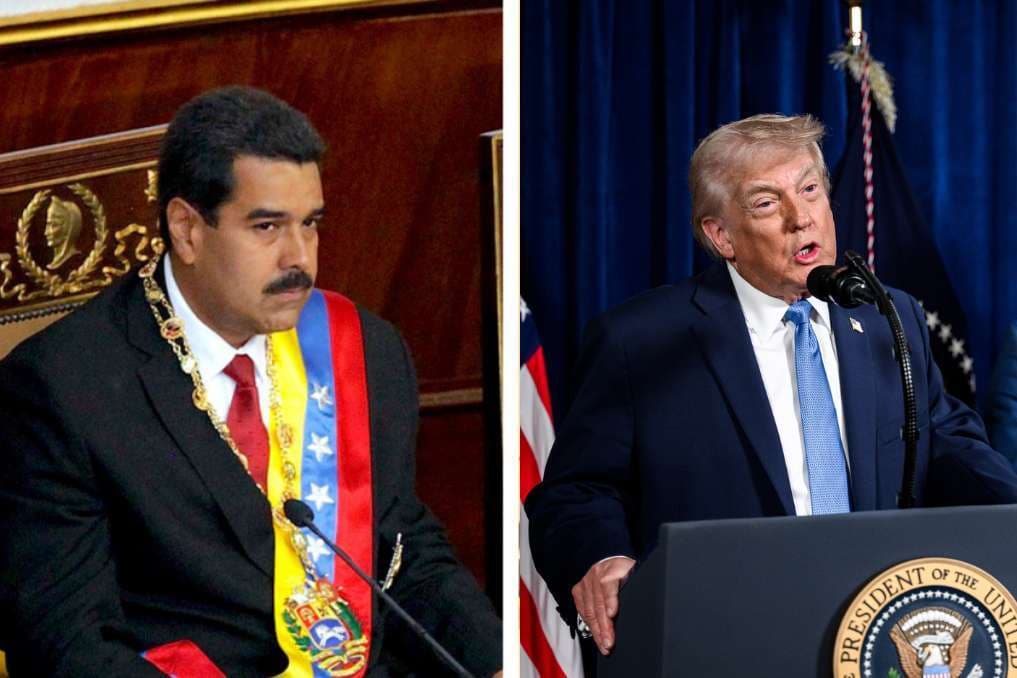
Venezuelan leader Nicolás Maduro and his wife Cilia Flores pleaded not guilty in a New York federal court Jan. 5 to charges of narco-terrorism. Separate reports in recent days have detailed deaths and damage in Venezuela from the Jan. 3 U.S. military operation that culminated in the capture of the presidential couple in Caracas.
As CatholicVote reported Jan. 3, U.S. forces arrested Maduro and Flores in the early hours of Jan. 3. More than 150 aircraft from 20 bases were used to dismantle Venezuela’s air defense systems, providing cover for helicopters and ground forces involved in the capture. U.S. authorities later transferred both Maduro and Flores to the Metropolitan Detention Center in New York ahead of their initial court appearances in the Southern District of New York.
Court proceedings and charges
Maduro pleaded not guilty Jan. 5 to four criminal counts, including narco-terrorism, cocaine importation conspiracy, and possession of machine guns and destructive devices.
Speaking through an interpreter, Maduro told the court, “I am innocent. I am not guilty. I am a decent man. I am still president of my country,” Reuters reported.
Flores also pleaded not guilty. The next court date was set for March 17.
U.S. prosecutors allege Maduro oversaw a cocaine-trafficking network that partnered with violent criminal organizations, including Mexico’s Sinaloa and Zetas cartels, Colombia’s FARC rebels, and Venezuela’s Tren de Aragua gang, according to the 25-page indictment published by AP News.
According to The Wall Street Journal, Maduro is represented by defense attorney Barry Pollack, who previously represented WikiLeaks founder Julian Assange.
Death toll and damage inside Venezuela
Separate reporting in the days following the operation detailed the human toll inside Venezuela. According to The New York Times, Venezuelan officials said Jan. 4 that preliminary figures indicate about 80 people were killed, including civilians and military personnel.
Cuba’s government confirmed on Jan. 4 that 32 Cuban citizens, including military and intelligence personnel operating in Venezuela, were among those killed. Cuban President Miguel Díaz-Canel said the casualties were members of Cuba’s armed forces or interior ministry who were deployed at Venezuela’s request, according to Cuban state media cited by the Times.
“Our compatriots fulfilled their duty with dignity and heroism and fell, after fierce resistance, in direct combat against the attackers or as a result of the bombings,” Díaz-Canel said.
President Donald Trump acknowledged foreign casualties, telling reporters aboard Air Force One Jan. 3 that “a lot of Cubans were killed yesterday, trying to protect him [Maduro].” He did not provide a specific number.
“There was a lot of death on the other side,” he told reporters who flew with him from Florida back to Washington, D.C. “No death on our side.”
In a Jan. 3 FOX News phone interview, Trump explained that “a couple” U.S. soldiers were injured and that a U.S. helicopter was hit during the mission but was still flyable. The Times separately reported that about six U.S. soldiers were injured during the capture, citing two anonymous U.S. officials.
Meanwhile, Reuters reported that residential areas in Catia La Mar, a coastal town about 20 miles north of Caracas, were damaged or destroyed during the operation.
What comes next
U.S. officials are considering reopening the U.S. embassy in Venezuela, according to a senior State Department official.
“As President Trump said, we are making preparations to allow for a reopening should the president make that decision,” the official said, CBS News reported.
The embassy has remained closed since March 2019, when the U.S. Department of State withdrew all diplomatic personnel from Caracas.
At the United Nations, U.S. Ambassador Mike Waltz said the U.S. “is not occupying a country,” describing the operation as a law enforcement action tied to longstanding indictments rather than a war against Venezuela or its people.
Secretary of State Marco Rubio has confirmed in multiple interviews that the U.S. would not be running Venezuela, CatholicVote reported Jan. 4.
Meanwhile, Venezuela swore in Delcy Rodríguez as interim president Jan. 5 while Maduro awaited arraignment in New York. Rodríguez initially denounced the U.S. operation but later adopted a more conciliatory tone, according to CBS. Rubio had earlier said that the U.S. would assess remaining regime figures based on their actions going forward, CatholicVote reported Jan. 3.
Reactions
In the days following the operation, U.S. officials and Catholic leaders weighed in.
U.S. Ambassador to the Holy See Brian Burch said in an X post Jan. 5 that Pope Leo XIV is closely following developments in Venezuela and has called for prayers for peace.
“Pope Leo XIV said Sunday he is following the news in Venezuela and praying for peace. He emphasized the need to work together to build a future for the Venezuelan people based on cooperation, stability, and harmony,” Burch wrote.
He praised Trump’s role in the operation, saying that because of Trump’s leadership, Maduro would now face justice: “This is a moment to celebrate hope for millions long exploited, while ensuring a safer, stronger future for the United States.”
As CatholicVote previously reported, during his Jan. 4 Sunday Angelus, Pope Leo asked Catholics to pray for the people of Venezuela and invoked the intercession of Our Lady of Coromoto, the nation’s patroness, as well as Saints José Gregorio Hernández and Carmen Rendiles, whom he canonized in October 2025.
“The good of the beloved Venezuelan people must prevail over every other consideration,” Pope Leo said. “This must lead to the overcoming of violence, and to the pursuit of paths of justice and peace, guaranteeing the sovereignty of the country, ensuring the rule of law enshrined in its Constitution, respecting the human and civil rights of each and every person, and working together to build a peaceful future of cooperation, stability and harmony, with special attention to the poorest who are suffering because of the difficult economic situation.”

Comments