Memo: GOP risks electoral consequences in midterms if they weaken pro-life stance
If GOP leaders retreat from longstanding pro-life positions, there may be “real enthusiasm risks for the November midterm general election,” a polling and predictive analytics firm warned in a Feb. 17 memo.

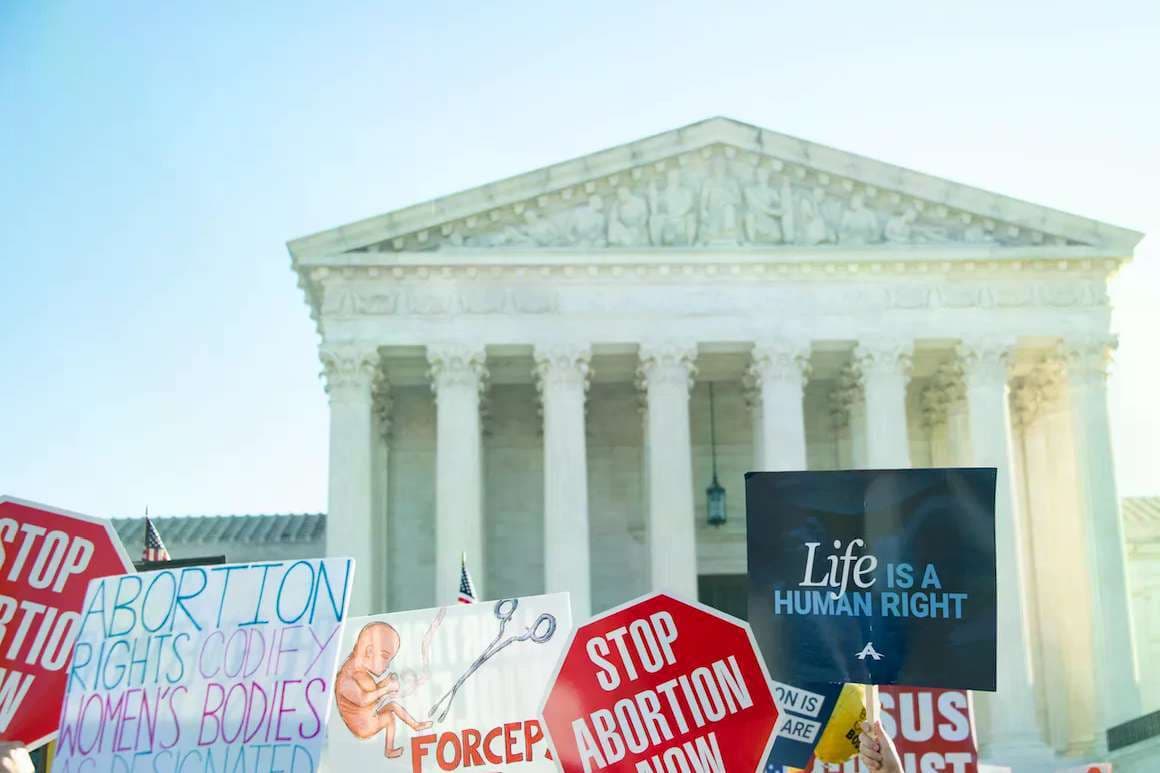
If GOP leaders retreat from longstanding pro-life positions, there may be “real enthusiasm risks for the November midterm general election,” a polling and predictive analytics firm warned in a Feb. 17 memo.
Strong pro-life consensus among GOP base
The memo by Cygnal, which does political and public affairs research, cites a recently conducted survey. The firm surveyed 1,000 likely Republican primary voters Feb. 8-10 and found that 86% oppose using federal tax dollars to fund abortions, 79% want to keep the Hyde Amendment, and 75% support defunding Planned Parenthood.
“This is not a marginal constituency, it is the GOP primary core,” John Rogers, Cygnal’s senior partner and pollster, wrote in the memo.
Frustration with HHS policy
The memo argues that recent actions at HHS are “at odds with the Trump/MAHA base” and “are creating a trust crisis.” Seventy-one percent of respondents oppose Kennedy’s decision to continue allowing the abortion drug mifepristone to be prescribed online and mailed nationwide without in-person consultations. Opposition rises to 77% among self-identified Trump Republicans and 76% among voters aligned with the “Make America Healthy Again” (MAHA) movement.
Overall, 80% of respondents said the Food and Drug Administration should again require in-person visits for chemical abortions. Seventy-two percent opposed approving a generic version of mifepristone before completing a promised safety review, and 65% opposed what the memo described as “the overall HHS direction on abortion.”
Rogers said the data show that “self-identified MAHA Republicans (69% of primary voters) do not regard abortion access as part of the Make America Healthy Again promise.”
Midterm enthusiasm at risk
The survey also found that abortion remains a salient issue for GOP voters. Seventy-four percent said a candidate’s position on abortion is important when deciding whom to support, and 75% said it is important for congressional Republicans to “aggressively oversee HHS actions on abortion.”
The potential political consequences could be significant. If Republican leaders “weaken or abandon pro-life policies,” 32% of GOP voters said they would have decreased enthusiasm for voting in the midterm general election, according to the memo. That number rises to 36% among the most engaged Republican primary voters.
“A diminution in enthusiasm among one-third of the Republican base would be devastating in close U.S. House and U.S. Senate races in November,” Rogers wrote.
The memo also points to possible declines in campaign activism. Thirty-four percent of respondents said they would be less willing to volunteer or take part in general election campaigns if pro-life principles were abandoned, including 37% of the most engaged GOP voters and 45% of evangelicals.
On the Hyde Amendment, which bars most federal funding for abortion, 79% said keeping it in place is important. If GOP leaders were to drop support for Hyde, 30% said they would be less enthusiastic about voting in November.
Dobbs expectations vs. reality
The poll suggests a gap between voter expectations following the Supreme Court’s 2022 Dobbs decision to overturn Roe v. Wade and current federal policy. Only 20% of respondents were aware that abortion numbers have increased since the ruling, but when informed that roughly 1.1 million abortions continue to occur annually, 73% said they found the number concerning.
“Republican voters likely expected that Dobbs would lead to fewer abortions and certainly expected that the leaders around President Trump would work hard to extend pro-life protections everywhere possible in the federal government,” Rogers wrote. “Instead, under Secretary Kennedy, HHS is actively facilitating access to the chemical abortion drug mifepristone.”
Early primary states show stronger opposition
The survey included oversamples of Republican primary voters in Iowa and South Carolina, two early presidential primary states. In Iowa, 89% opposed federal funding for abortion, compared with 86% nationally. Eighty-four percent of Iowa respondents and 80% of South Carolina respondents said keeping the Hyde Amendment is important.

Comments