North Carolina city amends noise restrictions to settle pro-lifer’s free speech suit
A North Carolina city has increased the sound level it permits in public spaces as part of a settlement with a pro-life advocate who sued after he was told he could not use a speech amplifier while sidewalk counseling.

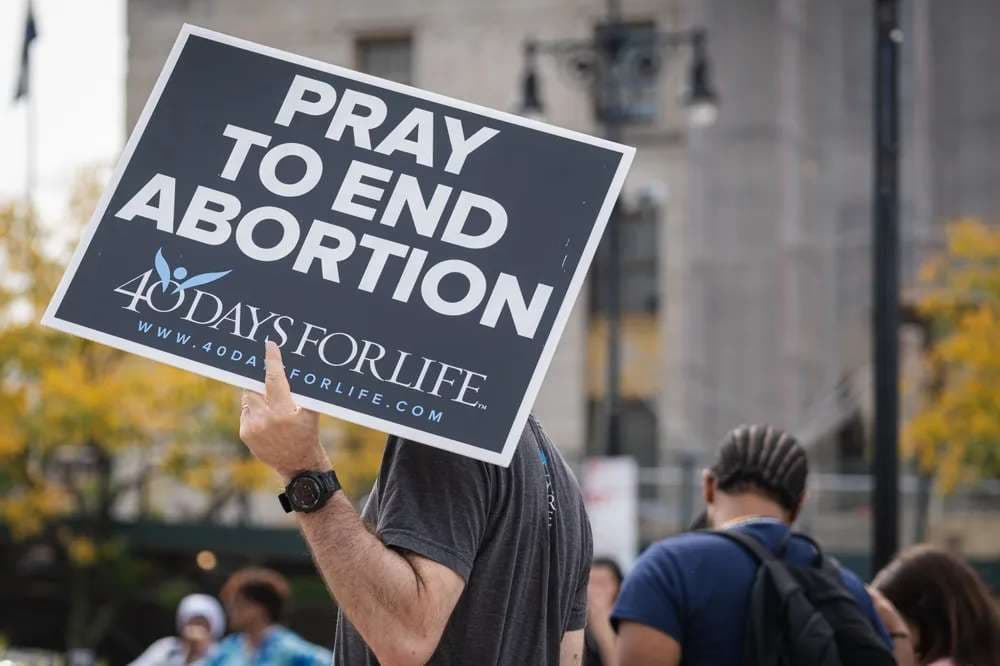
A North Carolina city has increased the sound level it permits in public spaces as part of a settlement with a pro-life advocate who sued after he was told he could not use a speech amplifier while sidewalk counseling.
According to court documents, pro-lifer Zachary Hebb sued the city of Asheville in 2022 after the city adopted a noise ordinance that banned amplified sound within 150 feet of a public school or open medical clinic, which included the Asheville Health Center, an abortion facility. WORLD reported that the facility legally played loud music outside, making it difficult for pro-life advocates to hold conversations with abortion-minded women. Hebb said the only option left to him would be to yell while sidewalk counseling, which he argued would “undercut his message and purpose,” according to court documents.
Hebb’s suit against the city claimed the ordinance violated his constitutionally protected free speech rights. Hebb also said the ordinance was “unconstitutionally vague as applied to prevent himself and others from speaking through plastic cones within the buffer zone,” which he argued violated the Fourteenth Amendment’s due process clause.
After Asheville appealed a district court ruling that favored Hebb, the U.S. Court of Appeals for the Fourth Circuit denied in 2025 the city’s two attempts to dismiss Hebb’s First Amendment claim. The appeals court remanded part of the district court’s ruling, but the city decided to settle rather than continue litigation, WORLD reported.
According to a March 3 press release from First Liberty Institute, Hebb and Asheville reached a settlement that included changing the noise ordinance to allow speech that can be heard up to 150 feet away from an amplification device.
Nate Kellum, senior counsel for First Liberty, said in the release that Hebb can now “effectively” provide a pro-life witness outside the abortion facility.
He added, “It is paramount, now more than ever, that we protect the right of each American to freely express their faith and beliefs in the public square.”

Comments