Op-ed: Why are so many people at Mass on Ash Wednesday?
Most regular Massgoers know the experience. You’re hungry from fasting, tired from work, childrearing, or both, and finally make it to Mass on Ash Wednesday. You sidle up to your usual pew – and find it occupied by someone you’ve never seen before.
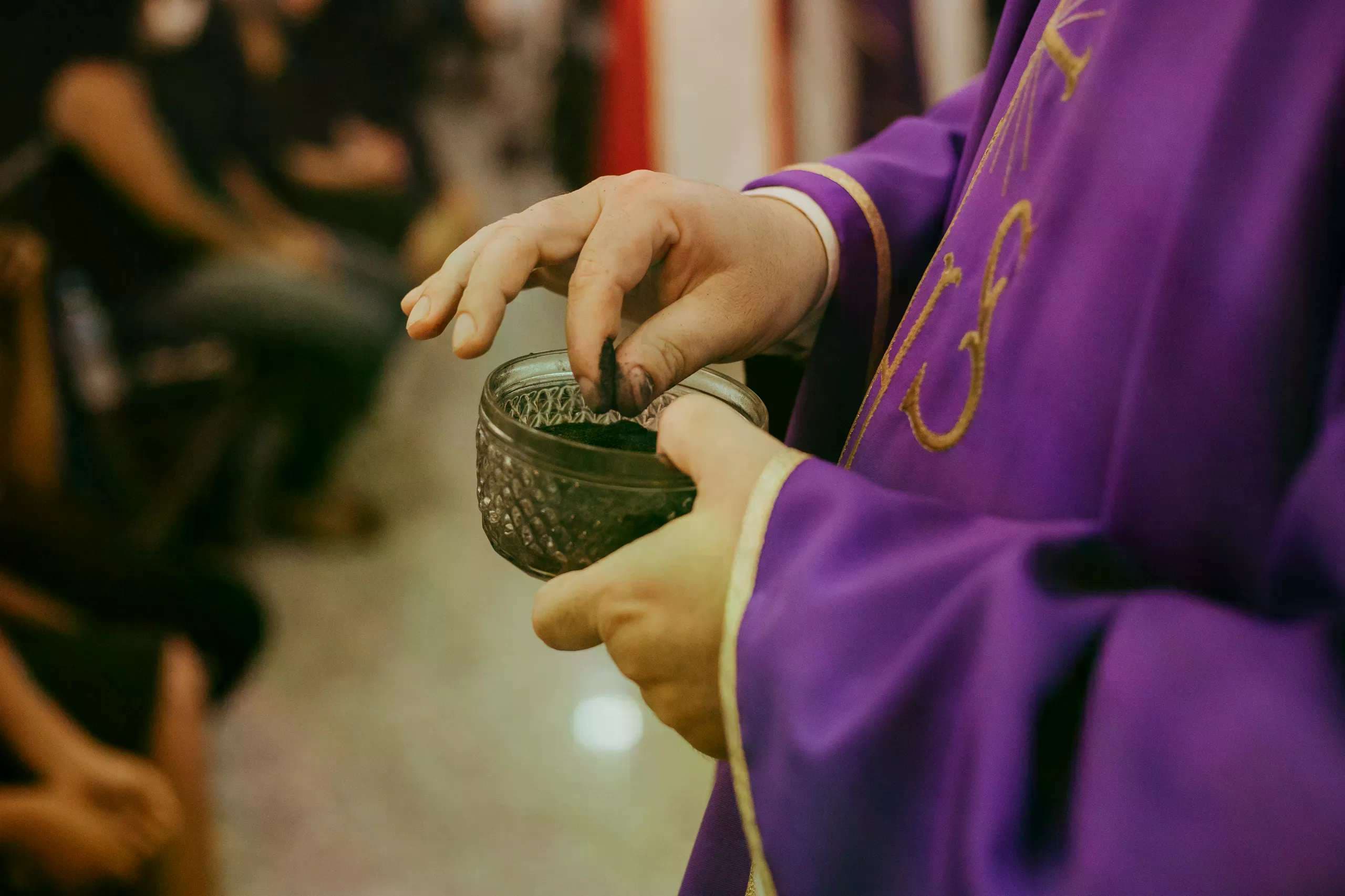
Most regular Massgoers know the experience. You’re hungry from fasting, tired from work, childrearing, or both, and finally make it to Mass on Ash Wednesday. You sidle up to your usual pew — and find it occupied by someone you’ve never seen before.
“Why are you here?” one might be forgiven for thinking while squeezing into a packed church. “It isn’t as though you’re ever here on Sunday.”
I’ll admit I’ve had that thought before. Uncharitable as it may be, it raises a worthwhile question: Why do so many people who don’t attend Mass regularly still come on Ash Wednesday?
The cynical answer is that they just want to show off their ashes and feel pious, but I don’t think that tells the whole story. It’s true that ashes on the forehead are a visible sign that someone has gone to church (or at least walked up to someone in a big city applying ashes). Yet in the contemporary religious climate, that sign is hardly likely to earn the average person many brownie points.
Ash Wednesday marks the beginning of the season of Lent, a season of preparation for the joy of Easter. Lent is characterized by prayer, fasting, and almsgiving. But perhaps most of all, Ash Wednesday confronts us with human mortality and sinfulness. Our culture prefers to ignore both of these uncomfortable realities.
The dying — who in previous generations would have been far more visible — are hidden away in nursing homes. The Christian practices of burial and open-coffin funerals have become less common. With cremation now the norm, many people rarely, if ever, encounter a human corpse. Our tech overlords even promise that any decade now mankind will achieve earthly immortality.
Meanwhile, the media trumpets moral failings as triumphs. We’re told that pride, far from being a deadly sin, is a cardinal virtue. Acquisition of money and gadgets is the aim of life. Suicide is glorified as “death with dignity.” At times, it seems the only thing still considered a sin is prejudice.
Despite this backdrop, many still feel the need to be marked by a sign of their mortality and to be reminded of the need to repent and believe in the Gospel. In the back of their minds, these “Ash Wednesday Catholics” know that death — that cruel reality caused by our first parents’ trust in the Serpent — comes for us all. And they know that none of us stands sinless before God.
In an essay for The Lamp, Matthew Walther reflected on the striking witness that Ash Wednesday Catholics give to the enduring power of Christ’s message.
“There is something lovely about the idea of unaccustomed knees stiffening over antiseptic leather and half-familiar words being mumbled with that admixture of sheepishness and comfort familiar to any backslider,” he wrote.
Walther argues that those who come out of the woodwork for Ash Wednesday Mass have an innate sense of the power of sacramentals. Though the Church counsels them not to present themselves for Holy Communion, they are free to receive an annual, ashy reminder of Christ’s call to repentance.
“Sacramentals are messy things, not unlike human lives,” Walther wrote.
I think this gets to the heart of why so many people who feel far from Holy Mother Church return on Ash Wednesday. Catholicism is a religion centered on the Incarnation, and its practices recognize man’s need for physical reminders of ineffable truths.
In the darkest moments of my own life, the physicality of Catholicism has brought me great comfort. Genuflecting before the Blessed Sacrament, kissing the feet of a saint’s statue, or tearfully clutching a Rosary has helped me know that, despite my profound brokenness, God’s love is present in my need.
Why should any other baptized Catholic — practicing or not — feel differently?
So this year, if someone sits in my family’s usual place at Mass, I want to remember that it might be the Holy Spirit’s way of prompting me to pray for that person. That poor sinner is as welcome in Christ’s church as I — another poor sinner — am.










Comments