Pope Leo addresses Pontifical Academy for Life, says health is ‘universal right’
Pope Leo XIV on Feb. 16 addressed the Vatican’s bioethics academy and quoted the late Pope Francis that health is “not a consumer good, but a universal right,” urging governments to address inequalities in access to treatment and warning that war and profit-driven systems are undermining global public health.

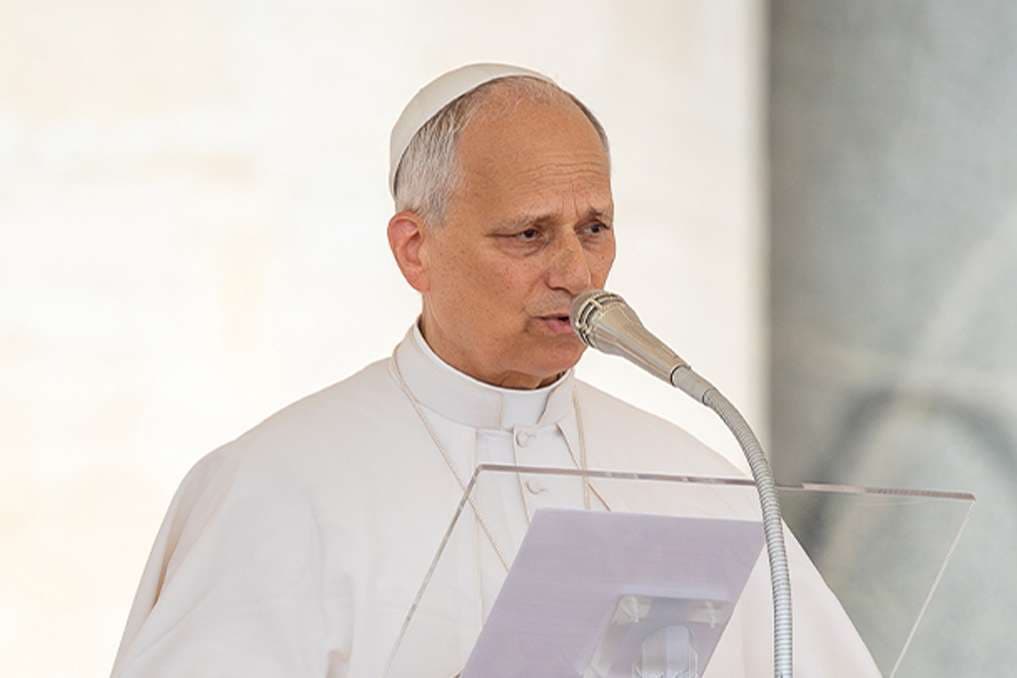
Pope Leo XIV on Feb. 16 addressed the Vatican’s bioethics academy and quoted the late Pope Francis that health is “not a consumer good, but a universal right,” urging governments to address inequalities in access to treatment and warning that war and profit-driven systems are undermining global public health.
His address opened the plenary assembly of the Pontifical Academy for Life, a Vatican body founded by St. John Paul II in 1994 to study bioethical issues and advise the Holy See on matters related to human life, medicine, and healthcare policy.
This year’s assembly chose the theme “Healthcare for All. Sustainability and Equity.”
The Pope thanked the assembly for choosing this theme and said the topic was especially relevant “in a world scarred by conflicts, which consume enormous economic, technological and organizational resources in the production of arms and other types of military equipment.”
“It has never been more important to dedicate time, people and expertise to safeguarding life and health,” he said.
Quoting Pope Francis, he reiterated that life and health “is not a consumer good, but a universal right which means that access to healthcare services cannot be a privilege.”
The Pontifical Academy for Life has, in recent years, broadened its focus beyond traditional beginning- and end-of-life questions to address global public health, healthcare systems, and widening inequalities. The Pope said the COVID-19 pandemic revealed just how deeply interconnected human lives are and how individual health is tied to the well-being of others.
“It has become clear how much reciprocity and interdependence underpin our health and our very lives,” he said, calling for dialogue among medicine, politics, ethics, and management to build more just health systems.
He criticized vast disparities in life expectancy and quality of care across countries and social groups, saying such gaps are rooted in economic and political decisions rather than inevitabilities.
“When we look at life expectancy and the quality of health in different countries and social groups, we discover enormous inequalities,” Pope Leo said. “These depend upon variables such as income level, the level of education attained and the neighborhood in which one lives.”
“It is often said that life and health are equally fundamental values for all, but this statement is hypocritical if, at the same time, we ignore the structural causes and policies that determine inequalities,” he said. “In reality, despite declarations and statements to the contrary, all lives are not equally respected and health is neither protected nor promoted in the same way for everyone.”
The Pope also pointedly condemned attacks on civilian structures and hospitals in war zones, calling them among “the most grave attacks that human hands can make against life and public health.”
Pope Leo also promoted the “One Health” approach, a model which calls for a coordinated, multidisciplinary response to health challenges and urges governments to factor health considerations into policies ranging from transportation and housing to agriculture and education.
Human life, he said, is “incomprehensible and unsustainable without other creatures.” He also quoted Pope Francis’ 2015 encyclical Laudato Si', which teaches that “all of us are linked by unseen bonds and together form a kind of universal family, a sublime communion which fills us with a sacred, affectionate and humble respect.”
He said the approach reinforces the pursuit of the common good and helps prevent narrow national or economic interests from taking precedence over public health. But he cautioned that the common good can become “an abstract and irrelevant notion” if it is not rooted in concrete relationships and social bonds.
“We need to rediscover the fundamental attitude of care as support and closeness to others, not only because someone is in need or is sick, but because they experience vulnerability, the vulnerability that is common to all human beings,” he said.
He closed by thanking the academy’s members for their work and offering them his blessing.






Comments