Pope Leo shares message for World Day of the Sick
In his message for the 34th World Day of the Sick, Pope Leo XIV returned to the Gospel of Luke’s Good Samaritan parable and spoke about illness not as a private burden to be managed but as a summons to relationship.

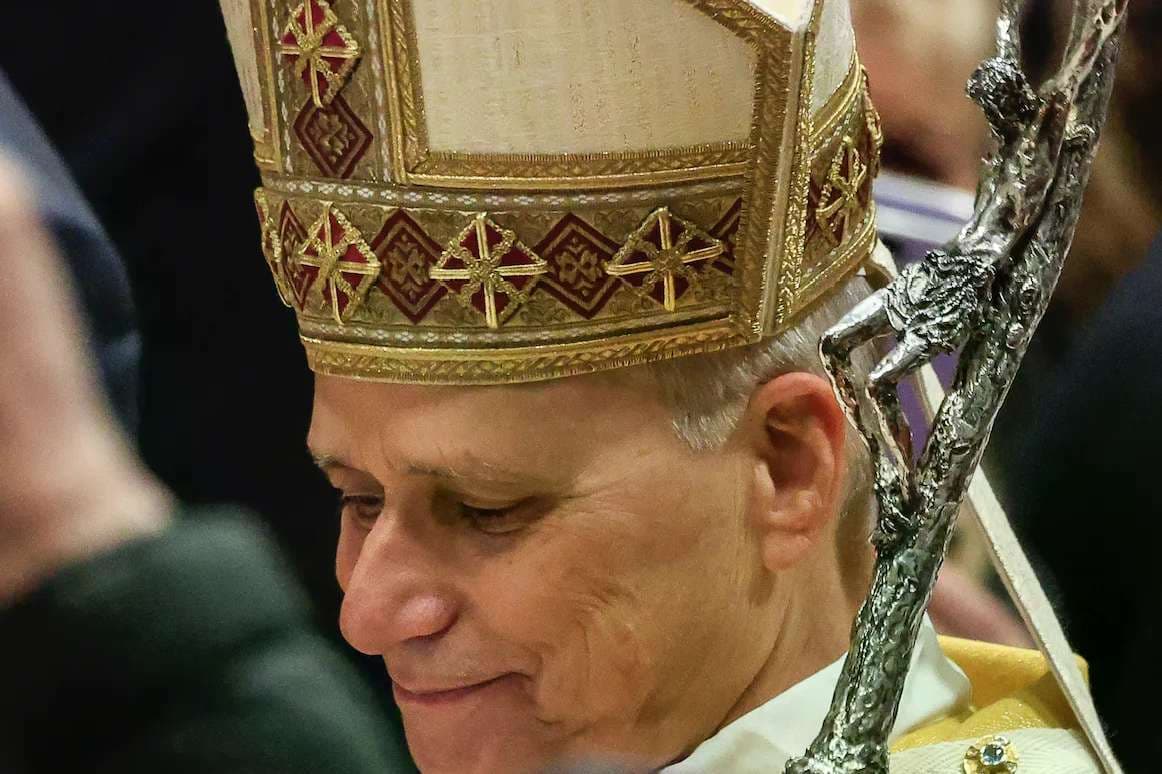
In his message for the 34th World Day of the Sick, Pope Leo XIV returned to the Gospel of Luke’s Good Samaritan parable and spoke about illness not as a private burden to be managed but as a summons to relationship.
Issued ahead of the Feb. 11 observance, the Pope’s address reflected on the parable, emphasizing that care for the sick is never merely individual. True compassion, he argued, unfolds within a network of shared responsibility — among families, caregivers, health professionals and the Church itself — where love becomes tangible through presence, time and accompaniment.
“The Samaritan discovered an innkeeper who would care for the man,” he wrote, adding that “we too are called to unite as a family that is stronger than the sum of small individual members.” Drawing on his years as a missionary and bishop in Peru, he pointed to families, neighbors, health care workers and pastoral ministers who “stop along the way to draw near, heal, support and accompany those in need,” giving compassion “a social dimension” rooted in shared responsibility.
Pope Leo placed care for the sick at the heart of the Church’s mission, calling it an authentic “ecclesial action.” Quoting Saint Cyprian, he framed service to the sick as a test of a society’s moral health: whether “the healthy serve the sick” and whether those entrusted with care remain faithful to the vulnerable.
Against what he calls a culture of “speed, immediacy and haste,” Pope Leo urged the faithful to recover the courage to pause. In the parable of the Good Samaritan, he noted, the decisive difference is that the Samaritan “did not ‘pass by.’ Instead, he looked upon him with an open and attentive gaze — the very gaze of Jesus — which led him to act with human and compassionate closeness.”
That gaze, the Pope wrote, makes room for encounter in a world shaped by “discard and indifference.”
Pope Leo also dwelled on the physicality of the Samaritan’s response: He “stopped, approached the man and cared for him personally, even spending his own money to provide for his needs,” but, the Pope added, “above all, he gave him his time.” Jesus, Pope Leo explained, is not merely clarifying “who our neighbor is,” but teaching the faithful “how to become a neighbor” — a shift that moves love from definition to decision. Citing Saint Augustine, he wrote that the Lord did not show “who that man’s neighbor was,” but rather “to whom he should become a neighbor,” concluding simply that “no one is truly a neighbor until they freely draw near to another.”
In this sense, according to Pope Leo, love is never passive.
“Being a neighbor,” he wrote, “is not determined by physical or social proximity, but by the decision to love.” The Samaritan’s mercy is therefore not philanthropy at a distance but what the Pope called “personal participation in another’s suffering,” a gift that goes beyond meeting needs so that “our very person becomes part of the gift.” Such charity, he insisted, is always rooted in encounter with Christ, “who gave himself for us out of love.”
The Pope linked this dynamic to Christian discipleship. Christians become neighbors to the suffering, he wrote, by following Christ himself, “the true divine Samaritan who drew near to a wounded humanity.” Quoting Saint Francis of Assisi’s account of his encounter with lepers — “The Lord himself led me among them” — Pope Leo shared that closeness to the wounded is a place where the joy of loving is discovered. To live this “gift of encounter,” he said, is to learn again the sweetness of having met the Lord by stopping for those left on the side of the road.
Pope Leo emphasized that sincere compassion is never merely an emotion but “a profound feeling that compels us to act.” In Saint Luke’s telling, the Samaritan “was moved with pity,” and that interior movement takes visible form: He draws near, tends wounds, takes responsibility and ensures ongoing care. Compassion, the Pope wrote, is “the defining characteristic of active love,” revealed through concrete gestures that place one’s own life at the service of another.
Such service, the Pope added, flows from unity in Christ. “To be one in the One” — an apparent reference to his Papal motto In Illo uno unum, meaning “In the One (Christ) we are one" — means recognizing that the suffering the faithful encounters is not that of a stranger but “the pain of a member of our own Body.”
This care participates in Christ’s own suffering and expresses the inseparability of love of God and love of neighbor.
“The true remedy for humanity’s wounds,” Pope Leo concluded, “is a style of life based on fraternal love, which has its root in love of God.”
The Pope ended his message by turning to prayer. He entrusted all who suffer to the intercession of the Blessed Virgin Mary, invoking her under the title “Health of the Sick” and asking her to remain close to those “in need of compassion, consolation and a listening ear.” He offered an ancient Marian prayer prayed in families during times of illness, pleading for a mother who does not turn away, walks alongside the afflicted, and obtains for them the blessing of the Father, Son, and Holy Spirit.



Comments