Pope Leo: God's mercy goes beyond human calculations of merit
Pope Leo XIV’s Sept. 20 Angelus continued themes of love, forgiveness and God’s freely given mercy that have appeared in his recent Sunday addresses.
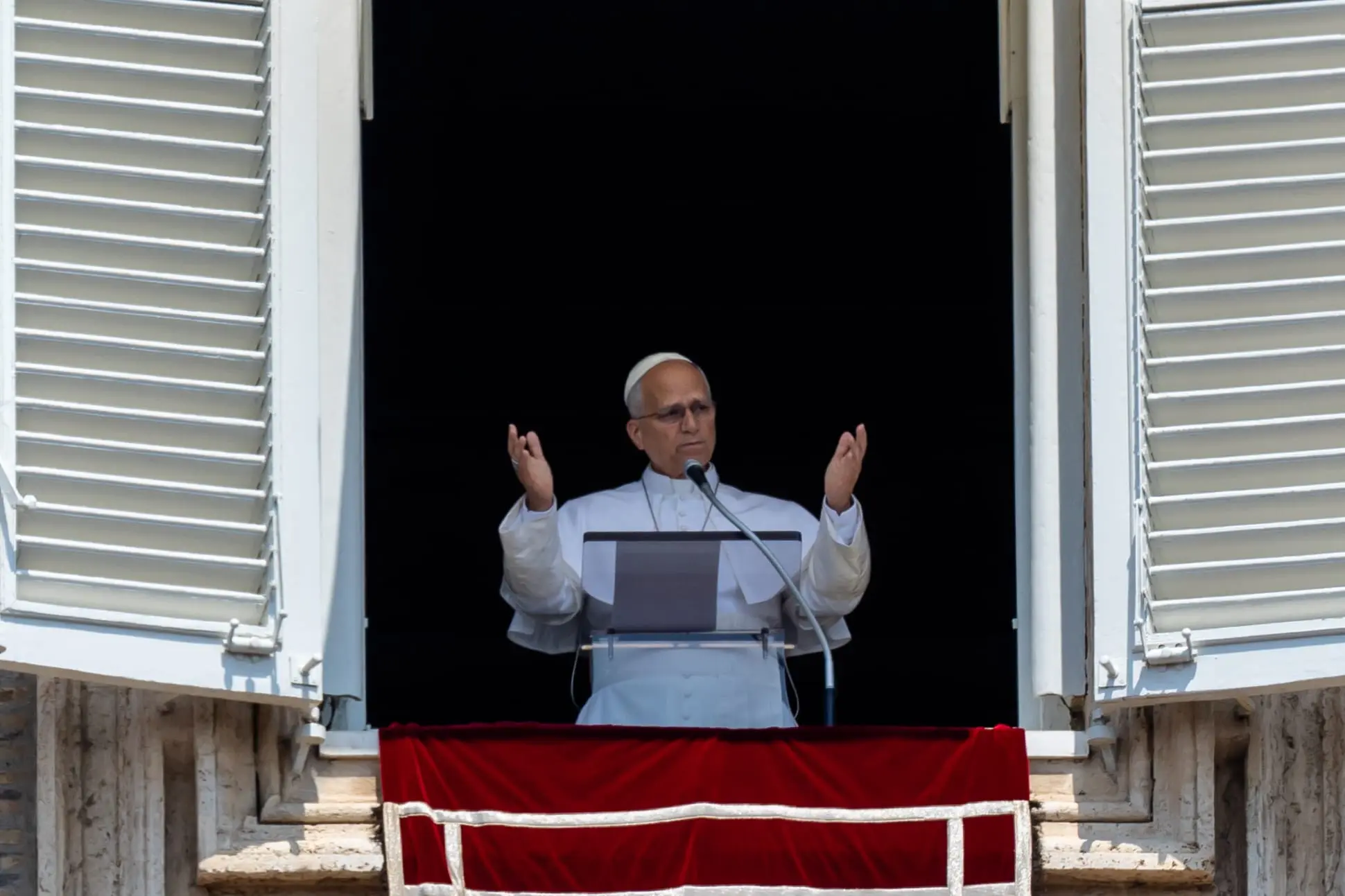
Pope Leo XIV said Sept. 20 that God’s mercy and generosity go beyond human calculations of merit, reflecting in his Angelus address on Jesus’ parable of the workers in the vineyard.
Speaking from St. Peter’s Square, the Pontiff focused on Matthew 20:1-16, in which workers hired at different times of the day receive the same payment.
The Pope drew particular attention to the landowner’s instruction that the workers be paid “beginning with the last and then going to the first.”
The negative reaction of those who had worked all day “could easily have been avoided,” Pope Leo said. Instead, the landowner intentionally allowed the first workers to see how he treated those hired later.
“The revelation of God’s goodness is for everyone, not just for a few,” the Pope said.
He said the parable also addresses those “who consider themselves to be first and believe they have earned what they have, that they deserved the results they have achieved.”
“We all gain joy, wisdom and a better future when the law of love interrupts that of calculation, when the experience of mercy broadens that of merit, and when the gift of peace suspends rivalries and brings us closer together in gratitude,” the Pontiff said.
The Sept. 20 address follows recent Angelus reflections in which Leo also spoke about love, debts, forgiveness and mercy.
In his Sept. 6 Angelus message, Pope Leo reflected on St. Paul’s instruction in Romans to “owe no one anything, except to love one another” and described Christians as owing one another a continuing “debt of mutual love.” A week later, he said forgiveness should be offered “beyond all limits, without measure” and called gift and forgiveness “the foundation of our existence.”
On June 14, the Pope described grace as entirely free and impossible to “merit or ‘buy.’” On Aug. 23, he said an encounter with Christ can require Christians to follow “unfamiliar paths” rather than simply continue doing things as they always have.
On Sunday, Leo returned to that language of divine newness, saying that “God has different ways and fresh ideas,” including for those who believe they have earned the results they have achieved.
Leo concluded his Sept. 20 reflection by describing Christians as “God’s co-workers” called to work in his vineyard and serve his “Kingdom of justice and peace.”
“There is no room for envy or division where God’s newness breaks forth,” he said.
The Pope encouraged Christians to seek God, abandon “crooked paths and wicked thoughts,” and entrust themselves to God’s mercy.
After the Angelus, Leo expressed concern about a humanitarian crisis affecting parts of Somalia. He said violence and extreme weather were worsening already precarious living conditions, particularly for women and children, and called for the involvement of the international community in providing assistance.
Leo also sent his blessing to people gathered in Pescantina, Italy, to remember those deported and imprisoned during World War II.
“We must not forget,” the Pope said, “but rather learn from history so as not to repeat the mistakes of the past.”








Comments