Pope Leo says Church must keep eyes fixed on 'homeland of heaven'
Continuing his catechesis on the documents of Vatican II, Pope Leo XIV reflected on the Church’s “eschatological dimension” during his May 6 Wednesday audience, where he encouraged the faithful to keep their eyes fixed on the “homeland of heaven.”

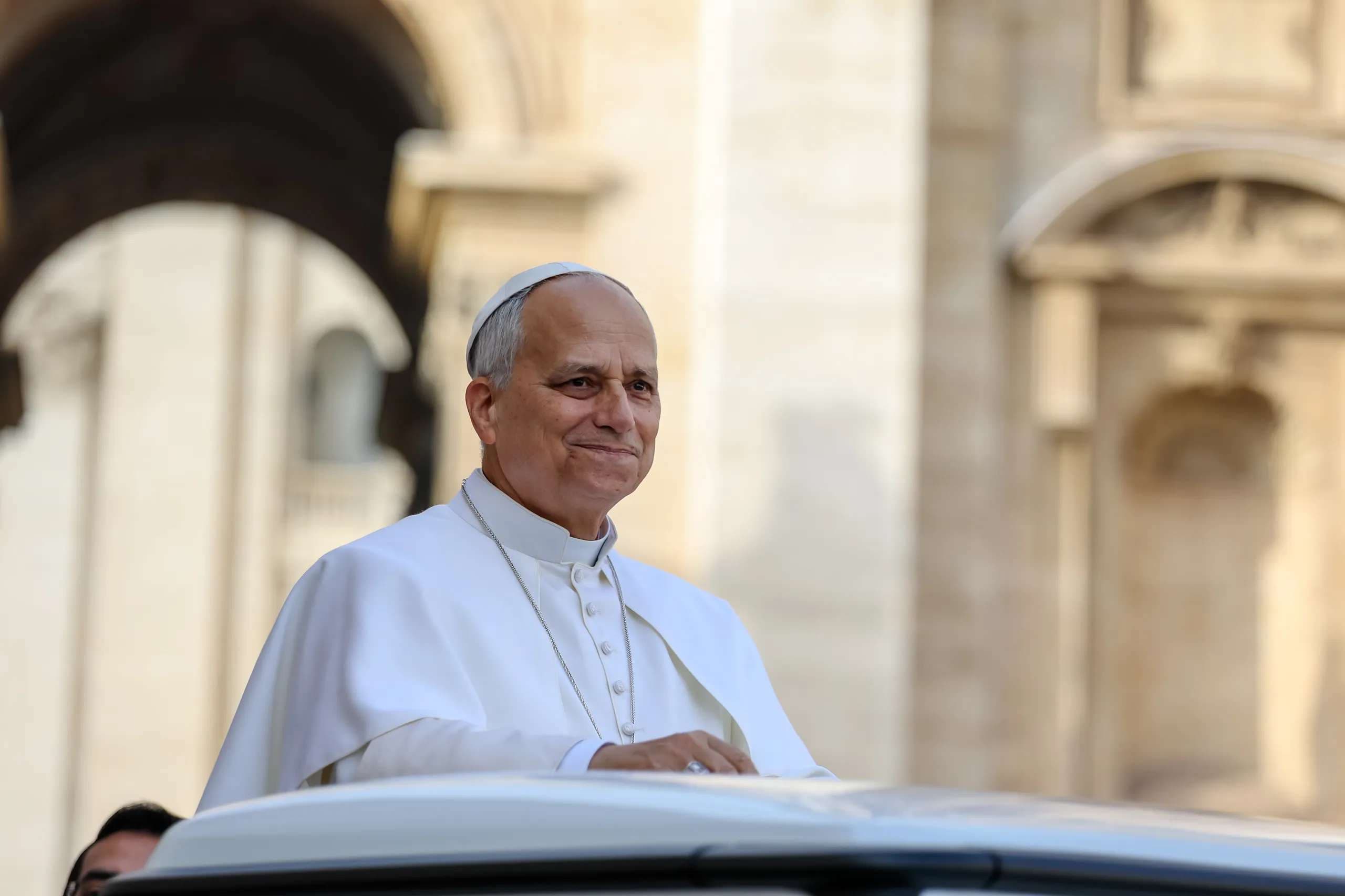
Continuing his catechesis on the documents of Vatican II, Pope Leo XIV reflected on the Church’s “eschatological dimension” during his May 6 Wednesday audience, where he encouraged the faithful to keep their eyes fixed on the “homeland of heaven.”
The Pope’s reflection centered on Lumen Gentium, a document of the Second Vatican Council outlining the nature and mission of the Catholic Church.
The “eschatological dimension” refers to the Church’s understanding that the Kingdom of God is already present in the world, while awaiting its full realization at the fulfillment of history.
Pope Leo said that the Church exists in service of the coming Kingdom of God, calling it the “universal sacrament of salvation,” that guides the faithful on their continued journey of conversion through participation in the sacraments, and in particular, the Eucharist.
The Church journeys through history toward the fullness of life and peace promised by God, Pope Leo said, calling this eschatological focus an essential dimension of Christian life, which is often overshadowed by worldly concerns.
He highlighted that the Church does not proclaim itself, but as the "guardian of hope” champions the salvific mission of Christ through its denouncement of evil and proclamation of the word of God.
The Pontiff emphasized that the Church, although the “seed and beginning” of the Kingdom of God, must acknowledge the “human fragility” and “transience” of its institutions as they exist within history and time. He added that the fullness of God’s Kingdom will only come at the end of time.
“Therefore,” Pope Leo said, “the Church realizes her mission between the ‘already’ of the beginning of the Kingdom of God in Jesus, and the ‘not yet’ of the promised and anticipated fulfilment.”
Pope Leo said that Lumen Gentium affirms the communion of all Christians, emphasizing the spiritual connection between the earthly Church and the heavenly Church. He urged the faithful to pray for those who have died and to follow in the footsteps of those who lived as disciples of Christ.

.jpg&w=3840&q=75)



Comments