After the white smoke: A look back at Pope Leo’s first year
When the world saw the white smoke pour from the chimney atop the Sistine Chapel May 8, 2025, the sight confirmed that a new chapter in the life of the Church was beginning. That day, Cardinal Robert Prevost became Pope Leo XIV, the first Augustinian and the first American pontiff.

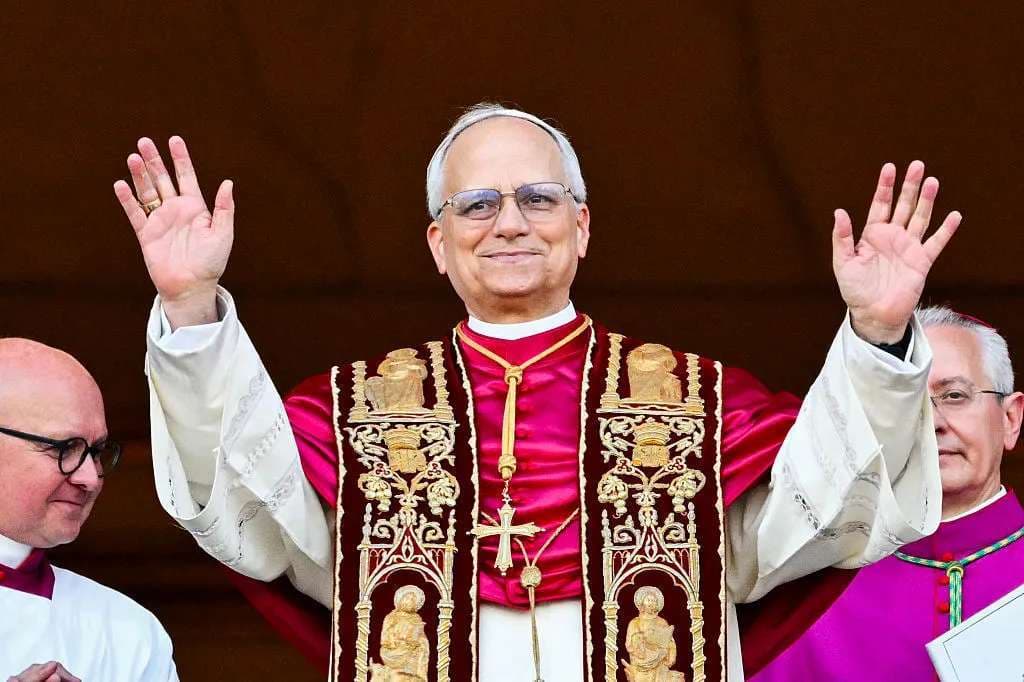
When the world saw the white smoke pour from the chimney atop the Sistine Chapel May 8, 2025, the sight confirmed that a new chapter in the life of the Church was beginning. That day, Cardinal Robert Prevost became Pope Leo XIV, the first Augustinian and the first American pontiff.
In the 365 days that have followed, the 266th successor of St. Peter has made a number of remarkable administrative and pastoral decisions, international apostolic trips, historic addresses, and comments on artificial intelligence (AI) and war. Most especially, he has repeatedly underscored the Church’s mission to proclaim Jesus Christ, emphasizing His role as the Prince of Peace.
In choosing the name “Leo,” the Pontiff signaled a particular concern for how the development of AI is impacting the world. Just days after his election, he explained that Pope Leo XIII had “addressed the social question in the context of the first great industrial revolution” and that present-day challenges mark a similar revolution. AI, he noted, “pose[s] new challenges for the defense of human dignity, justice, and labor.”
In November, he reflected on that topic again during remarks about the respect due to the human person. In a message at the time sent to an AI forum group, he said the Church “calls all builders of AI to cultivate moral discernment as a fundamental part of their work — to develop systems that reflect justice, solidarity, and a genuine reverence for life.”
Apostolic journeys and concern for international affairs
The Holy Father’s several international trips have included visits to Turkey, Lebanon, Equatorial Guinea, Algeria, Cameroon, and Angola.
The Pontiff has not shied away from denouncing international violence. He has lamented bloodshed in Gaza, Ukraine, and Sudan, and called for ceasefires and dialogue. He met with a number of major political leaders, including Ukrainian President Volodymyr Zelenskyy and Israeli President Isaac Herzog, to advocate for the protection of the most vulnerable.
He has also repeatedly warned world leaders against the use of nuclear weapons, urging them instead to pursue genuine peace. Both in formal statements and in off-the-cuff responses to journalists, Pope Leo has also spoken about the U.S.-Israel war with Iran, calling on political leaders to prioritize diplomacy and reminding the faithful to pray for peace.
He has emphasized that his message of peace is not rooted in the political sphere but in his role as a spiritual shepherd proclaiming Christ’s words. When President Donald Trump publicly criticized him, the Holy Father said, “I am not a politician, and I do not want to enter into a debate with him,” noting that the Church’s role is to proclaim the Gospel.
“We’re not politicians,” the Pontiff said in April. “We’re not looking to make foreign policy with the same perspective that [Trump] might understand it, but I do believe in the message of the Gospel, ‘blessed are the peacemakers,’ is a message that the world needs to hear.”
Asked this month about Trump’s claim that the Holy Father was in favor of Iran obtaining a nuclear weapon, the Pope reiterated that "the mission of the Church is to proclaim the Gospel, to preach peace.”
"The Church has spoken for years against all nuclear weapons, so there is no doubt about this," he added. "If anyone wishes to criticize me for proclaiming the Gospel, let them do so with the truth."
Ecumenical efforts
Promotion of Christian unity has been a central theme for the Augustinian Pontiff, whose motto is “In Illo uno unum,” Latin for “In the One, we are one.”
He has focused on ecumenical efforts with the Eastern Orthodox Church, issuing a joint declaration with the Ecumenical Patriarch of Constantinople, Bartholomew I, in November 2025 — the 1,700th anniversary of the Council of Nicaea.
Both the Pontiff and the patriarch expressed a shared desire to celebrate Easter on the same date. They also said that in sharing the same faith of the Nicaean Creed and affirming Christ’s divinity, “we can face our shared challenges in bearing witness to the faith expressed at Nicaea with mutual respect, and work together towards concrete solutions with genuine hope. We are convinced that the commemoration of this significant anniversary can inspire new and courageous steps on the path towards unity.”
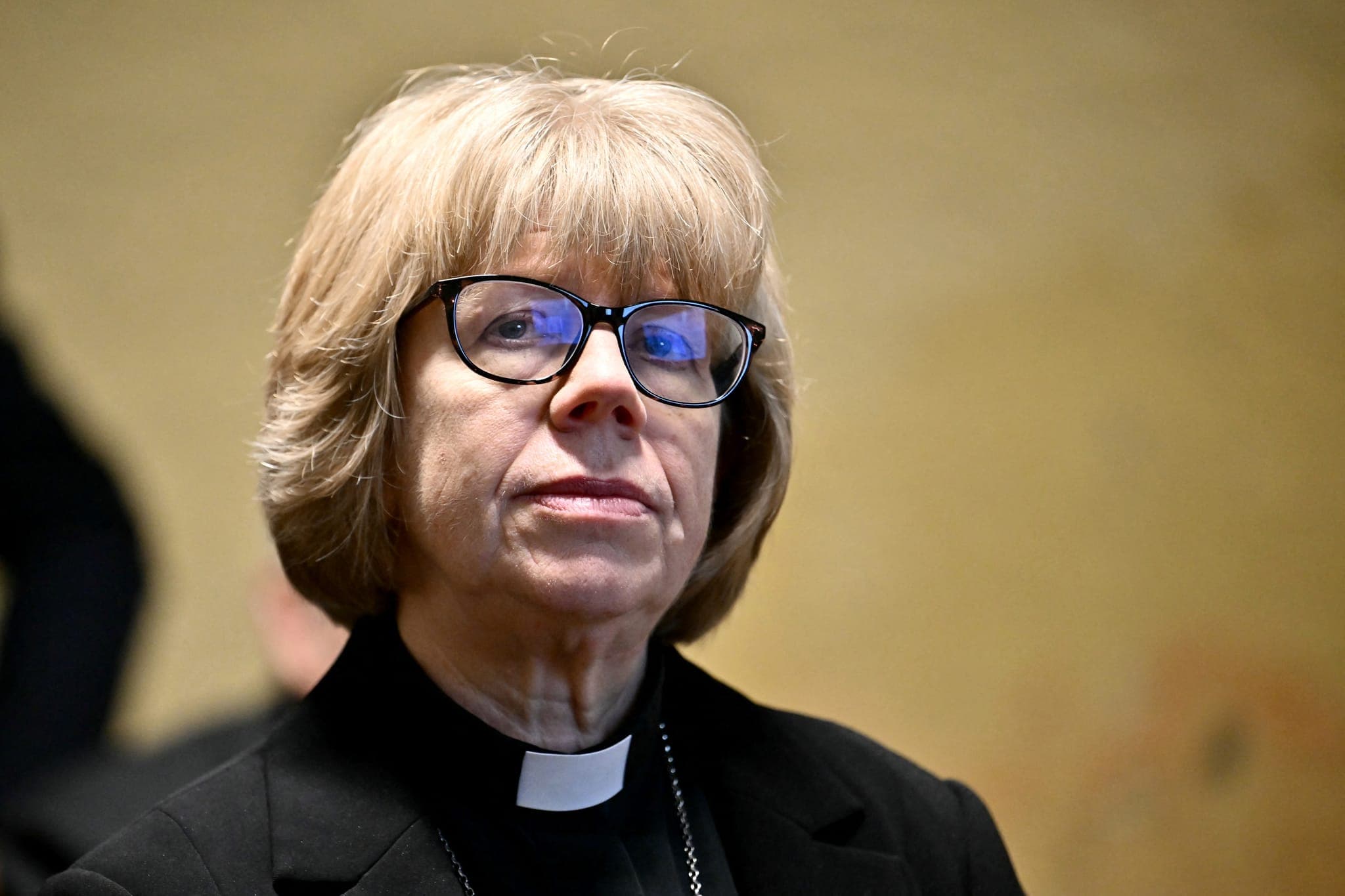
More recently, Pope Leo met with Sarah Mullally, whom the Church of England elected as the archbishop of Canterbury. He acknowledged the challenges posed by divisions among Christians and called for Anglicans and Catholics to continue ecumenical dialogue. He emphasized that Christian unity is essential to effectively proclaim the Good News.
“If the world is to take our preaching to heart, we must, therefore, be constant in our prayers and efforts to remove any stumbling blocks that hinder the proclamation of the Gospel,” he said.
Historic decision to hold yearly meeting with cardinals from around the world
Pope Leo has been praised by a number of Catholic leaders, such as Cardinal Joseph Zen, bishop emeritus of Hong Kong, for his willingness to listen to his brothers within the Church’s hierarchy. In January, he instituted annual extraordinary consistories of cardinals — a shift from the relative infrequency of such gatherings under past pontificates.
The Pope’s decision marked a desire for increased dialogue with and among the cardinals from around the world.
The Pope told the cardinals at the January extraordinary consistory that the meeting was “important, even if it is a very short time, but it is a very important time for me too, because I feel, I experience the need to be able to count on you: it is you who called this servant to this mission! So, I would like to say, I think it is important that we work together, that we discern together, that we seek what the Spirit asks of us.”
Changes for Vatican employees, governance rules
Pope Leo, a trained canon lawyer, has also made several administrative changes in Vatican City. In November, he made a small edit to the Vatican City State’s fundamental law, allowing for “other members,” such as laymen and laywomen, to serve as presidents of the Pontifical Commission. Before the revision, only cardinals could hold the position. The change regularized the appointment of Sister Raffaella Petrini, who had been placed in the position year by Pope Francis.
In a Nov. 21 report, CatholicVote observed that the change is seen as another indicator of the Pope’s “steady push to restore order, coherence, and predictability to the Church’s central administration.” By regularizing Sr. Petrini’s appointment, CatholicVote noted, Pope Leo signaled “Vatican law is meant to be followed. And when reality requires changes, the law should be amended openly and coherently, not sidestepped.”
He has also put efforts into improving the Vatican’s financial governance, such as issuing a decree last August that aimed to improve “transparency and efficiency in the awarding of public contracts,” as CatholicVote previously reported.
In addition, Pope Leo expanded Vatican employees’ parental leave and family benefits and restored a longtime Vatican tradition of awarding a 500-euro bonus to employees who worked during the period between papacies.
Encouragement of young people
Pope Leo stepped into the papal role during a unique moment in the 21st century when young people find themselves searching for meaning and authenticity amid rampant technological and social challenges. From the outset of his pontificate, Pope Leo has repeatedly addressed young people around the world with messages of hope and encouragement, urging them to put down phone screens and cultivate real friendships, forgive others, and find fulfillment in Jesus Christ.
In June 2025, the Holy Father dedicated a large portion of a video message aired at an Archdiocese of Chicago event to the young people of the world, calling them to cultivate community and to share hope with the world. In late November, he addressed a message to the Australian Catholic Youth Festival, encouraging participants by reminding them that one’s ultimate purpose is found in doing God’s will and “becoming who God made us to be.”
He also canonized the first Millennial saint, Carlo Acutis, as well as the youthful early-20th-Century figure Pier Giorgio Frassati, in September 2025. The Holy Father has cited the new saints as models of holiness for young people.
During the August 2025 Jubilee of Youth, Pope Leo had a historic meeting in Rome with more than one million young Catholics from about 150 countries. During the homily for the Jubilee Mass, he urged them to pursue greatness, following the examples of Frassati and Acutis.
“We are not made for a life where everything is taken for granted and static, but for an existence that is constantly renewed through gift of self in love,” the Holy Father told them. “This is why we continually aspire to something ‘more’ that no created reality can give us; we feel a deep and burning thirst that no drink in this world can satisfy.
“Knowing this, let us not deceive our hearts by trying to satisfy them with cheap imitations! Let us rather listen to them! Let us turn this thirst into a step stool, like children who stand on tiptoe, in order to peer through the window of encounter with God.”
He encouraged them at the homily’s conclusion: “Aspire to great things, to holiness, wherever you are. Do not settle for less. You will then see the light of the Gospel growing every day, in you and around you.”

Comments