Pope Leo urges Europe to draw on Christian roots to pursue peace and unity
At a conference center in Metz, France, named for Venerable Robert Schuman, the Pope held up the Catholic statesman’s work to reconcile former enemies as a model for Europe today.

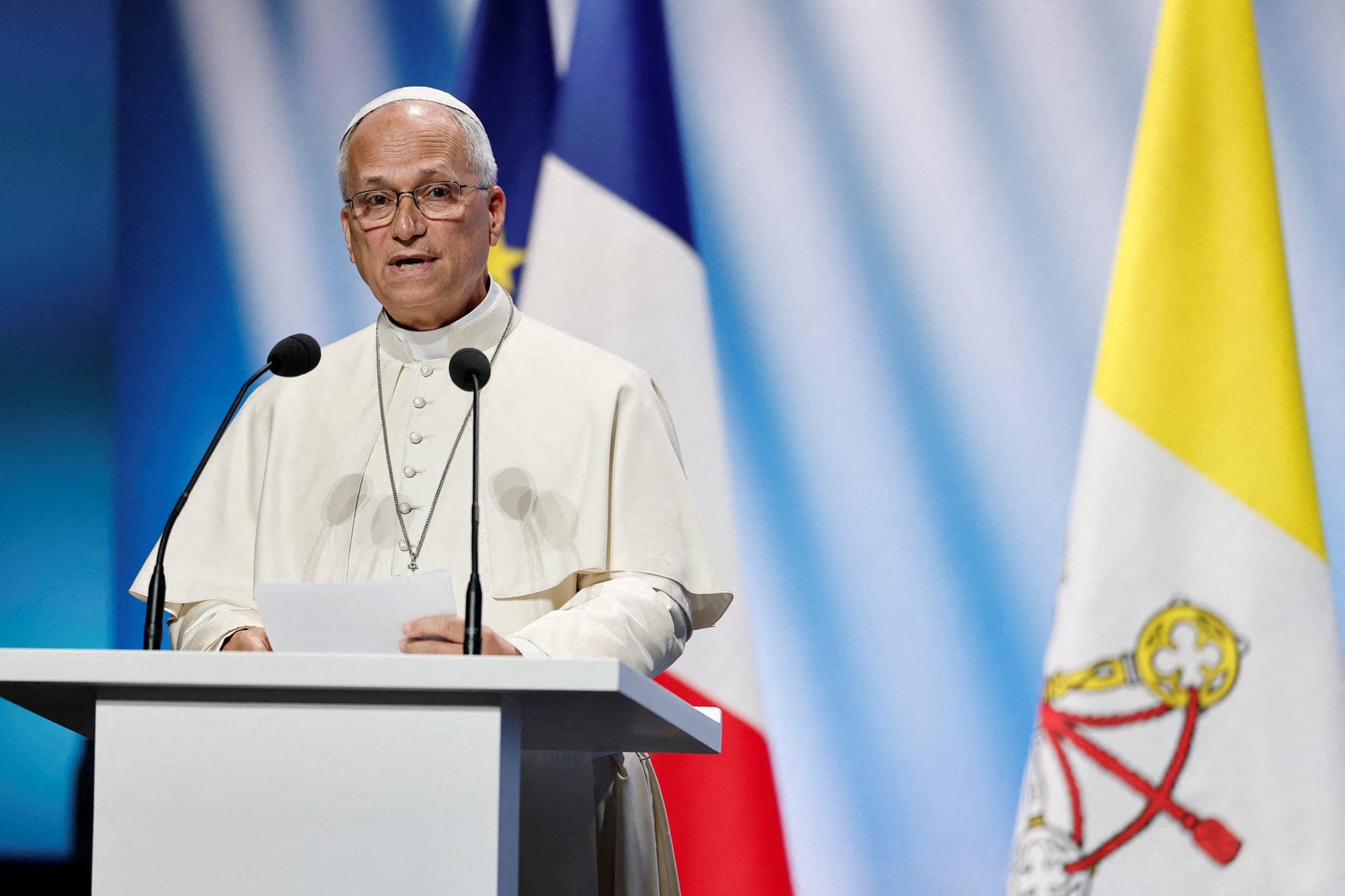
On the final day of his four-day visit to France, Pope Leo XIV urged religious leaders in Metz to reach across divides and Europeans to draw on their Christian heritage in pursuit of peace.
Metz, near France’s borders with Germany, Luxembourg, and Belgium, is closely associated with Venerable Robert Schuman, a Catholic statesman who helped lay the foundations of European integration after World War II, when reconciliation between former enemies was an urgent goal.
>> Pope Leo begins four-day apostolic journey to France: ‘That the world may have life’ <<
Speaking at an interreligious meeting at the Robert Schuman Congress Centre, the Pope pointed to Ven. Schuman as an example of how nations can overcome historic divisions and work together.
“This man of faith and conviction knew how to transform old dividing lines into bridges of hope for all of Europe, becoming a true ambassador of unity in diversity,” Pope Leo said. “Following his example, our shared responsibility as men and women of faith is to bear witness that, beyond all borders, it is always possible to meet one another, forge friendships, and seek peace.”
The Pope said dialogue “does not diminish our identity, but expresses it with simplicity and truth by opening it to the diversity of the other.” He also cited Pope Francis’ Fratelli Tutti encyclical, which describes the goal of dialogue as establishing “friendship, peace, and harmony.”
Pope Leo added that the world “sorely needs” the art of encounter, which he characterized as “the opposite of aggression and violence.”
“To invoke God’s name in order to justify violence or oppression is to profane that name,” he said. “Nothing that disfigures human dignity can claim to be inspired by God.”
The Holy Father emphasized that a civilization’s greatness is measured by how it cares for and upholds the human person.
“Religions are guardians of life, for they affirm its sacred value,” he added. “Their fruitfulness is shown in their loving presence alongside those who are most vulnerable and fragile.”
He called on his audience to be “artisans of peace and witnesses to a hope that never ceases to grow in our world.”
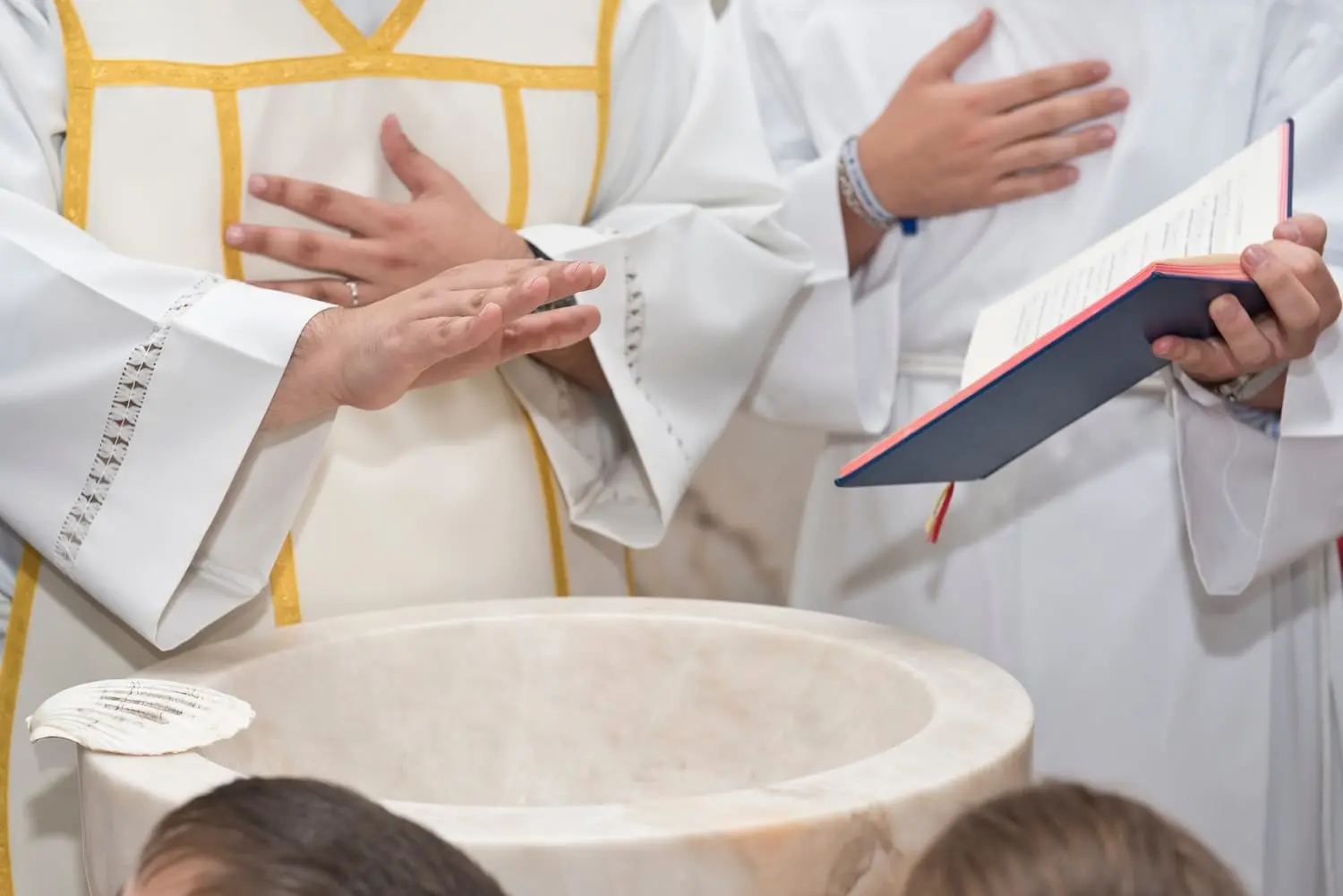
>> Pope Leo challenges France’s growing Church: Baptism is only the beginning <<
At a second meeting at the same center, titled “At the Roots of Europe for Peace and Unity,” Pope Leo addressed civil and religious authorities, including French President Emmanuel Macron. He described Europe as a cultural and historical reality shaped by many peoples and traditions.
“We cannot speak of Europe, then, without mentioning Christianity,” Pope Leo added, highlighting in particular the influence of Saint Benedict and the Benedictine monks on education, medicine, care for the vulnerable, and civic life.
He said recognizing Christianity’s influence could help Europeans uphold human dignity and freedom while engaging with people of other backgrounds. He cited Ven. Schuman’s belief that Christianity had taught the equality of all people, the dignity of work, and a duty of charity toward others.
In today’s multicultural Europe, the Pope urged people both to rediscover their roots and to remain open to dialogue. That “twofold movement,” he said, could help restore balance among rights and between rights and duties.
“As Pope Francis always reminded us, ‘The equally essential and complementary concept of duty no longer seems to be linked to such a concept of rights,” Pope Leo said. “As a result, the rights of the individual are upheld, without regard for the fact that each human being is part of a social context wherein his or her rights and duties are bound up with those of others and with the common good of society itself.’”
He then turned to migration, recalling an address he gave during his June visit to Spain’s Canary Islands. He again called for safe and legal pathways, action against human traffickers, protection for victims, and efforts to receive and integrate migrants.
“To welcome a person means to integrate them as if they were part of one’s own family, offering them the opportunity to develop their gifts, abilities and sensibilities, but also to enter into the life of the household,” Pope Leo said.
The Pope returned to Ven. Schuman’s efforts to unite European countries after World War II. Noting that war has returned to Europe and is taking civilian lives, he called for patient dialogue, courageous negotiations, and respect for international law. He cautioned against both “a naïve form of pacifism” and “the illusion that rearmament is the answer.”
“Today we must ask whether we are truly making ‘creative efforts’ to advance world peace, or whether we are simply seeking to ‘stem the tide of war’ and better prepare ourselves for wars that we assume are still to come,” Pope Leo said.
Pope Leo closed with an appeal to young Europeans to promote peace in their communities, start families, and take part in political life.
“Do not give in to the mentality of violence and oppression,” he said. “Love life at every moment, and do not be afraid of the future! Do not be afraid to start a family, to bring children into the world, to defend the dignity of every person, from the moment of conception to death. Do not be afraid to work tirelessly for the good of your communities, including through political engagement.”
Later in the day, Pope Leo celebrated Mass at Metz’s Cathedral of Saint Stephen. During his homily, the Pope said Christ calls the faithful to embrace the path of forgiveness, mercy, and magnanimity, rather than one of vengeance, retaliation, and rejection.
Pope Leo closed his homily and apostolic visit by sharing his wish that the community in Metz, which “today more than ever is called to be a beacon of hope for this country, for Europe, and for the world,” will be entrusted to the intercession of the Virgin Mary and France’s patron saints, Saints Therese of Lisieux and Joan of Arc.
The Pope’s itinerary then called for a farewell ceremony and an evening flight to Rome.
.jpg&w=3840&q=75)
Comments