Pope Leo warns against ‘watering down’ Christianity to attract the world
The Holy Father reflected on the Church’s place in society, calling Catholics to live the Gospel in every sphere of life.

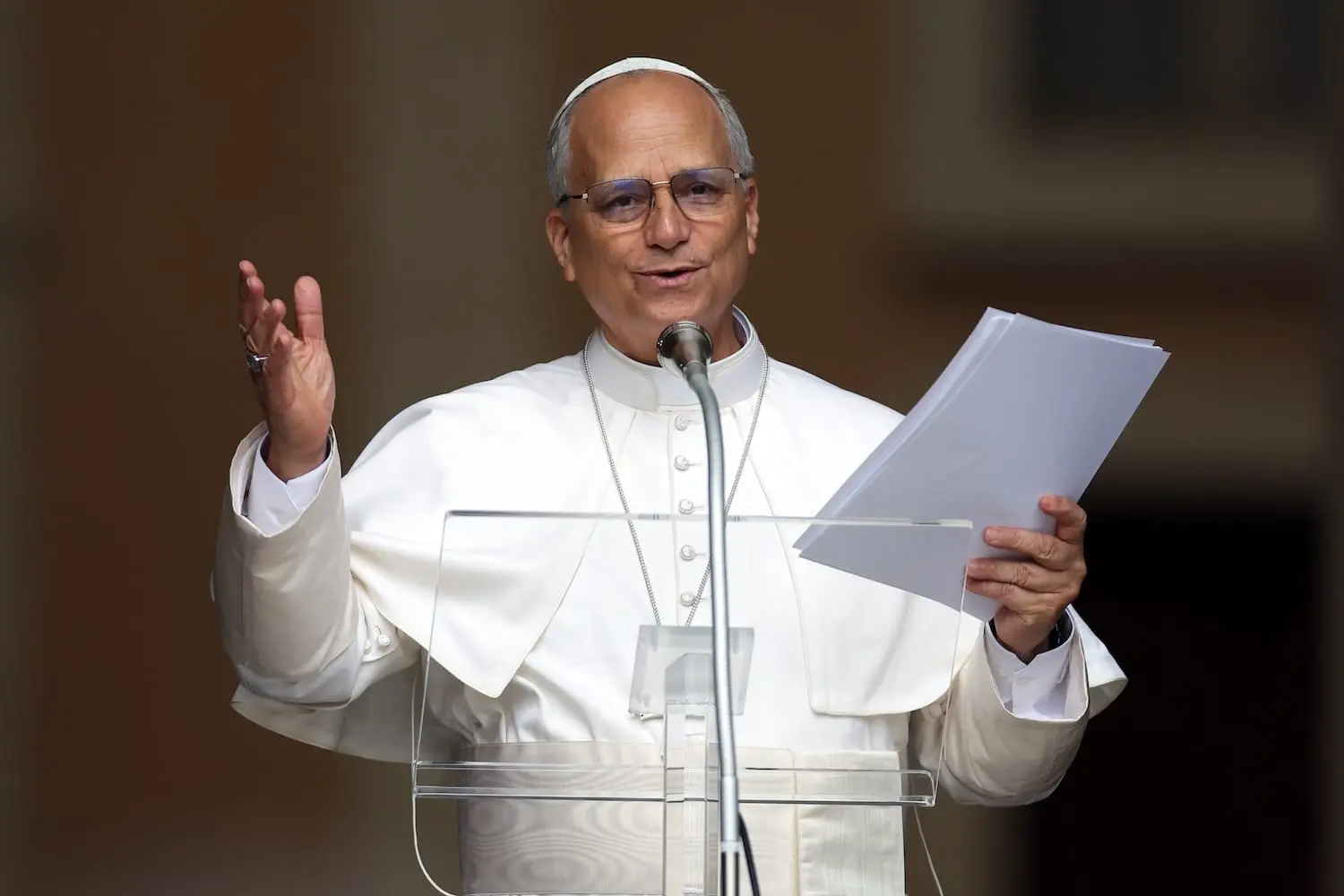
During his Oct. 7 Wednesday Audience, Pope Leo XIV reflected on the Church’s mission in the modern world, emphasizing the responsibility of Catholics to bring their faith into daily life and society.
Continuing his catechesis on the documents of the Second Vatican Council, the Holy Father drew from Gaudium et Spes to reflect on the Church’s relationship with the world.
“To fulfil the Gospel mission effectively, it is necessary for every baptized person to commit to cooperating with the grace of the Holy Spirit, so that their faith may be living and expressed in consistent behaviour,” he said. “Indeed, as the Council Fathers reiterate, the discrepancy between professed faith and daily life ‘deserves to be counted among the more serious errors of our age.’”
Pope Leo placed that responsibility within a broader reflection on the Church’s relationship with the world.
“First of all, the Council recalls that the Church is not ‘above’ or ‘beside’ the world, but is, as it were, grafted into it. ‘Mundus reconciliatus Ecclesia’, wrote Saint Augustine (Sermon 96): the Church is the world already reconciled with God; we are pilgrims on earth and share in this world’s fragility and beauty,” he said.
From her place within the world, the Church helps people look beyond material concerns to the greater purpose of life, according to the Pope.
“The first mission of the Church is to help people be attentive to the profound questions of life: those concerning our origin and our destiny, as well as those concerning the meaning of love and suffering,” he said. “The logic of profit at all costs and the manipulation of information risk exerting undue pressure on people to conform to a lifestyle centred on the consumption of material goods, but our hearts are made to look upwards.”
Pope Leo then turned to the Church’s role in society.
“The Council Fathers remind us that the Church’s mission is fulfilled also in contributing to the construction of the earthly city. However, her methods and aims are not primarily of a political order; rather, they consist in bearing witness to faith and charity, together with commitment for justice, peace, and fraternity. “
Pope Leo said that responsibility includes seeking the good of others.
“By worshipping Christ, the Righteous One who died for the unrighteous, the believer cannot accept the oppression of the weak and the poor, nor the unjust structures that perpetuate conditions of dependence and injustice. The social doctrine of the Church guides the actions of Christians, who collaborate with all people of good will in promoting the common good,” he said.
Pope Leo then turned to the mission of the faithful.
“Gaudium et Spes reserves special mention for the mission of the lay faithful who, by virtue of their Baptism, are called to enliven the world with the Christian spirit and the vision of the Gospel. The principal settings for this activity, which may well be described as priestly, are undoubtedly the family and the workplace, but it extends to every sphere of life.”
Pope Leo said the Church must remain rooted in Scripture and Tradition as she responds to developments in society.
“It is the task of the whole People of God, especially pastors and theologians, to discern what in the cultures of our time is worthy of consideration, always taking the Word of God and the Tradition of the Church as the supreme criteria for discernment. This requires a balanced mind, free from cultural trends, capable of viewing the world in a positive light whilst remaining steadfast in preserving and presenting the Gospel message in its entirety. Indeed, ‘it is certainly not by watering down the content or softening the demands that Christianity can be made attractive.’”
The Holy Father concluded by pointing to holiness and love as essential to the Church’s mission.
“Dear friends, as she journeys through history, ‘the Church has a single intention: that God’s kingdom may come, and that the salvation of the whole human race may come to pass.’ She strives towards this end above all through personal holiness and fraternal love. Saint Paul VI wrote: ‘Without this mark of holiness, our word will have difficulty in touching the heart of modern man. It risks being vain and sterile.’ Let us therefore be open to the action of the Holy Spirit, that He may help us to live in holiness and charity, so that the world may believe and hope.”






Comments