Report: Biden administration failed to properly vet nearly half of Afghan nationals entering US after military withdrawal
The Department of Homeland Security Inspector General found a 40% error rate in processing applicants for Operation Allies Welcome, including potential terrorist threats missed.
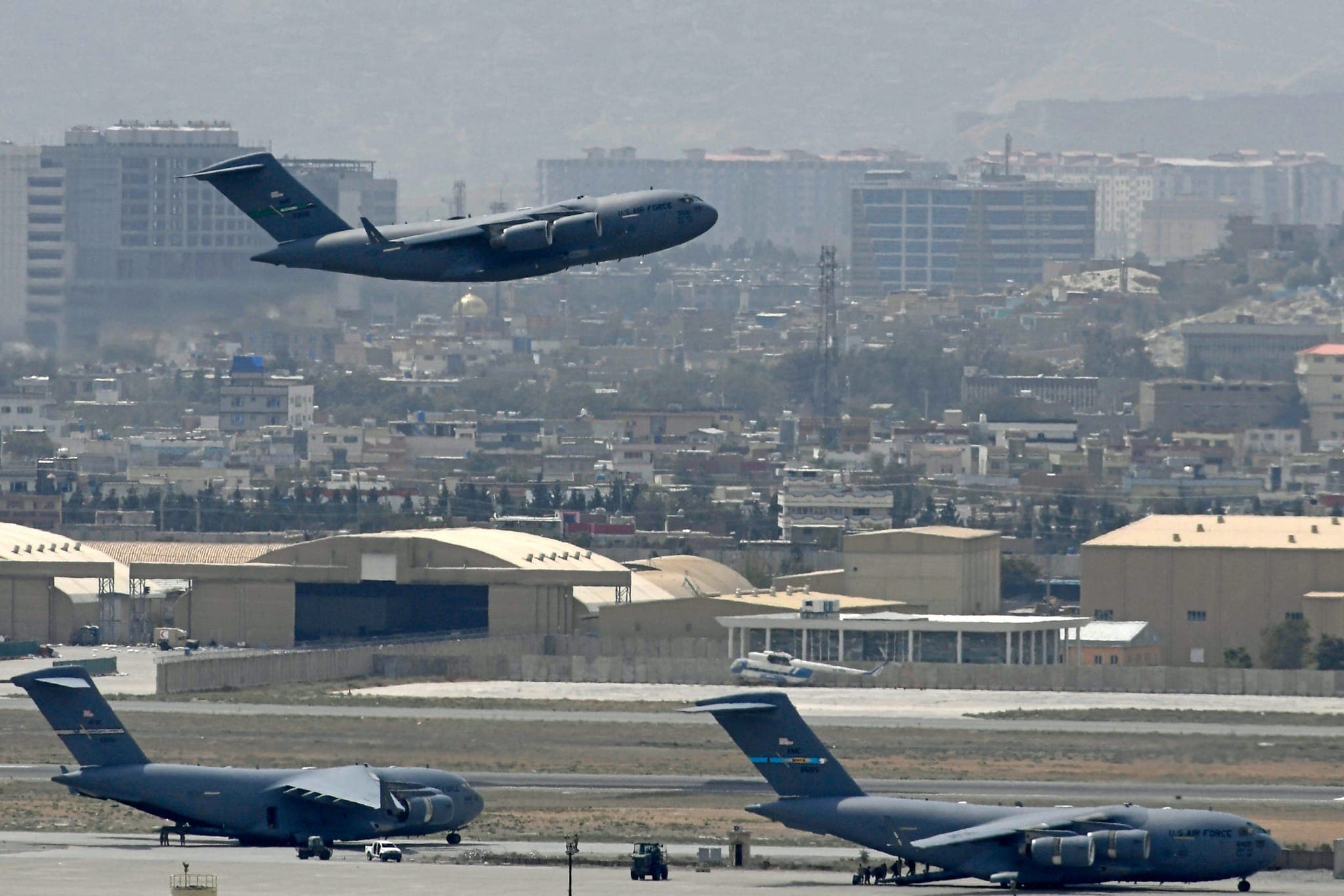
Former President Joe Biden’s administration failed to properly vet Afghan nationals seeking entry to the U.S. following the administration’s military withdrawal from Afghanistan, according to a new federal report.
The Department of Homeland Security (DHS) Office of Inspector General (OIG) published a Sept. 23 report finding a 40% error rate in Operation Allies Welcome (OAW) files processed by U.S. Citizenship and Immigration Services (USCIS).
In July 2021, as the U.S. military was withdrawing from Afghanistan, Biden introduced Operation Allies Refuge (OAR), a program intended to evacuate non-combatant civilians from Afghanistan. Within days, Congress passed legislation to increase the visa cap for Afghan interpreters and to expedite the U.S. Special Immigrant Visa (SIV) process for Afghan nationals.
OAW was a DHS continuation of OAR, managing and resettling refugees and evacuees. Between July 2021 and August 2022, roughly 97,000 Afghan nationals were paroled into the U.S. as part of OAW. Once in the U.S., Afghan nationals could apply for asylum or refugee status, SIVs, and U.S. benefits, including work authorization and welfare programs. As of 2025, 97% of applications had been approved.
The DHS OIG report found that Biden’s USCIS ignored or did not seek out critical information related to OAW beneficiaries. The report found 303 missed aliases, 23 missing security checks, 45 unresolved records, and 115 other documentation issues. In two cases, the DHS OIG even identified potential inadmissibility on terrorism-related grounds.
“The prevalence and type of errors suggest U.S. Citizenship and Immigration Services may have missed opportunities to potentially link names provided by applicants to derogatory information,” the report said.
According to the report, at least 40% of OAW files reviewed contained errors, including multiple files with more than one error each. Of the sample of 678 files reviewed, the DHS OIG identified 486 errors. In hundreds of cases, asylum officers did not enter identified aliases into the DHS system, so that critical information never made it into Afghan nationals’ alien registration files (A-files). The A-files are used in adjudicating asylum applications and determining eligibility for various visas.
In a number of other cases, asylum officers did not check the names and aliases that they received against FBI and other intelligence records, “potentially missing matches between the applicant and a derogatory record in one of the systems,” the report said.
Notably, the DHS OIG found that there was no statistically significant increase in error rate following a September 2023 settlement agreement stipulating that all OAW applicants would be resettled in the U.S. within 150 days. In other words, the error rate was statistically the same in the years prior to the settlement agreement as it was when OAW personnel were pressed to speed up processing.
“We performed this analysis for asylum applications before and after the settlement agreement to determine whether error rates were higher after the settlement agreement, as suggested by complaints,” the report said.
“Although many of the errors we identified may have resulted from minor omissions, they still resulted in USCIS missing opportunities to identify potential matches between names the applicant provided to USCIS and derogatory information,” the report concluded. “Some of the errors we identified in the adjudication process could negatively impact the integrity of the A-files, which USCIS relies on for future immigration administration and enforcement activities.”
Under the Biden administration, an estimated 20,000 foreign nationals from majority-Muslim countries were ushered into the U.S. on a monthly basis. Afghanistan alone accounted for a monthly average of 1,768 visas per month. Under President Donald Trump, that number has fallen to nine visas per month.
Lax vetting has been responsible for a massive increase in the foreign-born Muslim population in the U.S. Between Sept. 11, 2001, and the end of 2024, the foreign-born Muslim population in the U.S. more than doubled from 1,697,452 to nearly 3.5 million, a 103% increase, according to a report from the Center for Immigration Studies.
Nearly all of the increase in the foreign-born Muslim population came through legal immigration avenues, including asylum and refugee programs.
.jpg&w=3840&q=75)




Comments