Saint of the day, May 26
Philip Neri was one of four children born to Francesco Neri in Florence, Italy. He was always a good-natured and cheerful child, known as “good little Phil” by friends and neighbors. He received his education from the Dominicans in the convent of San Marco in Florence.
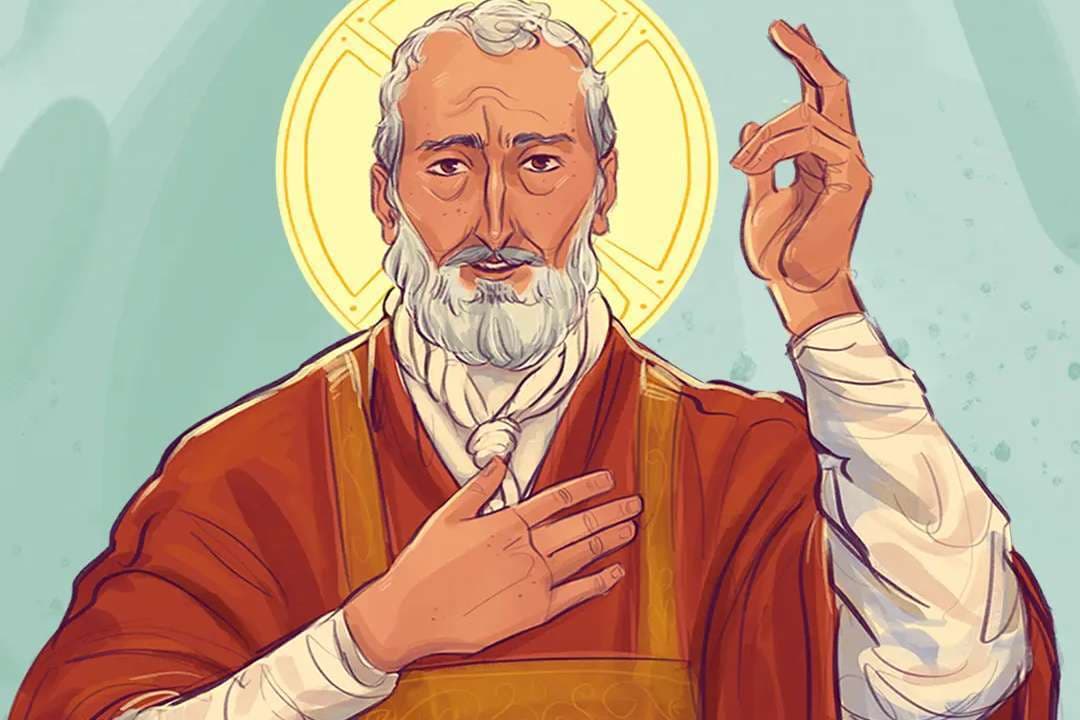
May 26 - Saint Philip Neri
Born: July 21, 1515
Died: May 26, 1595
Nationality: Italian
Vocation: Priest
Patronage: Rome, US Special Forces, humor, joy
Canonization: March 12, 1622 by Pope Gregory XV
Philip Neri was one of four children born to Francesco Neri in Florence, Italy. He was always a good-natured and cheerful child, known as “good little Phil” by friends and neighbors. He received his education from the Dominicans in the convent of San Marco in Florence.
At the age of 18, Phillip was sent to live with a wealthy uncle in San Germano. The plan was for Philip to assist with and possibly inherit the family business, giving him a respectable living and a place to raise a family. It was during this time that Philip received a vision and a religious conversion which radically changed his life and its trajectory. He lost interest in business and instead wanted to radically serve the Lord.
He decided that Rome was the best place to serve the Lord, as it was the home of the Holy Father. While in Rome, Philip supported himself by tutoring the sons of another Florentine living in the city. The two boys improved greatly under Philip’s charge. During this time, he lived a solitary style of life, praying, fasting, and practicing the ascetic life.
In 1535 he began to study theology and philosophy at the Sapienza and at St. Augustine’s monastery. After three years he gave up any thought of ordination, even though he was considered to be a promising scholar. He felt that God was calling him to live well as a layperson instead. He sold his books and set out to help the poor in Rome. He wanted to reconvert the Eternal City, which was at that point becoming quite secularized and corrupt.
His method of evangelization was quite different from all those of his day. As a layman he would talk on street corners and in public squares. He made acquaintances and friends using his friendly personality and humor to start conversations. Philip met people where they were at, and would then draw them higher. One of his customary questions was: “Well, brothers, when shall we begin to do good?”
He would bring people from his conversations on the street to the hospitals to wait on sick and into churches to pray. As the Council of Trent met to reform the Church, Philip walked the streets of Rome reforming his community and giving people a true example of Christian brotherhood. He spent his days talking to people, and his nights praying, either in a church, or in the dark catacombs beside Appian Way.
In 1544, on the eve of Pentecost, Philip had a vision as he was praying. A globe of fire appeared, entered his mouth and descended into his heart, causing his heart to dilate with divine love. This was incredibly painful, and Philip finally cried: “Enough, enough, Lord I can bear no more!” From that day forward, the area over Philip’s heart was swollen, a sign of his enlarged heart which caused him no pain.
In 1548, Philip’s confessor, Father Persiano Rossa, helped found a confraternity for poor laymen to meet, serve the poor, and pray together. It was called the Confraternity of the Most Holy Trinity. Ultimately this same priest convinced Philip to continue his priestly formation, insisting that Philip could serve his growing confraternity and continue his ministry more effectively as a priest. Philip agreed and was ordained in May of 1551, at 36 years of age.
There was talk around this time of making Philip a cardinal, as his holiness and wisdom were renowned. Among his friends were St. Ignatius of Loyola, St. Charles Borromeo, and other holy men and women. Philip refused the honor however, and went to live with Father Rossa and other priests at San Girolamo. He carried on his mission, but spent most of his time in the confessional, remaining there from dawn until dusk. Though he entertained going to India in the footsteps of Francis Xavier, Rome needed him. The priests who helped Philip came to be called Oratorians because they would ring a bell to call people to the “oratory” – a Latin word for a place of prayer.
A few years later, Philip’s foundation of the Congregation for the Priests of the Oratory was formed. Its members encouraged others to deepen their faith. The only rules were to share a common table and perform spiritual exercises together. The organization was approved by Pope Gregory XIII in 1575. Many people contributed financially to the construction of a church for the Oratorians, including Charles Borromeo and Pope Gregory.
Philip was constantly in a crowd, surrounded by people, hearing their confessions and engaging in ministry and prayer. He was truly all things to all men – weeping with those who wept and laughing with those who laughed. Laypeople called him the “apostle of Rome.”
On the feast of Corpus Christi in 1595, a physician told Philip that he was not healthy. Philip, seemingly knowing that his time to die had come, proceeded on with his plans for the day, listening to confessions and seeing visitors as normal. He then went up to his room and passed away from a hemorrhage that night at the age of 80, entering into his eternal reward.
St. Philip Neri, pray for us.


Comments