The Joseph option: Fatherhood as a bridge to eternity
Father’s Day usually brings a flood of neckties, grilling tools, and well-wishes, but behind the annual celebrations is a much weightier and exciting reality. It is a reality perfectly mirrored by St. Joseph, whom the Church honors as the head of the Holy Family.
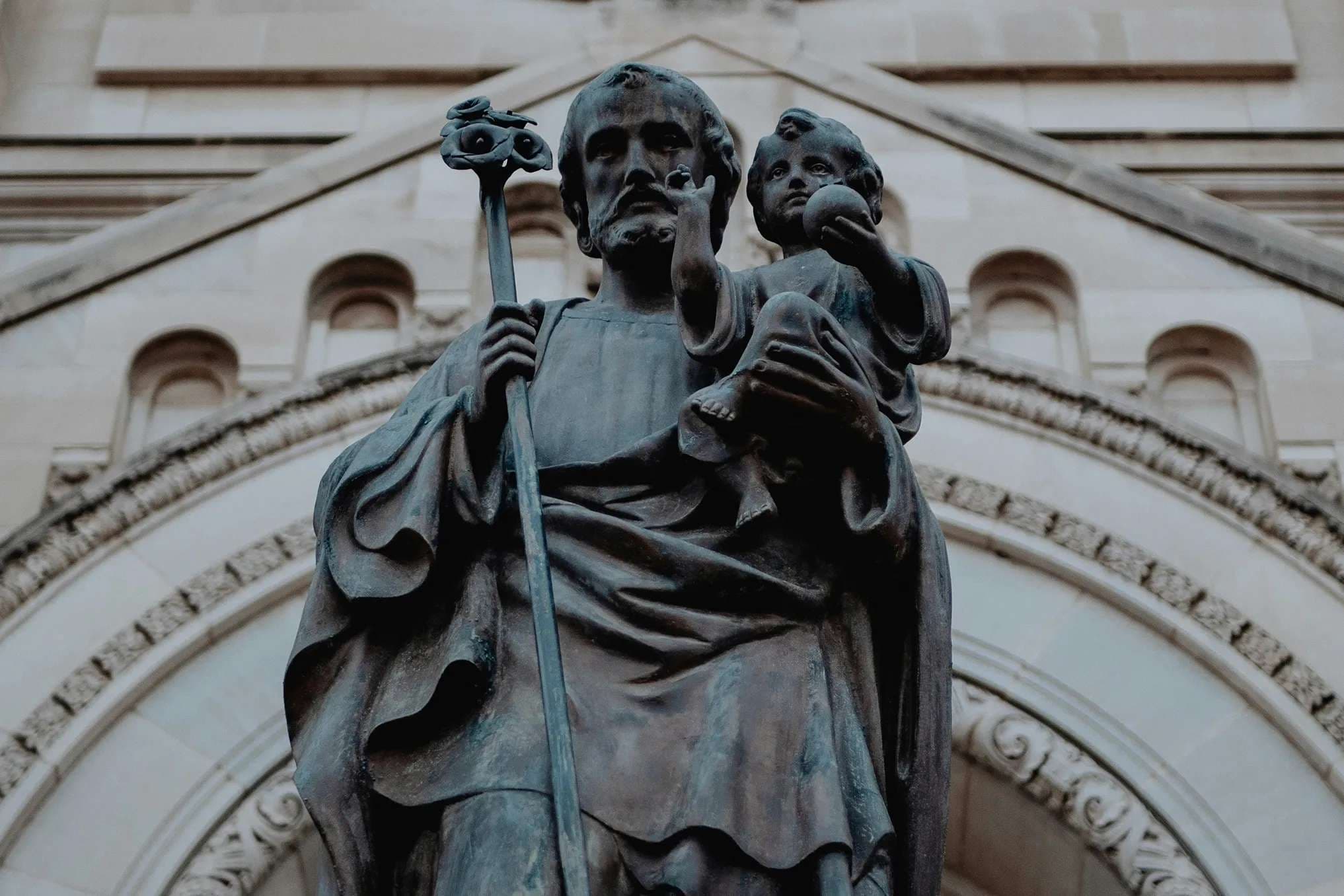
Father’s Day usually brings a flood of neckties, grilling tools, and well-wishes, but behind the annual celebrations is a much weightier and exciting reality. It is a reality perfectly mirrored by St. Joseph, whom the Church honors as the head of the Holy Family.
Our life’s ultimate goal is to pass through death's doorway into Heaven, where we will be with Jesus. For fathers, the road there is found in caring for our families as a natural extension of our very being — and that mission continues even after we die, just as it does for St. Joseph, echoing into eternity.

Standing on our fathers’ shoulders
This mission starts with being born into a family. We can't come into this world without our parents, and contrary to the individualistic narratives of secularism, we can't grow into who we are without being raised by our families and in socialization with our communities.
We love because we were loved first. Out of gratitude for the legacy our parents gave us, we should seek to pass those same traditions and values down to our own children.

The shift from heir to founder
When you marry and become a father, you realize that your role goes far beyond external modeling; a deeper spiritual reality is constantly shaping your family. You must always be on guard against attacks of the enemy that seek to weaken and distract you. You learn to embrace the graces given to us as fathers following the model of St. Joseph, Terror of Demons and Pillar of Families. You become a founder, a leader, a nurturer, a protector, a rock.
To do this, a father must be like St. Joseph, Guardian of Virgins — the fierce protector of his children’s purity and innocence. In an age of digital intrusion and moral relativism, the father must act as a filter. You can prevent problematic content from getting to your family that might infect their souls, building their immunity through intentional formation and creating a sacred space for them to grow. This is the "enclosed garden" of the Christian home.

Making space for your children to grow
Yet, this protection creates a paradox of the role. You hold the power, but it doesn’t really belong to you. No different than an earlier Joseph, the ancient steward of Egypt’s resources in the Old Testament, you are a steward of your family for the Father of Heaven.
To raise a prosperous family, a father must cheerfully sacrifice both his resources and his personal limelight. It means stepping back from the center of attention for hidden service and giving up control in areas where we tend to be selfish.
Real authority in the home is not found in the exercise of power, but in the sacrifice of it. Every time a father chooses his child’s needs over his own desires, or his wife’s peace over his own ego, he is practicing the "little way" of the cross. He is showing his children that a man’s strength is best used to carry the weight of others.
Fathers must firmly rein in their children when they’re stepping out of line. Good fathers find ways to patiently connect with their children even while consistently applying measured discipline.

The intercession of the patriarch
As the years pass, the father’s gaze begins to shift toward the horizon of life. Just as St. Joseph retires from an active parenting role as Jesus starts his public ministry, fathers see the fruits of their labor grow as their children embark on their own journeys.
St. Joseph, Patron of a Happy Death, provides the ultimate blueprint. Like him, we acknowledge what we leave behind, and look forward to interceding for it in Heaven. Our death will not be an end of our participation in what we build here on earth, but a transcendence that leads to our final end: to be with Christ.
From that vantage point, the work of a father continues. We will pray for the sanctity of our families, for their good, and for their own journeys to be with God. We build here so that we may dwell there. We lead our families to the threshold of the domestic church, hoping that one day, we will all meet again in the eternal home of the Father.
This Father's Day, we honor fathers not just for providing for us, but for the ways they gave their all to help us grow, disappearing like St. Joseph so that Christ could be the center of their homes.


_.jpg&w=3840&q=75)





Comments