The me-culture is holding back vocations
While dioceses across the country are in dire need of priests and the number of religious has plummeted, historically few of us truly spend time in discernment listening for God’s vocational direction. Modern culture — and often those sitting comfortably in the pews — has come to view total consecration to God not as a crowning glory, but as an eccentric, tragic disposal of human potential, rather than a generous self-gift.
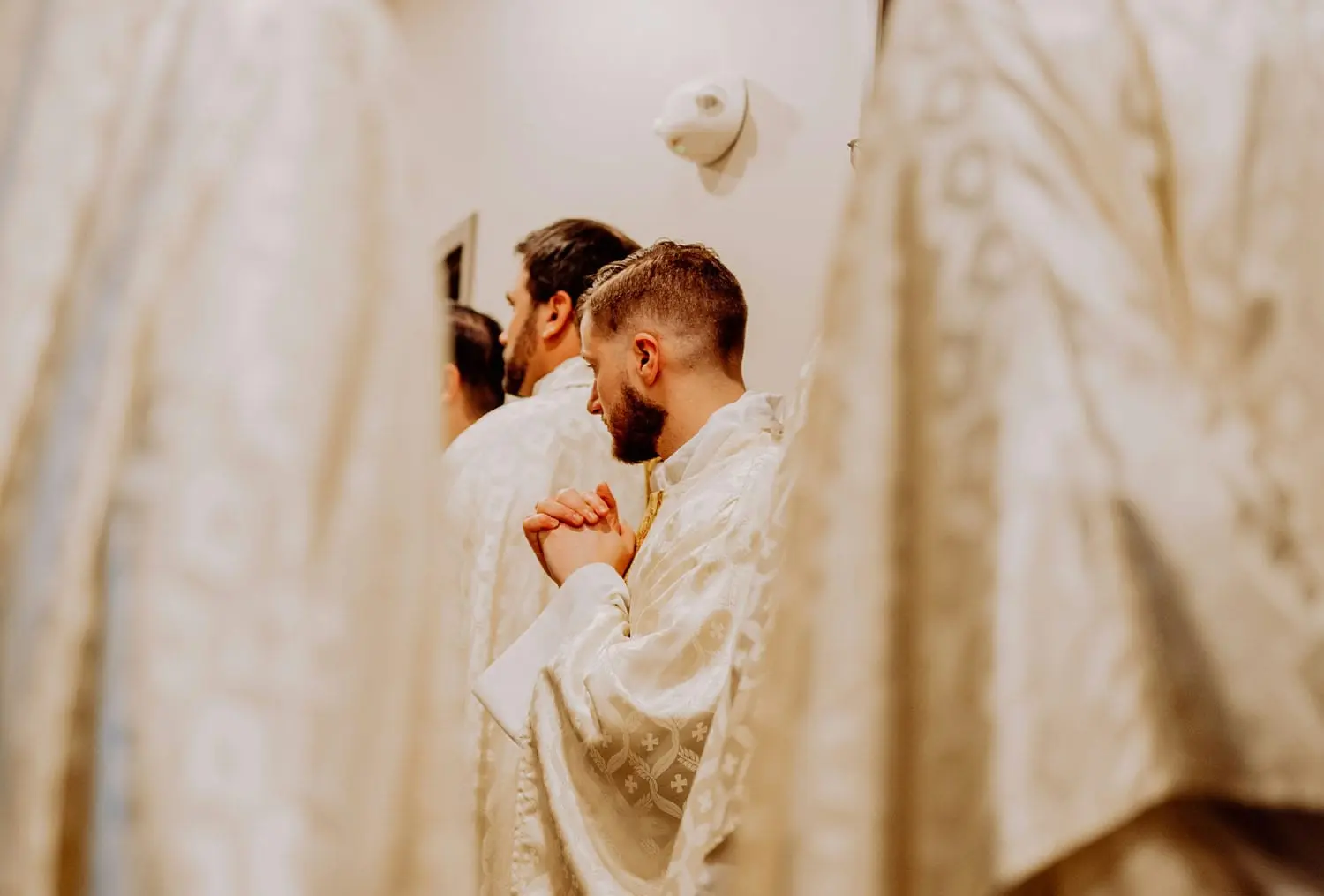
A couple of years ago, a newly ordained priest in our diocese — recently returned from his theological formation at the pontifical university in Rome — celebrated Mass in Italian for an important regional feast day. For our local Italian-American community, which has spent decades weathering the decline of aging pews and generational indifference, the liturgy was the rebirth of Italian Catholic community life in our area.
At the end of Mass, the deacon invited the young priest’s parents to come forward so the parish could recognize them for the gift of their son. Standing beside him, they radiated a memorable joyful gratitude. It was an extraordinary visual testament to the true purpose of Catholic parenthood: raising children not merely to preserve a family name or fulfill earthly ambitions but keeping hands open to whatever God might ask of them. These parents knew that while they were surrendering the natural joy of bouncing their son’s children on their knees, they were gaining the sight of their son’s foretaste of eternal life united to Christ in an extremely close and unique way.
That scene in the sanctuary ought to be a regular occurrence across our parishes. Instead, it has become an anomaly.
Far more common are the judgmental whispers that circulate through parish parking lots whenever a sharp, handsome young man announces he is entering seminary, or a vibrant young woman enters the convent: “What a waste of talent,” or “What a shame, she is so beautiful.” Modern culture — and often those sitting comfortably in the pews — has come to view total consecration to God not as a crowning glory, but as an eccentric, tragic disposal of human potential.
The lie of the 'sensible' vocation
Behind those whispers lies an insidious cultural delusion: that marriage is the smart choice of vocation — who wouldn’t want to enjoy living with their spouse and bringing grandchildren to their parents? Let someone else become a priest or religious sister. While historically few of us truly spend time in discernment listening for God’s vocational direction, dioceses across the country are in dire need of priests, but many of the men being called are distracted daydreaming about living our best, most luxurious life.
Society has spent decades marketing holy matrimony as a domestic vacation of personal enjoyment, where you find a soulmate to complete your desire of not being alone but without any greater sense of mission to anyone but yourselves.
The truth is, marriage only looks like the cushy option if you are neutering the vocation.
It only looks easy if you artificially cap your family size to guard your leisure and disposable income, or if you build an insular moat around your household to keep out the needs of the wider world. When you embrace the Church’s teaching and let God determine the size of your family, marriage is a demanding, sanctifying gauntlet.
Each child dramatically re-engineers your life. Your budget is squeezed, your sleep is broken, and your patience is often tested to its limit. It requires you to bleed life for your family day in and day out, exactly as Christ bled for His bride.
This vocation can feel so relentlessly difficult that millions simply abandon their vows. The USCCB cites 2014 data indicating that roughly one in five Catholics has experienced divorce. While the Church certainly recognizes tragic circumstances where physical separation or civil divorce is necessary to protect someone from abuse or grave harm, far too many couples have simply forgotten that marital vows are meant to hold firm in the worst of times — not just when the relationship feels emotionally satisfying.
It is easy to forget that whether we are married, ordained, or single, God remains our first and ultimate love. When we pledge ourselves at the altar, our fidelity to our spouse is an expression of our fidelity to Him, no matter the cost. Bearing each other’s burdens through dry spells, sickness, and deep trials isn't a sign that a marriage has failed — it is the very way the cross triumphs in family life. Carrying out our vocation in the darkest valleys is where the covenant is forged into something holy.
Cultivating hearts of service
Likewise, the duty of charity doesn’t stop when we become parents. A few Sundays ago, our parish priest brought this point home by recounting a famous three-point sermon: First, millions of people are starving in the world right now. Second, most of us don’t give a damn about it. And third, you are far more scandalized that a priest just said the word “damn” from the pulpit than you are about millions of starving people.
The pews went silent because the mirror was unflattering. A comfortable faith seeks self-preservation, but the universal call to holiness demands stepping into the mess of human need as our season of life allows. That kind of charity is personal and not just a donation to the parish. It looks like dropping off a hot meal for a family navigating a cancer diagnosis or the sleepless haze of a newborn, mowing the lawn for an elderly neighbor who can no longer push the mower, inviting the latchkey kid over for an after-school snack, or lending a reliable hand to the single mother next door. Most importantly, it means refusing to blind ourselves to the struggles all around us, modeling for our children that self-sacrificing love isn't just an abstract homily topic, but how Catholics inhabit their neighborhoods.
Reclaiming Godly vocational guidance for our children
When young people see marriage and family life lived with that kind of radical, generous availability, the priesthood no longer looks like an alien sacrifice. It simply looks like another way of maturing and exercising one’s fatherhood.
Our vocation as parents is to raise children who know and can respond freely to God’s call. We should make faith, the priesthood, and consecrated life familiar and beautiful, welcoming a religious vocation not as a family loss but as a great gift and honor. By joyfully living the sacrificial love of marriage and family life, we can help our children recognize that every Christian vocation is a generous self-gift — whether to marriage, priesthood, or consecrated life.







Comments