Trump announces U.S. capture of Venezuela’s Maduro, promises peace and reform
Early Jan. 3, the U.S. military captured Venezuelan President Nicolás Maduro and his wife, Cilia Flores de Maduro, in Caracas, President Donald Trump announced.
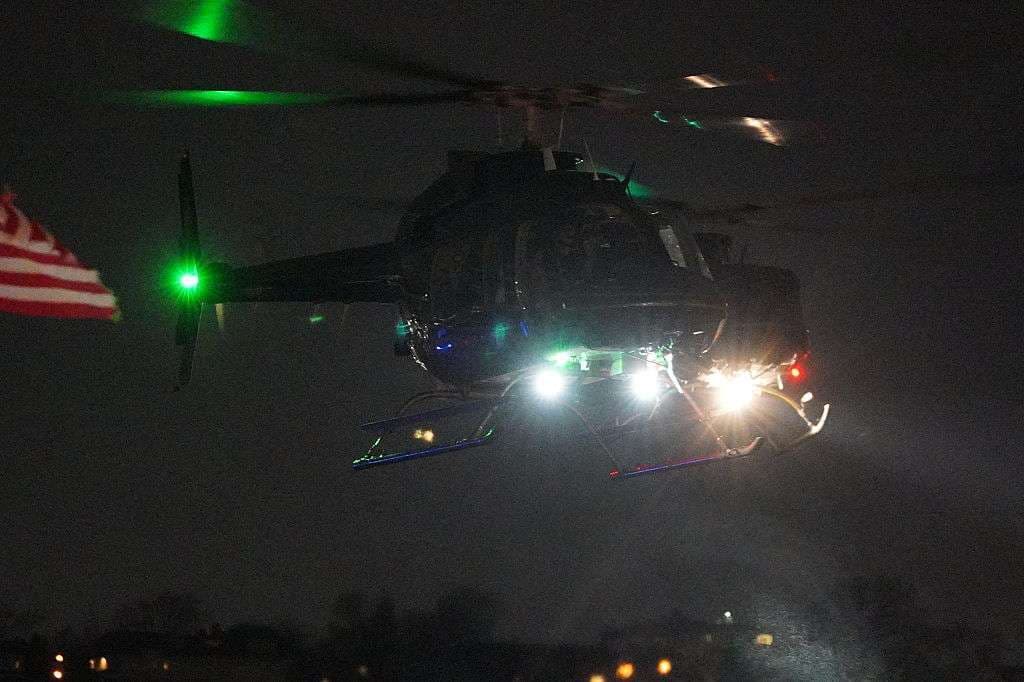
Early Jan. 3, the U.S. military captured Venezuelan President Nicolás Maduro Moros and his wife, Cilia Flores de Maduro, in Caracas, without any loss of American service members or military equipment, President Donald Trump announced in a press conference held this morning at his Mar-a-Lago home in Florida.
Maduro and Flores have been indicted in the U.S. District Court Southern District of New York “for their campaign of deadly narcoterrorism against the United States and its citizens,” Trump said.
Who are Maduro and Flores?
According to the indictment, Flores acted as the president of the National Assembly from about 2006 to 2011, the attorney general of Venezuela from about 2012 to 2013, and a National Constituent Assembly member since about 2017. Maduro, the indictment said, has been president of Venezuela since about 2013, after former President Hugo Chavez died. Maduro’s re-elections in 2018 and 2024 were disputed, and the U.S. views him as an illegitimate leader.
Charges against Maduro and Flores in the indictment include importing cocaine into the U.S. and possession of automatic machine-guns. Maduro also oversaw Cartel De Los Soles, which trafficked illegal drugs that killed many people in the U.S, and sent gangs to terrorize American communities, Trump said.
Maduro, “like former President Chavez before him-participates in, perpetuates, and protects a culture of corruption in which powerful Venezuelan elites enrich themselves through drug trafficking and the protection of their partner drug traffickers,” the indictment said. “The profits of that illegal activity flow to corrupt rank-and-file civilian, military, and intelligence officials, who operate in a patronage system run by those at the top-referred to as the Cartel de Los Soles.”
What happens next?
Trump said that Venezuela will become a wealthy, safe, and independent nation because the U.S. captured Maduro and Flores.
He said the U.S. will “run the country until such time as we can do a safe, proper, and judicious transition” because the administration doesn’t want to risk having the next leader of Venezuela be someone who does not “have the good of the Venezuelan people in mind.”
He explained that his administration will designate and announce a group of people who will “be working with the people of Venezuela to make sure that we have Venezuela right.” This group will oversee the country until the nation can provide Venezuelans “a lot of money” and give them “a great way of life,” Trump said. He said his administration seeks peace, liberty, and justice for Venezuelans, both those in the South American nation and those who live in the U.S. but wish to return to their homeland. Trump told reporters that his administration would make sure both people Maduro forced out of Venezuela and people in Venezuela are “taken care of.”
“They’re not going to suffer anymore,” he said. “The illegitimate dictator Maduro was the kingpin of a vast criminal network responsible for trafficking colossal amounts of deadly and illicit drugs into the United States.”
>> US seizes Venezuelan oil tanker officials say is tied to terror-linked shipping network <<
Trump said Rubio had spoken with Venezuela Vice President Delcy Rodríguez, whom Maduro had selected. She was sworn in as president Jan. 3, he said.
“She’s essentially willing to do what we think is necessary to make Venezuela great again,” Trump said.
However, a memo Rodríguez posted on her Instagram on Jan. 3 condemned the Trump administration’s action as an act of military aggression against Venezuelans and called it a violation of Articles 1 and 2 of the United Nations Charter. The memo, written in Spanish, said the attack was a threat to peace and international stability that jeopardizes the lives of millions of people and the intent was simply so that the U.S. could benefit from Venezuela’s oil and minerals.
“The attempt to provoke a colonial war to destroy the republican form of government and force a ‘regime change,’ in alliance with the fascist oligarchy will fail like all previous attempts,” the memo said, according to an unofficial translation.
Rodríguez said in a televised address to Venezuelans that Maduro remains president, The Hill reported.
Trump said U.S. oil companies will bolster Venezuela’s “badly broken” oil infrastructure and “start making money for the country.” He told reporters that the oil companies will pay billions of dollars to rebuild the infrastructure and they will be reimbursed.
“We have to rebuild their whole infrastructure,” Trump said, noting that it is dangerous to take oil out of the ground.
He said the U.S. will proceed to sell large amounts of oil from Venezuela to other countries. The money the companies invest will be used in Venezuela, according to Trump. The money gained through the oil will go to Venezuelans and people who were forced to leave Venezuela and via reimbursement for the damages Venezuela caused the U.S., Trump said.
He said that running Venezuela helps the U.S. because the nation needs to have stable neighbors and protected sources of energy.
The U.S. is also prepared to make a second, larger attack on the nation if that’s necessary, but it appears that what the first accomplished renders that superfluous, he said.
“You’re going to have some of the riches that you should have had for a long period of time,” Trump said, addressing the Venezuelan people. “It was stolen from you. But you’re going to have peace, and you’re going to have safety. You’re going to have justice. You’re going to have a country.”
Why and how was the operation conducted?
U.S. Secretary of War Pete Hegseth said Trump is committed to stopping gangs, violence and drugs to the American people; taking back oil that his administration said Venezuela stole; and restoring American “deterrence and dominance in the Western Hemisphere.”
“Nicolas Maduro had his chance, just like Iran had their chance – until they didn’t and until he didn’t,” Hegseth remarked. “He effed around, and he found out.”
Joint Chiefs of Staff Chairman Gen. John Daniel "Raizin" Caine said interagency work on the mission — “Operation Absolute Resolve” — began months ago. The CIA, the National Security Agency, and the National Geospatial-Intelligence Agency worked with every military branch on the “unprecedented” operation, he said. The date of the capture was selected to minimize both harm to Maduro, Flores, and civilians as well as anticipation that the operation would occur, according to Caine.
More than 150 aircrafts, from 20 bases, flew into Venezuela and dismantled the country’s air defense systems to protect helicopters and ground forces that would capture Maduro and Flores from Maduro’s compound, Caine explained.
One U.S. helicopter was hit during the mission but was still flyable, he said.
Trump said Maduro attempted to enter a steel-reinforced safe place but wasn’t able to close the door before he was captured. Maduro and Flores were taken into custody by the Department of Justice (DOJ), and aircrafts protected helicopters that took them out of the area, according to Caine. Maduro and Flores were taken aboard the USS Iwo Jima.
Secretary of State Marco Rubio stated that Maduro, who was indicted in 2020 in the U.S., had a $50 million bounty for information leading to his arrest. Maduro, Rubio said, rejected U.S. offers and “chose instead to act like a wild man.”
Rubio said the mission showed Trump is “a president of action.”
“Don’t play games when this president’s in office because it’s not going to turn out well,” Rubio remarked. “I guess that lesson was learned last night, and we hope it’ll be instructive moving forward.”
Rubio said the administration notified Congressmen “immediately after” the mission. Because it was “trigger-based,” the administration couldn’t notify Congress without endangering the mission, according to Rubio. He emphasized that it was a law enforcement operation that the Department of War helped the DOJ accomplish.
Trump said Congress would have leaked the information had his administration shared it. Americans who are in Venezuela have been protected, according to Trump.
>> Trump designates illicit fentanyl as a weapon of mass destruction <<

Comments