U.S. military buildup near Iran raises tensions, questions of war as diplomacy continues
The U.S. has significantly increased its military presence in the Persian Gulf in recent weeks, deploying a second aircraft carrier strike group Feb. 13 and reportedly sending another 50 fighters Feb. 18. The buildup comes as President Donald Trump continues to warn Iran that it must abandon its nuclear program or risk military action.

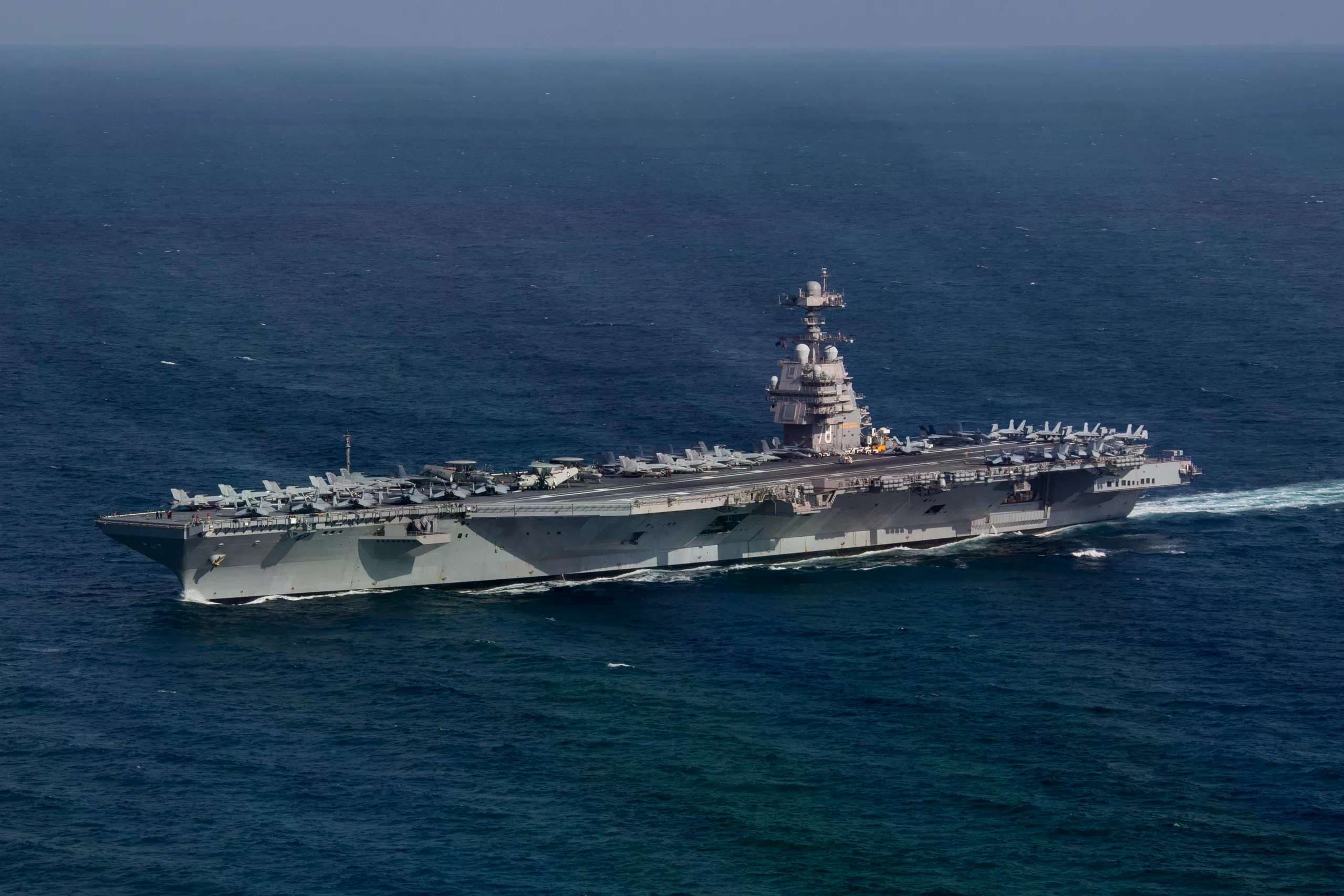
The U.S. has significantly increased its military presence in the Persian Gulf in recent weeks, deploying a second aircraft carrier strike group Feb. 13 and reportedly sending another 50 fighters Feb. 18. The buildup comes as President Donald Trump continues to warn Iran that it must abandon its nuclear program or risk military action.
According to a Feb. 18 Axios report, more than 150 U.S. military cargo flights have transported weapons systems and ammunition to the Middle East. The expanding U.S. military presence there now includes two aircraft carriers, roughly a dozen warships, hundreds of fighter jets, and multiple air defense systems.
Trump ordered the second carrier, the USS Gerald R. Ford, to the region shortly after a Feb. 11 White House meeting with Israeli Prime Minister Benjamin Netanyahu. The carrier, previously stationed in the Caribbean, will join the USS Abraham Lincoln strike group already in place, according to FOX News.
After his closed-door meeting with Netanyahu, Trump told reporters that Iran and the U.S. “have to make a deal, otherwise it’s going to be very traumatic, very traumatic.” When asked about a timeline for an agreement, he said, “I guess over the next month.”
Trump has repeatedly clashed with Iranian leaders, warning in recent weeks that Iran must permanently renounce nuclear weapons to avoid military conflict with the U.S. In early January, he said the U.S. could intervene if the Iranian regime began killing anti-government protestors, though by Jan. 14 he suggested a pause on threats to strike. Weeks later, Trump warned Jan. 28 that a “massive Armada” of U.S. forces was en route to the country and called for negotiations. As Zeale News previously reported, Iranian officials have said they would respond forcefully to any military aggression.
The U.S. has already demonstrated a willingness to strike. In June 2025, U.S. forces targeted three Iranian nuclear sites following Israeli-led strikes aimed at dismantling Iran’s nuclear weapons development programs. Addressing the nation afterward, Trump called the operation a “spectacular military success,” saying it put “a stop to the nuclear threat posed by the world’s No. 1 state sponsor of terror.”
As Zeale has previously reported, Trump advisors Jared Kushner and Steve Witkoff later revealed Trump had been displeased with Israel’s aggression in the past, suggesting it disrupted diplomacy and was a betrayal. Referring to an Israeli strike on Qatar, Kushner said the President felt “the Israelis were getting a little bit out of control in what they were doing, and that it was time to be very strong and stop them from doing things that he felt were not in their long-term interests.”
Despite the military buildup, diplomatic efforts continue. According to Axios, Kushner and Witkoff met Feb. 17 in Geneva with Iranian Foreign Minister Abbas Aragchi. Both sides later said the talks “made progress,” and U.S. officials reportedly gave Iran two weeks to submit a detailed proposal.
Vice President JD Vance, speaking in a Feb. 17 FOX News interview, said the talks “went well” in some ways, but “in other ways it was very clear that the President has set some red lines that the Iranians are not yet willing to actually acknowledge and work through.”
“Our primary interest here is we don’t want Iran to get a nuclear weapon,” he said. “We don’t want nuclear proliferation. If Iran gets a nuclear weapon, there are a lot of other regimes — some friendly, some not so friendly — who would get nuclear weapons after them. That would be a disaster for the American people.”
While Trump wants to reach a deal, Vance said the President “reserves the ability to say when he thinks diplomacy has reached its natural end.”
At a Feb. 18 press conference, White House Press Secretary Karoline Leavitt called diplomacy Trump’s “first option” regarding Iran or any other country and added that “Iran would be very wise to make a deal with President Trump and with this administration.”
Meanwhile, Israeli officials have suggested a confrontation could be imminent. According to The Times of Israel, Amos Yadlin, a former military intelligence chief of the Israeli Defense Forces (IDF), said Feb. 18 he would “think twice about flying [abroad from Israel] this weekend.”
Yadlin, who now heads a security consultancy in Israel, added that “many oppose” a strike and said the Pentagon is divided about what it wants to achieve with an attack.
“The statement that all options are on the table is based on a credible military threat,” he said, “which comes alongside the preparations off the coast of Iran and in the skies.”










Comments