US unveils Gaza Board of Peace, reconstruction plan at Davos ceremony
President Donald Trump officially launched his international Board of Peace for Gaza Jan. 22 during a signing ceremony at the World Economic Forum in Davos, Switzerland. Officials at the event outlined reconstruction proposals for the war-torn territory, marking a further expansion into Phase Two of the administration’s ceasefire plan.

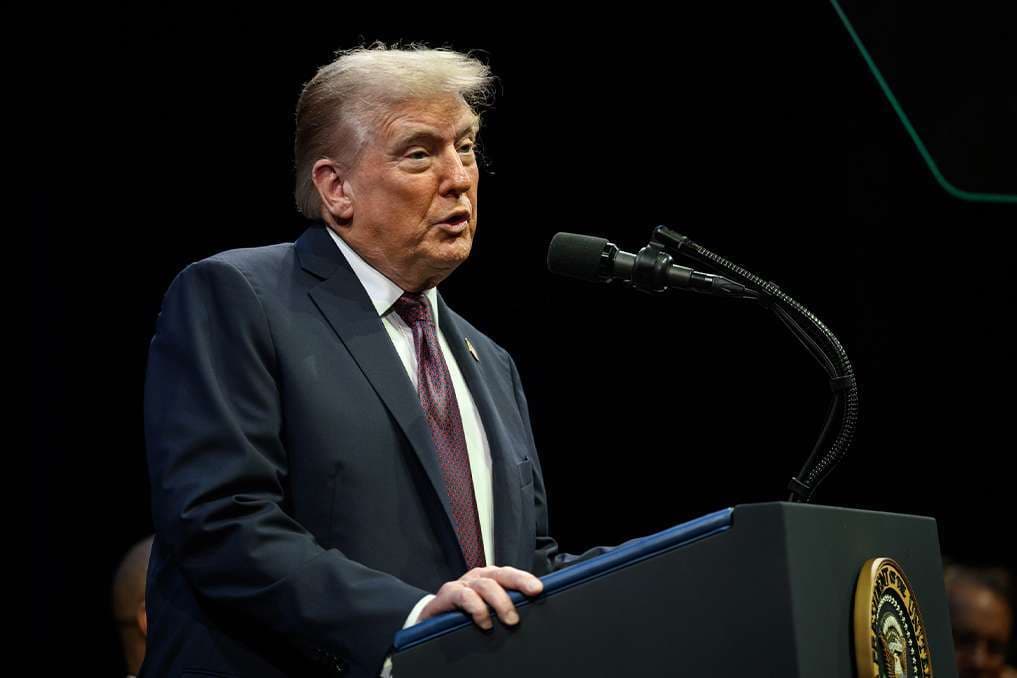
President Donald Trump officially launched his international Board of Peace for Gaza Jan. 22 during a signing ceremony at the World Economic Forum in Davos, Switzerland. Officials at the event outlined reconstruction proposals for the war-torn territory, marking a further expansion into Phase Two of the administration’s ceasefire plan.
Speaking briefly at the ceremony, Trump said he was honored to serve as chairman of the board, which he described as potentially “one of the most consequential bodies ever created.”
The board is intended to oversee Phase Two, which shifts the plan’s focus from an initial truce toward demilitarization, transitional governance, and long-term reconstruction in Gaza. Trump said the board will coordinate reconstruction efforts with international partners, including the United Nations.
“I think we can spread out to other things as we succeed with Gaza,” Trump said. “We’re going to be very successful in Gaza. We can do numerous other things. Once this board is completely formed, we can do pretty much whatever we want to do.”
What countries will be on the Board of Peace?
Representatives from more than 20 countries on the board attended the ceremony: Argentina, Armenia, Azerbaijan, Bahrain, Bulgaria, Hungary, Indonesia, Jordan, Kazakhstan, Kosovo, Morocco, Mongolia, Pakistan, Paraguay, Qatar, Saudi Arabia, Turkey, United Arab Emirates, and Uzbekistan, according to a list published by CNBC.
Israeli Prime Minister Benjamin Netanyahu said Jan. 21 that he will also participate on the board, despite his earlier objections to the composition of the subordinate Gaza Executive Board. As CatholicVote reported, Netanyahu had called that body “contrary” to Israeli policy and objected in particular to the inclusion of Turkish and Qatari officials. Netanyahu was not at the Davos ceremony.
Secretary of State Marco Rubio told attendees in Davos that additional countries are expected to join the board in the coming weeks.
“Many others who are going to join, you know, others either are not in town today or they have to go through some procedure internally in their own countries, in their own country, because of constitutional limitations. But others will join,” he said.
Trump has invited several other leaders to join, including Pope Leo XIV and Russian President Vladimir Putin, according to FOX News. Neither leader has said whether he will participate.
What is the reconstruction plan?
During the signing event, Senior Trump Adviser Jared Kushner delivered a detailed presentation outlining “New Gaza,” a large-scale reconstruction vision that includes an airport, data centers, workforce housing, and coastal tourism development.
According to Kusher, the proposal would divide Gaza into distinct zones for residential living, industry and advanced manufacturing, tourism, agriculture, and transportation. He projected the construction of roughly 100,000 housing units, more than 200 education centers, around 180 cultural and religious facilities, and at least 75 medical centers. Kusher said the goal would be to achieve “100% full employment” in the territory.
“In the beginning, we were toying with [building] a free zone, and then a Hamas zone,” Kushner told the audience. “And then we said, ‘You know what? Let's just plan for catastrophic success.’”
Kusher said parts of the reconstruction could be completed within two-to-three years and stressed that the plan is contingent on Hamas’ full demilitarization.
Kushner and special envoy Steve Witkoff, who jointly helped develop the administration’s 20-point ceasefire framework, traveled to Gaza in October. The two later described the region’s devastation in a 2025 interview with CBS News’ “60 Minutes,” as CatholicVote previously reported.
“It looked almost like a nuclear bomb had been set off,” Kusher said during the interview, adding that the destruction was particularly troubling because civilians “really have nowhere else to go.”
Both officials criticized a September Israeli missile strike in Qatar that occurred during negotiations, saying they felt betrayed. Kushner said Trump believed “the Israelis were getting a little bit out of control in what they were doing, and that it was time to be very strong and stop them from doing things that he felt were not in their long-term interests.”
Background on the Board of Peace
The Board of Peace was first announced in September as a central element of the Trump administration’s 20-point plan for long-term peace in Gaza. In a Jan. 16 statement, the White House said the board would provide “strategic oversight, mobilizing international resources, and ensuring accountability as Gaza transitions from conflict to peace and development.”
Under the chairmanship of Trump, the board will be implemented through a small executive group that includes Rubio, Witkoff, Kushner, former British Prime Minister Tony Blair, and several finance and development leaders. The White House said members will oversee portfolios related to governance reform, reconstruction, and international investment.
The administration said the board will be supported by senior advisers managing day-to-day operations and a U.S.-led International Stabilization Force tasked with security, demilitarization, and the facilitation of humanitarian and reconstruction efforts.
Comments