Vance completes two-day visit to Armenia, signs nuclear deal, visits genocide memorial
Vice President JD Vance concluded a two-day visit to Armenia on Feb. 10, marking the first time a sitting U.S. president or vice president has traveled to the country. The trip advanced U.S.-brokered peace efforts between Armenia and Azerbaijan, finalized a civil nuclear agreement, and included a solemn visit to the Armenian Genocide Memorial in Yerevan.

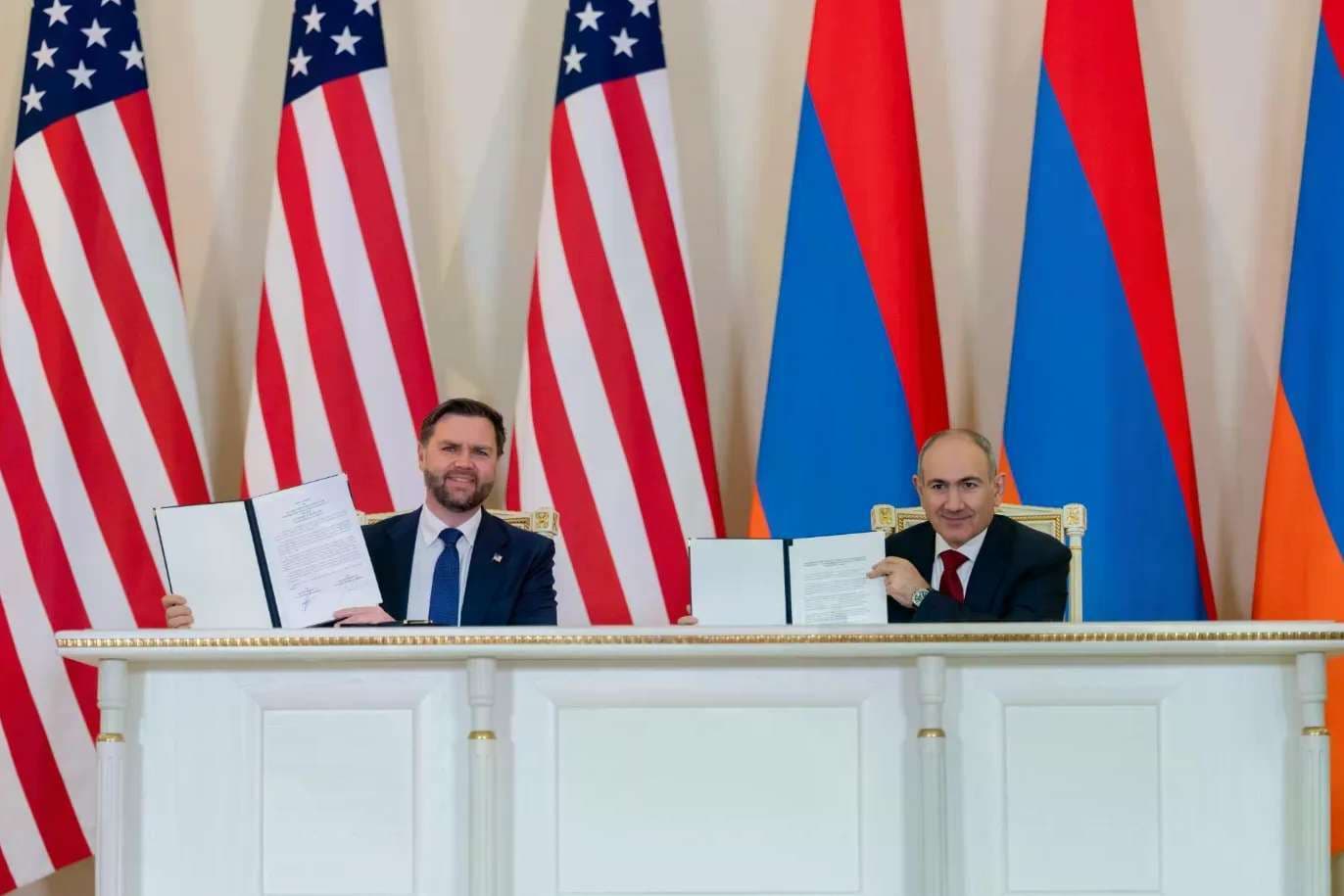
Vice President JD Vance concluded a two-day visit to Armenia on Feb. 10, marking the first time a sitting U.S. president or vice president has traveled to the country. The trip advanced U.S.-brokered peace efforts between Armenia and Azerbaijan, finalized a civil nuclear agreement, and included a solemn visit to the Armenian Genocide Memorial in Yerevan.
Energy and security agreements
Vance arrived in Yerevan Feb. 9, where he met with Armenian Prime Minister Nikol Pashinyan and signed what is known as a “123 Agreement.” The pact allows the U.S. to license nuclear technology and equipment to other countries, including Armenia, according to Reuters. It is reportedly intended to help Armenia replace its Russian-built Metsamor nuclear power plant and reduce reliance on Russian and Iranian energy.
“This agreement will open a new chapter in the deepening energy partnership between Armenia and the United States,” Pashinyan said at a joint press conference with Vance.
Visit to the Armenian Genocide Memorial
On Feb. 10, Vance and Second Lady Usha Vance participated in a wreath-laying ceremony at the Tsitsernakaberd Armenian Genocide Memorial, honoring Armenians killed during the 1915 massacres under the Ottoman Empire. The U.S. Holocaust Memorial Museum estimates that “at least 664,000 and possibly as many as 1.2 million” Armenians died in the genocide.
The couple laid flowers to honor the victims, observed a minute of silence, and viewed exhibits at the adjacent museum.
Vance told reporters that the visit came at the request of Armenian leaders. He described the memorial as “a very important site” to them and said the massacre is a “very terrible thing that happened a little over a hundred years ago.”
The vice president added that he visited the memorial site as “a sign of respect both for the victims but also for the Armenian government that’s been a very important partner for us in the region.”
Vance’s memorial visit drew online attention after an initial post on his official X account that referred to honoring victims of the “Armenian genocide” was later deleted and replaced with a message showing his guest book entry and a video of the wreath-laying. The White House’s rapid response account also briefly posted — and then deleted — Vance’s comments at the memorial site, with officials later attributing the error to a staff member, according to AP News.
U.S. presidents have historically avoided using the term “genocide” for fear of damaging ties with Turkey, a key regional ally. Former President Joe Biden broke with that practice in a 2021 White House statement, AP News reported.
In April 2025, the Trump administration marked the anniversary by commemorating the “Medz Yeghern” without translating the term into English. Medz Yeghern (“the great crime” or simply “the catastrophe”), similar to the Arabic “Nakba” (“catastrophe”) referring to the violent displacement of Palestinians in 1948, is an Armenian term for the genocide.
Vance promotes regional trade plan
During the trip, Vance also promoted the Trump Route for International Peace and Prosperity (TRIPP), a proposed 27-mile transit corridor through southern Armenia linking Azerbaijan to its Nakhchivan exclave. The project aims to expand trade across Central Asia, the Caspian region, and Europe while bypassing Russia and Iran.
In the press conference, Vance praised Pashinyan as “a great friend and a real ally,” saying the visit was about “not just making peace for Armenia” but creating “real prosperity for Armenia and the United States together.”
Azerbaijan visit
Later on Feb. 10, Vance traveled to Azerbaijan, where he signed an economic and security partnership with Azerbaijani President Ilham Aliyev. According to Reuters, Aliyev said that the agreement marked “an entirely new phase” in cooperation on defense sales and artificial intelligence with the U.S. and that both countries would continue working together on energy security and counterterrorism. Vance said the U.S. would provide Azerbaijan with an undisclosed number of ships to help it protect its territorial waters.
Relations between Armenia and Azerbaijan
The visits to both countries follow a peace framework announced at the White House in August 2025 aimed at ending the decades-long territorial dispute over the Christian Armenian settlement of Nagorno-Karabakh. Azerbaijan seized full control of the region in September 2023, prompting most of its roughly 120,000 Armenian residents to flee in what was widely condemned as an act of ethnic cleansing against them.
The region had been populated by Armenians for more than 2,000 years and operated as a self-governing entity since 1991, Zeale News previously reported.
Ahead of Vance’s visit, advocates urged the vice president to press for the release of Armenian Christian prisoners still held by Azerbaijan. On Feb. 4, Zeale News spoke with David Vardanyan, whose father is among those detained. Vardanyan said the trip represented a “unique opportunity” for the administration to demonstrate its commitment to defending Christians worldwide.
Asked whether the issue would be raised with Azerbaijani officials, Vance said it was “certainly going to come up,” citing strong U.S. relationships with both governments.







Comments