‘What kind of society do we want to be?’: Catholic speaks out against Scotland assisted suicide legislation
As members of the Scottish Parliament (MSPs) this week debate amendments to a proposed bill to legalize assisted suicide, an advocate representing the Scottish Bishops Conference has warned that no safeguards added to such a bill can guarantee protection of the vulnerable.

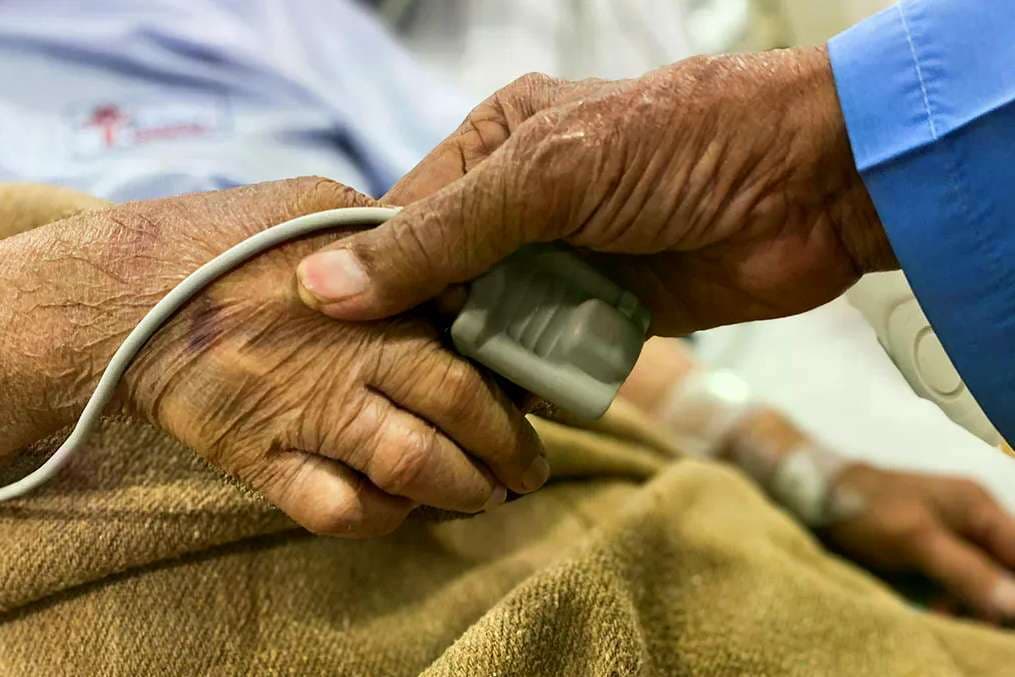
As members of the Scottish Parliament (MSPs) this week debate amendments to a proposed bill to legalize assisted suicide, an advocate representing the Scottish Bishops Conference has warned that no safeguards added to such a bill can guarantee protection of the vulnerable.
Anthony Horan, director of the Catholic Parliamentary Office of the Bishops’ Conference of Scotland, said the country is at “a pivotal moment.”
As the Parliament prepares for the final vote on the bill, “we must ask what kind of society we want to be,” Horan wrote in an emailed March 5 press release. “Though presented as compassionate and carefully controlled, this legislation would cross an irreversible moral and legal threshold — one that cannot easily be undone.”
Horan’s statement calls on the MSPs to reject the bill entirely — not just because the safeguards cannot truly protect vulnerable populations, but also because it is a fundamentally flawed pursuit.
Opposing assisted suicide “is not a denial of suffering,” he wrote.
Rather, it “is grounded in ethical principles, real-world evidence, and a serious understanding of human vulnerability,” Horan explained. “Legalising assisted suicide would weaken our commitment to the value of every life and undermine protections for those most at risk.”
According to a March 9 report from UK-based publication The Independent, the MSPs this week will have three “marathon sessions” debating more than 300 amendments to the bill, which is in its final stage of consideration. A final vote is expected to be held March 17.
Just ahead of the final stage of consideration, Liberal Democrat MSP Liam McArthur, who proposed the bill, urged fellow MSPs to not postpone passing the bill. According to The Independent, McArthur also noted that the week of work ahead would provide “the opportunity to add further protections” through amendments and emphasized that this bill is the right one for the issue at hand.
“It’s time to give terminally ill Scots that compassionate choice,” McArthur said.
However, as Horan emphasized in his statement, legalized assisted suicide cannot protect everyone. The “slippery slope” concern has been a proven reality in countries that have legalized it with initial safeguards.
“Supporters argue that strict safeguards will prevent abuse. Yet global evidence shows that no jurisdiction has successfully prevented the gradual expansion of eligibility or ensured consistent protection for vulnerable people,” Horan wrote.
Canada and the Netherlands initially legalized assisted suicide for only people with terminal illness, but have since expanded their scope “dramatically,” he continued. Now, people who have chronic conditions or disabilities are eligible. In Canada, another potential expansion is to make mental health conditions sufficient rationale for assisted suicide.
“These outcomes were once dismissed as impossible, yet they occurred. Once society accepts that doctors may intentionally end life, boundaries inevitably shift,” Horan wrote. “Scotland is not immune to this pattern.”
In the process of advancing the bill, basic safeguards — such as required training to detect coercion and conscience protections for health care workers — have been watered down or taken out entirely, according to Horan. He argued that it could not become safer in the future if it is dangerous from the outset.
“Even MSPs who once supported the Bill now admit it cannot guarantee safety,” he wrote. “If it is unsafe today, it will not become safer tomorrow.”
Further, coercion can never be fully accounted for, because it can be a factor stemming from unseen or subtle pressures, such as the existence of legalized assisted suicide itself, according to Horan.
“Assisted suicide is often imagined as a fully autonomous choice. But autonomy is shaped by fear, loneliness, financial pressure, family dynamics, or the feeling of being a burden,” he wrote. “The most dangerous coercion is subtle, unspoken, and impossible to reliably detect.”
If an elderly or disabled person expresses that they “don’t want to be a burden,” he or she should not be offered “a state-sanctioned path to death,” Horan argued. Rather, people should reassure and support them.
“No system, however well-intentioned, can identify every instance of hidden pressure,” he continued. “By allowing assisted suicide, the state risks sending the message that some lives are less worth protecting. For those already struggling, that message can become a quiet but dangerous internal voice.”
Horan also warned legalized physician-assisted suicide would undermine the foundation of trust — which “is built on the principle that doctors do not intentionally end life” — between patients and doctors.
Trust can crumble, especially if the patient is afraid that speaking about their suffering could be met with a suggestion of assisted suicide. People with disabilities have already expressed “feeling less safe in healthcare settings” in countries that have legalized the practice, according to Horan.
The ramifications would also extend to palliative care, which is at risk of becoming “deprioritized,” he argued. When it is made available, assisted suicide might appear to be the “easier choice” amid financial or political pressure.
“Scotland already struggles to provide universal access to quality palliative care; assisted suicide would worsen, not solve, that problem,” he wrote.
Concluding, Horan emphasized genuine compassion in the face of suffering is not accomplished “by eliminating the sufferer.”
“True compassion means providing excellent palliative care, emotional and social support, and affirming that every life has inherent worth. Ending life is not mercy — it is a failure to care,” he wrote. “This debate is not only about individual choice but about the ethical identity of our nation. Once the state authorises assisted suicide, it decides that some lives may be deliberately ended. No government should have that power.”



.jpg&w=3840&q=75)

Comments