Who was St. Valentine? The Christian history behind the chocolates and roses
What do chocolate and roses have to do with a third-century martyr? The celebration of Saint Valentine’s feast has a long and compelling history.

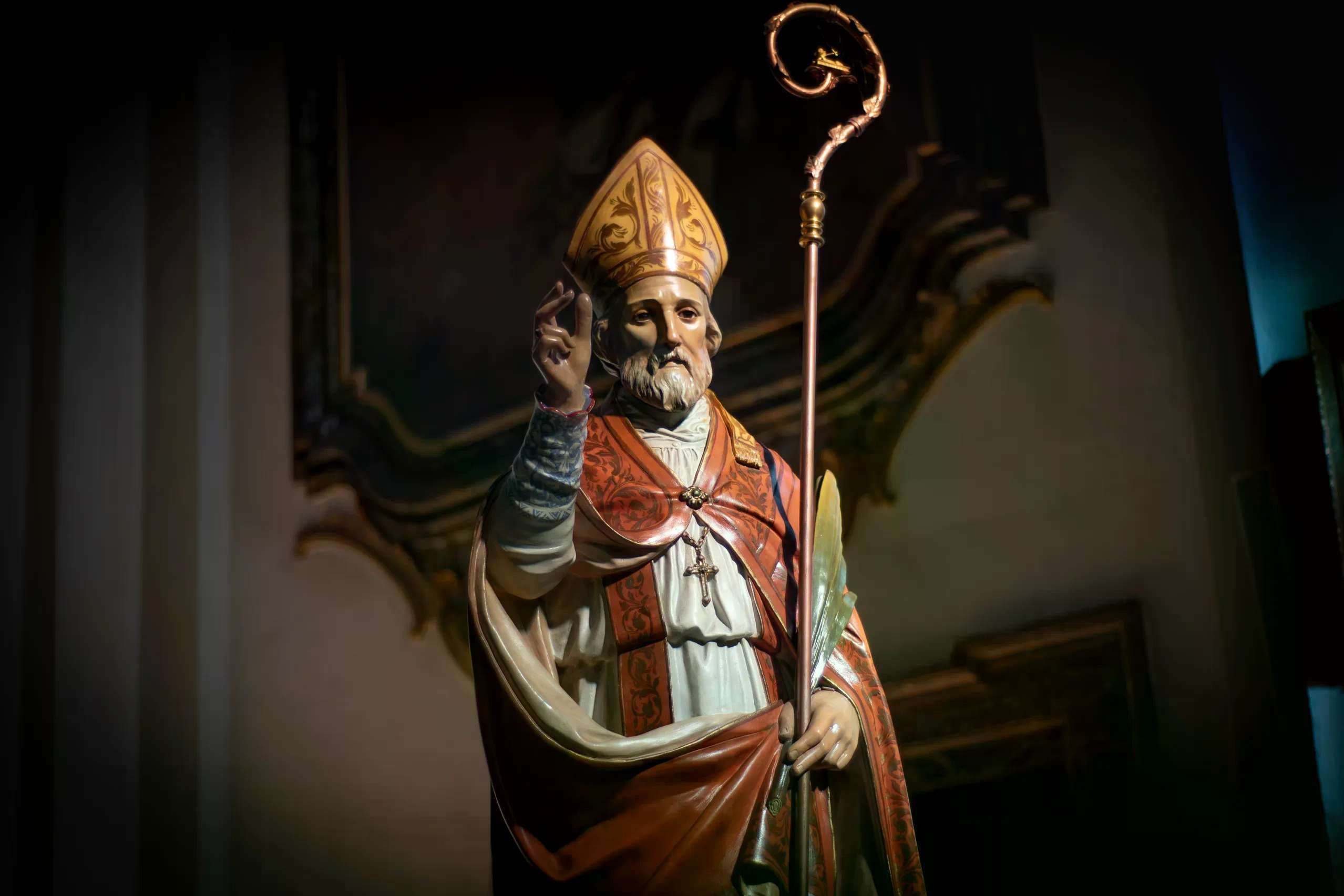
Birds, pink cards, and candy hearts: What do the symbols associated with Valentine’s Day have to do with a third-century martyr? The celebration of Saint Valentine’s feast has a long and compelling history.
The Roman martyrology lists two St. Valentines who were martyred on Feb. 14: St. Valentine of Rome, who was martyred under Claudius Caesar in 270, and Saint Valentine of Terni, who was put to death by the Prefect Furious Placidus about 70 years later, according to Vatican News. Both were beheaded.
St. Valentine of Rome was a well-known Christian, which drew the interest of Emperor Claudius. The emperor summoned him to his palace and tried to get him to worship pagan idols. When Valentine refused, the emperor sent him to a pagan nobleman’s home, hoping the nobleman would convince Valentine to apostatize. Instead, the saint healed the nobleman’s daughter, who was blind, and the whole family converted.
After their conversion, Claudius ordered Valentine to be beheaded on the Via Flamini in Rome. According to some sources, while Valentine was in prison, he sent a note to the healed girl, signing it, “Your Valentine.” Other legends say that he secretly officiated Christian marriages for Roman soldiers, who were forbidden to wed so that they focused on their military service. Soon after Valentine’s martyrdom, a church was built in his honor.
St. Valentine of Terni, a bishop, was invited to Rome by the philosopher Crato, who hoped he would heal his son’s physical handicap. Crato promised Valentine half of his wealth if he could heal the boy, but Valentine told him that only faith in Christ could bring healing. Valentine prayed over the young boy and he was healed. Crato’s family and several of his students converted, including the son of Roman prefect Furious Placidus.
Vatican News reports that Placidus was devastated by his son’s conversion and had Valentine decapitated on the Via Flaminia.
Vatican News proposes that the two saints may be one in the same: “Both give heroic testimonies of faith, both perform a miraculous healing that causes conversions, and both are martyred by beheading on the Via Flaminia in Rome.”
The 14th-century English poet Geoffrey Chaucer is credited with linking St. Valentine to romance and the mating of birds in the same month. In his poem “The Parliament of Fowls,” he writes, ”For this was sent on Seynt Valentyne’s day / Whan every foul cometh ther to choose his mate.”
Over the years, the day became sealed in popular culture as a day to celebrate couples, as referenced in literature such as Shakespeare’s plays from the early 17th century. Couples observed the festivities with small tokens of affection for each other, such as flowers and chocolates.
St. Valentine’s Day was observed as a memorial in the Church’s general calendar until 1969, when it was removed from the calendar per the recommendation of the Second Vatican Council document Sacrosanctum Concilium, according to Aleteia. Now the Church celebrates the memorial of Sts. Cyril and Methodius on Feb. 14. However, Catholic churches that follow the 1962 calendar still celebrate the feast of St. Valentine.
To commemorate the feast of St. Valentine, the faithful can pray the following prayer from Catholic Answers: “O St. Valentine, faithful servant of Christ, help us to love as you loved. Guide our hearts to cherish true, lasting love that is grounded in faith. Inspire courage, patience, and kindness in all our relationships. Be our Valentine, that we may honor God in our love today and always. Amen.”




Comments