WSJ: Will Massachusetts deny religious freedom by banishing symbols in public places?
The Massachusetts Supreme Judicial Court is set to hear oral arguments May 6 in a case that could determine whether the state’s constitution requires the removal of longstanding religious imagery from public spaces, even when those symbols carry secular significance tied to civic traditions.

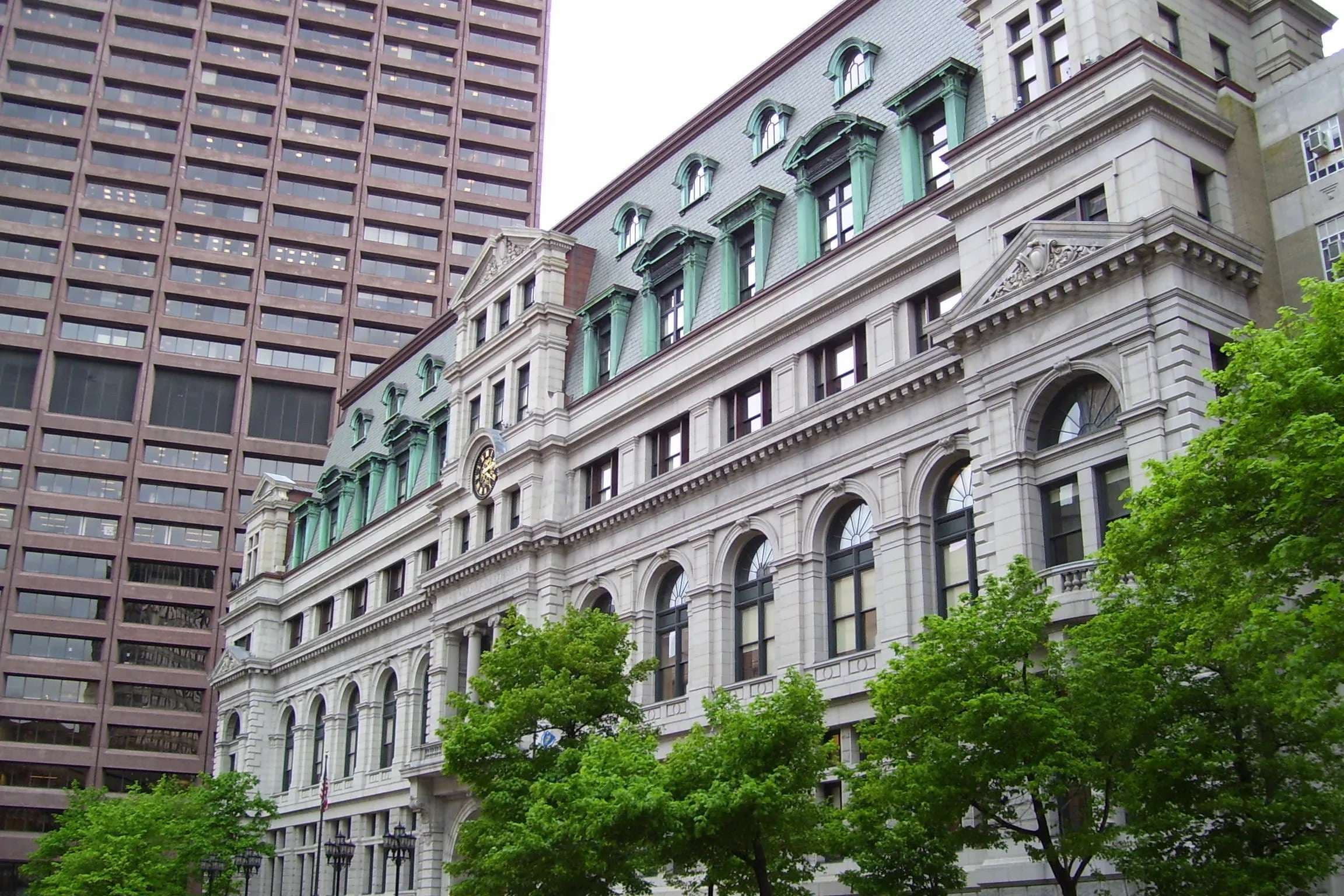
The Massachusetts Supreme Judicial Court is set to hear oral arguments May 6 in a case that could determine whether the state’s constitution requires the removal of longstanding religious imagery from public spaces, even when those symbols carry secular significance tied to civic traditions.
In a May 4 opinion piece published by The Wall Street Journal, Michael McConnell and John Witte Jr. argued that forcing the removal of such imagery in the name of religious neutrality would undermine the state’s constitution and revive a legal standard the U.S. Supreme Court has already abandoned.
The case centers on two statues commissioned by the city of Quincy, Massachusetts, for a police and fire building — one depicting Saint Florian, the patron saint of firefighters, and another depicting Saint Michael the Archangel, the patron saint of police and protection.
In October 2025, a Massachusetts judge ruled that the statues violated the state constitution because they endorsed Catholicism and ordered their removal from public display. Officials then placed the statues in storage. The lawsuit was brought by a group of Quincy residents who argued that displaying the statues violates the separation of church and state under the state constitution, according to the American Civil Liberties Union of Massachusetts, one of the groups representing the plaintiffs.
The Journal reported that, according to the city’s mayor, the statues were selected not for religious reasons but for their well-established historical and cultural associations with first responders.
“Florian, a Roman official said to have personally extinguished a raging fire, is recognized by firefighters across the globe as their patron saint, and Michael has long been associated with the courage and protection of police,” McConnell and Witte noted.
The dispute has drawn attention beyond Massachusetts because of the plaintiffs’ legal strategy. According to the Journal, rather than relying primarily on the text and history of the state’s Declaration of Rights, they have urged the court to adopt the federal Lemon v. Kurtzman test from 1971 — a standard the U.S. Supreme Court explicitly abandoned after decades of inconsistent application.
According to the Journal, the Lemon test produced what McConnell and Witte described as “distasteful results,” including rulings that required states to exclude religious schools from benefits or accreditation opportunities solely because of their religious affiliation. The report also cited a case in which a deaf student was denied a sign-language interpreter because he chose to attend a Catholic school, and another in which Connecticut’s protections for workers to take their sabbath day off were struck down.
In Kennedy v. Bremerton School District (2022), the U.S. Supreme Court stated that it had “long ago abandoned” the Lemon test as a federal standard.
McConnell and Witte wrote that the Supreme Court ultimately concluded that traditional symbols with mixed religious and secular meanings do not violate the First Amendment, arguing that this is “certainly true of Quincy’s statues of Florian and Michael, who have long been symbols of the heroism and sacrifice of firefighters and other first responders.”
The Journal reported that several religious groups have filed friend-of-the-court briefs in support of the Quincy statues, including Islamic, Jewish, and Russian Orthodox groups, as well as secular labor unions and first-responder organizations.
“If these statues were really an endorsement of Catholicism, it is difficult to explain why so many people of diverse faiths — and none — want them installed,” McConnell and Witte argued.
The authors also argued that the Massachusetts Constitution’s own language affirms the value of public worship and “instructions in piety, religion, and morality” for promoting societal happiness and prosperity. Article 3 of the Declaration of Rights, they wrote, emphasized that equal protection for religious sects is meant to allow individuals to worship “God in the manner and season most agreeable” to their conscience, not to purge religious symbols from the public square.
“When civic symbols draw on religious traditions, this doesn’t coerce anyone or establish any denomination as the official religion,” they argued. “One city may invoke Florian as a symbol of firefighters; another may use a Native American legend to inspire veneration for nature, or use the crossing of the Red Sea as illustrative of the defeat of tyranny — as did the proposed first seal of the United States.”
McConnell and Witte also rejected the plaintiffs’ argument that removing the statues protects pluralism.
“The Massachusetts Constitution, of all documents, was never designed to impose such a result,” they wrote. “The Supreme Judicial Court should reject the attempt to shoehorn dead-letter federal law into it, and instead embrace the constitution that Massachusetts citizens adopted.”
Comments