Both St. Matthew and St. Mark wrote that the head of St. John the Baptist was presented to Salome on a platter. But where did it go from there? Explore the history of this relic from one of the New Testament’s most impactful stories.
Transcript
Read the full transcriptAuto-generated · 571 words
Few relics have stirred as much fascination, devotion, and controversy as the head of Saint John the Baptist. John is no ordinary saint. He is the prophet who prepared the way for Jesus, who baptized him in the Jordan River, and who, with his powerful voice, denounced the rulers of his time. For this, he paid with his life.
His beheading, carried out in the court of Herod Antipas and recorded in the Gospels, is one of the most dramatic scenes in the New Testament. The head of the Baptist delivered on a platter to Salome. But what happened next? Here begins the mystery.
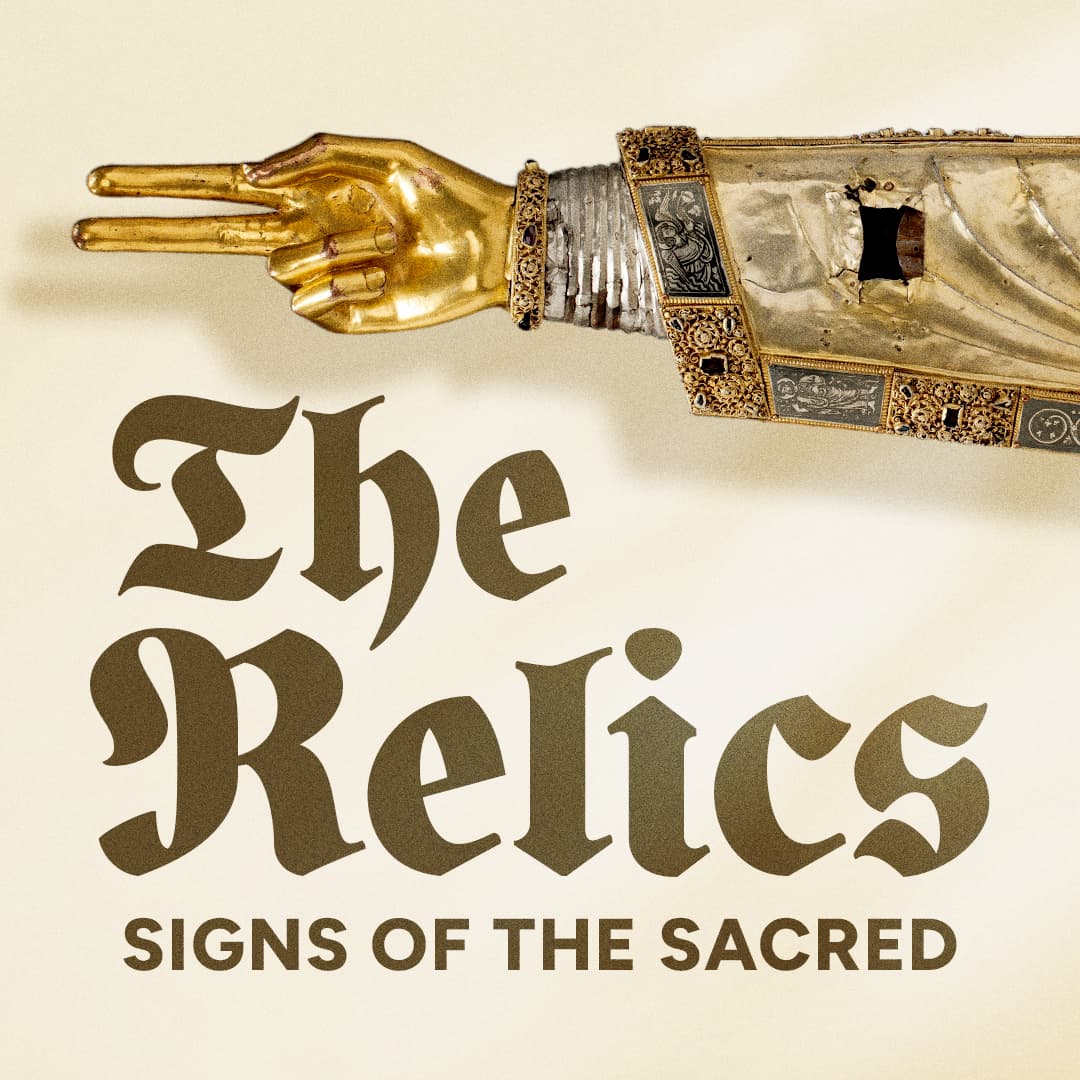
Tradition tells us that the head was buried in a secret place, perhaps in Jerusalem. Over the centuries, however, legends, miraculous discoveries, and competing claims multiplied. So did the number of places that claimed to possess it. In Rome, one of the most famous relics of John's head is kept in the Basilica of San Silvestro in Capite.
For centuries, pilgrims have come to venerate the skull, enclosed in a precious reliquary. But Rome is not alone. In the 13th century, a relic of the head arrived in Amiens, France, where it quickly became an object of massive devotion. Pilgrimages to Amiens flourished, and the city gained enormous religious and cultural prestige thanks to this relic. And thousands of miles away, in Damascus, another relic is preserved, believed by the faithful to be the head of the Baptist.
It rests in the magnificent Umayyad Mosque, where John is venerated not only by Christians, but also by Muslims, who honor him as the prophet Yahya. This makes it an extraordinary case of a relic that crosses religious boundaries, becoming a bridge of respect and devotion between different worlds. But how can there be more than one head of John the Baptist? It is one of the great enigmas of relic history. Some historians suggest that part of the skull remained in Jerusalem, another part was brought to Rome, and yet another to Amiens.
Others argue that many of these relics arose from popular devotion, where fragments, perhaps not authentic, were identified and revered as genuine. What is certain is that in the Middle Ages, possessing such an important relic meant not only spiritual prestige, but also political and economic influence. Entire cities were transformed into pilgrimage centers, attracting crowds and wealth. Thus, the head of the Baptist became at once a symbol of faith and a tool of legitimacy for those who guarded it.
Today, when faced with these relics, one question remains. Which one is authentic? We may never know, but perhaps that is not the point. The power of these relics lies less in their historical authenticity than in the message they carry.
John the Baptist remains the voice crying out in the desert, the man who lived without compromise, who denounced injustice, and who paid with his life for his fidelity to the truth. To gaze upon these relics is to confront his courage. It is as if, across the centuries, John the Baptist continues to speak.
Prepare the way of the Lord, make straight his paths. His voice, silenced by violence, was never truly extinguished, and perhaps this is the greatest miracle of his relic, to remind us that truth does not die with the one who proclaims it, and that the courage of a prophet can echo far longer than his own life.